For our Baptist forefathers, the doctrine of the Trinity was anything but mysterious and difficult with little practical application to daily life. No, rather, it was crucial to our communion with God and comfort in God.


For our Baptist forefathers, the doctrine of the Trinity was anything but mysterious and difficult with little practical application to daily life. No, rather, it was crucial to our communion with God and comfort in God.
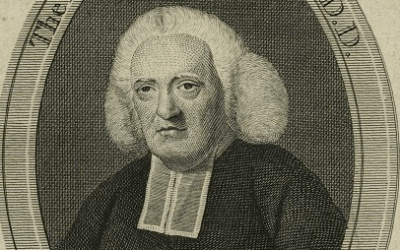
“…in his day, especially among members of his community, the Particular Baptists of the eighteenth century, John Gill may rightly be reckoned, in the words of Lloyd-Jones, ‘a very great man, and an exceptionally able man.'”

We must reject as unworthy of our Savior every doctrine which diminishes His true deity. He is not a lower case g God. He is capital G-O-D, God!

“Why doesn’t church discipline ever seem to work?” By that this person meant, “why haven’t we seen any of the excommunicated members repent and be restored?” This person had heard my previous statement about the goal being restoration and had assumed that restoration was the only goal, or perhaps even the primary goal. This is not the case. In fact, there are several goals in mind when a church practices discipline.

The title “The Angel of the LORD” is used nearly 50 times in the Old Testament. But there may be more titles in the OT referring to the Angel of the LORD than just these.

After decades and even centuries of neglect, the doctrine of the Trinity has become the focus of attention for theologians in recent decades. It is to be hoped that this interest of theologians will trickle down to ordinary Christians. The doctrine of the Trinity is of enormous practical importance to the serious Christian.

In a passage like this we see the value of two contexts of interpretation. One, we see that the entire book of Micah and the oscillating themes he employs provide interpretive direction. Two, we see the importance of the larger canonical context of doctrine as each text contributes to the body of doctrine and at the same time yields to its instruction.

Modern men and contemporary theologians find it difficult in their minds to reconcile the classical theism of the Christian tradition and the Scriptures with a God who is relational. The fault is in their minds and logic not in classical theism. Paragraph 2 of Chapter 2 has for its explicit emphasis the relations of God to the world and mankind.

This essay seeks to answer three questions: What is a missionary? What is the missionary’s task? Why is holiness essential to the missionary and his task?

Rather than making God an impersonal thing with whom it is impossible to have a relationship, we saw that His simplicity means that His character and affection toward us His people will never change. This is the theme of the next cluster of attributes mentioned in the Confession.
-transparent+cropped.png)
Join our mailing list to receive the latest news and updates from CBTS.