We should not even speak of man possessing the image of God. For the image is not something man possesses. It is something man is. Man is the image of God.


We should not even speak of man possessing the image of God. For the image is not something man possesses. It is something man is. Man is the image of God.

The doctrine of the threefold division of the law teaches that God’s law, as revealed and given to the nation of Israel at Mount Sinai, can be and should be divided into three elements. These are the moral law, ceremonial law and judicial law.

The fact is that one cannot neatly remove Genesis 1-11 from the biblical organism. It is not like removing scaffolding on a building after a paint job is finished. It is rather like wrenching the head from a living animal.

One of the most popular arguments against the doctrine of the Sabbath is the purposed silence of the Early Church fathers on the issue. While it is true that the early writers did not use the language of “Christian Sabbath,” they did have an almost uniform Lord’s Day observance.

We must reject as unworthy of our Savior every doctrine which diminishes His true deity. He is not a lower case g God. He is capital G-O-D, God!
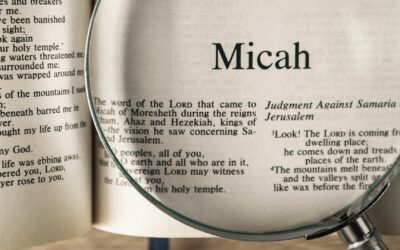
In a passage like this we see the value of two contexts of interpretation. One, we see that the entire book of Micah and the oscillating themes he employs provide interpretive direction. Two, we see the importance of the larger canonical context of doctrine as each text contributes to the body of doctrine and at the same time yields to its instruction.

Although there are myriads of angels of the LORD, there is only one called “The Angel of the LORD”. The OT usually refers to Him when it speaks of a single “Malak” or messenger, especially under the designation “angel of the LORD” or “angel of God”. This is the messenger we want to focus our attention on in this study. As we will see, He is not a human nor an angelic messenger. Instead, He is a messenger in a category all His own!
The first and most basic question answered by the Confession is the question, For what are the Scriptures sufficient? The Confession makes clear that the Scriptures are not sufficient for every conceivable purpose in human life. They are sufficient for “all things necessary for his own glory, man’s salvation, faith and life.” The sufficiency of Scripture is vertical in nature. It has to do with our relationship to God. It tells the Christian how to glorify God, what he needs to do to be saved, what He must believe as a matter of Christian doctrine, and how he must live in order to please God. There is nothing that we need about those matters that are not in Scripture. Still, the Scriptures are not a math, biology, or Spanish textbook.
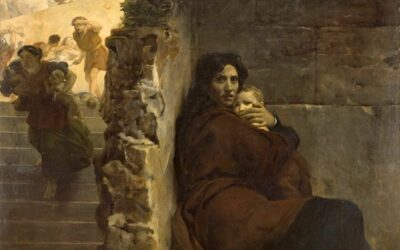
Introduction Every Christmas season a few questions come to the minds of some astute readers when the advent...
Before critiquing theonomy, we need a good definition. Some people today who use the word “theonomy” don’t mean anything more than “God’s law” because the etimology of the word theonomy is “theos” which means God, and “nomos” which means law. They only want to affirm that God’s law is supreme over man’s law. And they’re right about that. God’s transcendent moral law is the norm that norms all norms. Governmental laws should always be consistent with God’s law and human law must never violate God’s law.
But in this post, I’ll be using the word “theonomy” in a more technical sense, which is rooted in the historic usage of the term.