by CBTS | Aug 17, 2026 | Old Testament
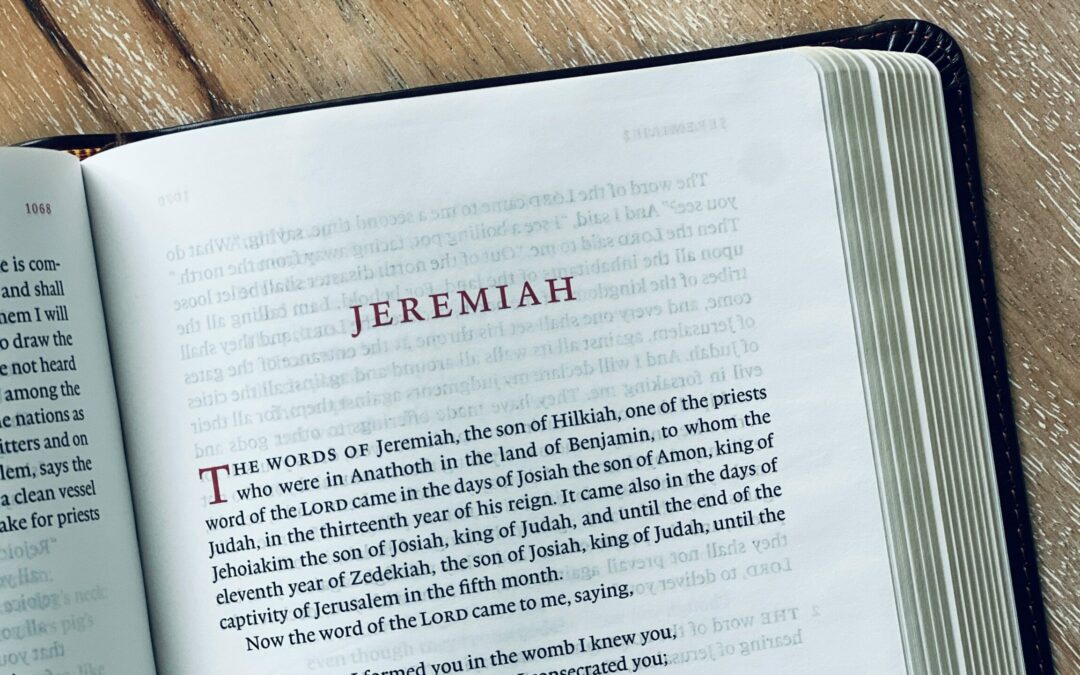
Few men have ever received such a direct call from God as Jeremiah did. God spoke directly to him and touched his mouth. God promised to give him the message to speak, the guidance on where he would speak, and protection from those who rejected his message. Jeremiah would be a fortified city, a pillar of iron, and a wall of bronze against all adversaries, the princes, the priests, and the people. How could such a person fail or become discouraged with such direct experiences with God, with such clear direction and guidance from God? If we only had such direct communion with God, our ministries, it seems, would be without the discouragements, problems, and misunderstandings that inevitably attend the ministry today. Yet, with all the divine promises and the direct communion that he experienced with God, Jeremiah experienced as much suffering and abuse as any minister or servant of God has ever suffered. His ministry was as difficult as any ministry that God has given to man.
Jeremiah furnishes us with biographical detail, supplying us with information about his personality. Historically, artists and scholars have viewed Jeremiah’s personality as a doleful or melancholy temper. Indeed, Jeremiah was a man of deep sympathies and compassion, who piously lamented the death of God’s servant, Josiah (2 Chr 35:25), the sinful state of the people of Judah (Jer 8:18-9:2), and the destruction of Jerusalem (the book of Lamentations). Jeremiah’s sensitive nature comes out again and again when he considers the condition of the nation and impending doom of the people (Jer 4:19-22). At times, he seemed depressed and despondent over the hopelessness of the situation. In fact, he may have been prone to mood swings. In Jeremiah 20:13, the prophet is singing praises to the Lord, and then in the next verse, he curses the day of his birth. Such traits may have been personality flaws, but more likely, they are the burdens and responses of a man who understands the seriousness of his times, who loves what his nation once stood for, and who realizes the absolute necessity and justice of God’s purifying judgment.
Yet, Jeremiah was also a sign to the nation (Jer 16); therefore, God restricted his social relations. God did not allow the prophet to marry because the women and children would suffer untold misery and hardship. If Jeremiah had married, this would have sent the wrong message of an optimistic future. This would have belied his messages and undercut his own ministry. Moreover, God did not allow the prophet to express his emotions publicly. Jeremiah was not stoically indifferent to suffering, but rather demonstrated God’s disfavor with the people and foreshadowed the coming judgment when no one would be mourned for because of the abundance of death. Furthermore, God forbade Jeremiah to go to the celebrations and feasts of the people because in the coming days, celebrations and feasts would not be heard. Jeremiah, as a sign to the nation, attracted curiosity and interest, giving the prophet an opportunity to share and to reinforce the Lord’s message to them.
Yet, Jeremiah, like everyone, had a more complex personality. Jeremiah could thunder forth the messages of God’s judgment as well as Elijah or any other prophet. He could pray judgment down upon his enemies in the spirit of the imprecatory psalms. He could stand before kings, prophets, priests, and the people and fearlessly declare the word of God. He calmly, yet heroically, faced imprisonment, beatings, and threats of death. After terrible ordeals, when it would have been easy or convenient to soften his message, Jeremiah never wavered, never compromised, never quit. He was a man of iron character. Although the palace, temple, and market square were all moving together against Jeremiah, he stood fast to God. He was, of course, a solitary rock. From all indications, he could not seek aid and comfort from converts—he apparently had few, if any, converts.
Although God made Jeremiah “a fortified city, an iron pillar, and a bronze wall,” he suffered diverse hardships and many setbacks in his ministry. At least twice in his ministry—but probably many other times unrecorded—Jeremiah was beaten. In one case, Pashhur, a priest probably over temple security, heard Jeremiah’s message, spoken in the temple. Outraged at Jeremiah, Pashhur beat the prophet and put him in the stocks at the temple (Jer 20:1-6). Jeremiah later recalled the constant insult and reproach this brought to him (Jer 20:8). On another occasion, Irijah, the captain of the guard, falsely accused Jeremiah of treason. Though Jeremiah denied the charge, Irijah beat and imprisoned the prophet. In fact, Jeremiah was probably imprisoned for the last months or perhaps for a few years before Jerusalem’s desolation in 586 (Jer 37:15). But prison did not prevent Jeremiah from preaching the word of God. For this, royal officials tried to starve or to kill him by exposure, placing him in a cistern. Though waterless, it was full of mud, deep enough for Jeremiah to sink down into it (Jer 38:1-6). Such sufferings are almost unimaginable.
Of course, there were many other plots and attempts on Jeremiah’s life. Jeremiah certainly felt that his life was in serious danger when the military commander, Irijah, beat him and imprisoned him. Jeremiah told King Zedekiah that if he sent him back to that prison, he would die (Jer 37:20). Although Jeremiah came from a priestly family and was a prophet, both the priests and the prophets demanded the death of Jeremiah for prophesying against Jerusalem (Jer 26:11). Such threats were real and intimidating. Another prophet, Uriah, also similarly prophesied against Jerusalem, and king Jehoiakim eventually murdered him. Such a message was not lost on Jeremiah—speak the word of the Lord at the risk of your own life (Jer 26:20-23). Perhaps the most troubling threat on Jeremiah’s life came from his own hometown, Anathoth. The men of Anathoth, clearly troubled about their hometown prophet, rebuked Jeremiah, ordering him to cease prophesying or to suffer the consequences (Jer 11:18-23). This threat was particularly worrisome to Jeremiah, because he was completely unaware of the threat, like a sheep to the slaughter. God had to reveal the plot to Jeremiah. Also, this plot came from his own town. These people may have been old friends and relatives. “Only in his hometown and in his own house is a prophet without honor.” (Matt 13:57) Of course, there were other rejections and oppositions to Jeremiah’s ministry. He was frequently attacked verbally. He was plotted against secretly (Jer 18:18). Jeremiah had to hide from the wrath of King Jehoiakim (Jer 36:19). From king to commoner, the nation did not listen to Jeremiah (Jer 37:2). Zedekiah, on one occasion, sought Jeremiah’s advice, but he never acted on it. Surely, this brought only more frustration to the prophet. In fact, even after Jeremiah’s prophecies proved true, the people still rejected the messages of the prophet. When Jeremiah pleaded with the remnant after the fall of Jerusalem to remain in the land and not to go to Egypt, Jeremiah was branded a liar (Jer 43:2).
Such trials and afflictions brought on perhaps Jeremiah’s greatest struggle—his struggle with his own call. Few men have ever experienced such a direct call from God, but few men have ever faced such persecutions and difficulties. Jeremiah accuses God of deceiving him about his call (Jer 20:7). God had promised to protect him and to make him a fortified city. God did not tell the prophet the fine print about the difficulties. God’s call had overpowered him, and he had received only abuse since. God’s message had brought only insult and reproach. Jeremiah wanted to give up, to forget the name of the Lord, to speak his word no longer. Jeremiah had had enough. Jeremiah wanted out. God’s call and ministry meant simply, “terror on every side,” to Jeremiah.
Jeremiah had no one to turn to, so he turned to God. Rejected by all, he was aided by God. Though he wanted to quit, though all, including friends, waited for him to slip, God was his mighty warrior to protect him, his righteous judge to exonerate him and condemn his enemies. Even when he wanted to quit, God empower the prophet with his word, “But if I say, ‘I will not mention him or speak any more in his name,’ his word is in my heart like a fire shut up my bones. I am weary of holding it in; indeed, I cannot.” (Jer 20:9). God’s call prevails over all difficulties, over all disappointments. Jeremiah struggled with God’s call, but the call of God overcame.
Certainly, God’s call did not overcome all opposition in one night, nor was the prophet’s character made in a night. God’s call and presence sustained him over a forty-year ministry through many doubts, fears, and toils. God shaped and fashioned the character of the prophet for over four decades, like a potter with clay. When the men of Anathoth plotted to kill Jeremiah, early in his ministry, God responded to Jeremiah’s complaint with one of the most beautiful statements in the book of Jeremiah, “If you have raced with men on foot and they have worn you out, how can you compete with horses? If you stumble in safe country, how will you manage in the thickets by the Jordan?” (Jer 12:5) In other words, if this relatively light problem—of someone planning to kill you!— wearies you, what will you do when more difficult challenges confront you? If you stumble in relatively safe lands, what will you do in dangerous lands? The ministry is a process. We must first be able to run with men before we can run with the horses. The Lord used all Jeremiah’s difficulties to conform him to the image of God’s own dear Son. Although Jeremiah could not run with the horses early in his ministry, he certainly outran the horses at the end of his ministry.
Jeremiah also struggled with the hopelessness of his message and call. His message was predominantly negative and very unpopular. The prophets and priests, Jeremiah’s most bitter enemies, declared his prophecies false. The military viewed his messages as treasonous and demoralizing to the troops. The king and his court viewed him as disloyal and subversive. But Jeremiah, for forty years, preached a hopeless message to a hopeless people. Even his messages of restoration and of hope could be realized only after the national calamity. But the hopelessness of the message and hopeless call did not mean a hopeless ministry. Though his ministry seemed useless to his own generation, it clearly helped countless other generations unto the present. His ministry of uprooting and of tearing down ultimately laid the foundation for his continued ministry of building and of planting.
About the Author
Dr. Fuller graduated with a business degree and a Masters in Bible at Bob Jones University. He attended Dropsie College in Philadelphia for its last year, then studied at Hebrew Union College and received MPhil and PhD degrees. He taught at Mid-Continent College for two years and at Southern Seminary for 22 years.
Stay in touch with CBTSeminary
For more information about CBTS, go to CBTSeminary.org
Consider giving to CBTSeminary to help us train the next generation of gospel ministers.
Apply to CBTS today to be sharpened for a lifetime of faithful ministry.
Follow CBTS on our socials: X | Instagram | Facebook | YouTube
Sign up for our newsletter and receive monthly updates related to the Seminary.
by CBTS | Aug 17, 2026 | Old Testament
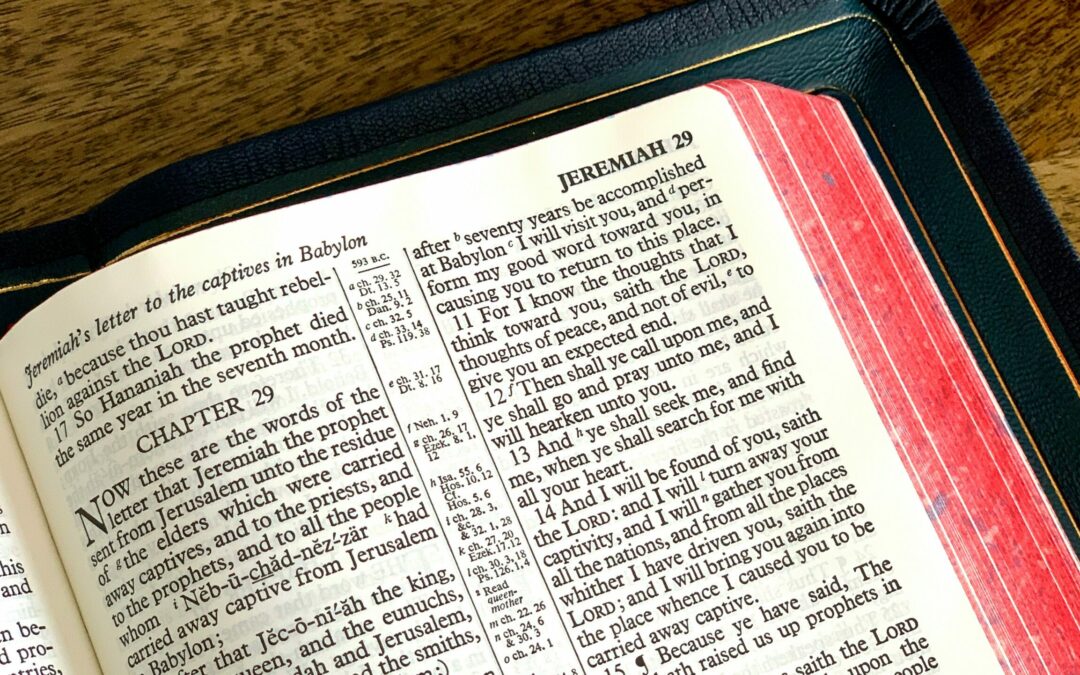
Jeremiah states that his call to the prophetic ministry occurred in the thirteenth year of Josiah’s reign, 627 BC. (Jer 1:2). He describes his call as “the word of the Lord came to me.” The precise manner of his call—dream, vision, divine visitation—is not given, though he hears the voice of God. The call of God is God’s summoning and commissioning of an individual or individuals for a specific mission, ministry, position, or salvation. For example, God called Abraham and his descendants to be His people, a kingdom of priests, and a light to the nations. God’s calling of Israel to national privileges and duties did not guarantee salvation (Rom 2:28-29; 11). God also calls individuals unto salvation (1 Cor 1:24; Rom 8:28; 2 Thess 2:13-14). God calls individuals for ministries as prophets, kings, priests, and pastors. God’s call also includes empowering individuals for specific actions or missions. God’s call of Paul, for instance, empowered and sustained the Apostle through many trials (Gal 1:15-17). Likewise, the Spirit of God empowered Samson’s exploits to begin Israel’s deliverance from Philistine control (Judg 16:20).
Men may not presume to call themselves into the ministry. Isaiah did not just decide to become a prophet. David did not anoint himself or call himself to be king. Moses did not appoint himself deliverer and leader of Israel, though some claimed that he did (Num 16:13). Those prophets in the Old Testament who called themselves were false prophets. The call, of course, must be from God, which furnishes the proper direction, message, encouragement, and power for ministry. God’s calling of Jeremiah ensured God’s guidance and direction of where he should go (Jer 1:7b). God’s call also supplied the message—Jeremiah was to say every word commanded by God. Jeremiah was not to give his own opinions, his own insight, or his own beliefs. He was restricted to proclaiming God’s word and God’s word alone (Jer 1:7b). God’s call provided encouragement against discouragement and failure. From a human perspective, Jeremiah’s ministry, with few converts, would be judged a failure. But God’s call to Jeremiah was very successful because God was with him (Compare Genesis 39 and Joshua 1). In his darkest days, God was with him. In prison, in foreign lands, in muddy pits, God was with him. When hated, threatened, despised, and rejected, God was with him. The divine presence, promised in the divine call, sustained and supported him. In fact, it empowered him when all seemed hopeless (Jer 20:9).
God appointed Jeremiah a prophet. A prophet is a divine spokesman of present duty and of future events. As a divine spokesman, a prophet receives his message directly from God. A prophet, Moses tells us, must not speak in his own name (or by his own authority), but he speaks the words, “that I (God) will put in his mouth.” (Deut 18: 18). God commands Jeremiah, “everything which I command you, you will speak.” (Jer 1:7) Then God places his word in Jeremiah’s mouth (Jer 1:9). In short, this is the gift of inspiration. Exodus 7:1-2 confirms the Biblical definition of a prophet: “See, I have made you like God to Pharaoh, and your brother Aaron will be your prophet. You are to say everything I command you, and your brother Aaron is to tell Pharaoh to let the Israelites go out of his country.” Because Moses claimed that he was not an eloquent speaker, Aaron became Moses’ spokesman.
Prophets spoke of present duties in light of future events. Jeremiah, for instance, foresees the coming invasion of Babylon and the coming disaster on Jerusalem (Jer 1: 11-16). In view of the coming wrath of God, the people should presently return to the Lord and mend their ways. All the prophets speak likewise. The prophet Joel warns of a future locust plague; therefore, the people should rent their hearts, not their garments, now (Joel 2:1-14). Prophecy is not given to satisfy our curiosity, but to encourage us to lead holy lives now. The Apostle John (1 John 3:3) states, “Everyone who has this hope (of the future return of Christ) in him purifies himself, just as he is pure.” This is the goal of all prophecy—to encourage holy lives now in view of future judgments and blessings. God’s call of Jeremiah was part of God’s eternal plan. The Bible teaches that God not only knows the future, but he also directs and governs the future. Modern thinking often chafes under such teaching, but modern teaching often exalts the creature and abases the Creator. From Genesis to Revelation, God controls and governs history. All things, Paul informs us, God works according to the counsel of his will (Eph 1:11). God works all things for our good to those who love him, who have been called according to His purpose (Rom 8:28). In fact, God works in us both to will and to do according to His good pleasure (Phil 2:13).
Of course, prophecy is only possible if God controls the future. In Isaiah’s prophecy concerning Cyrus, the Persian king (Isa 44:28-45:1; 45:13), God clearly chose his parents, ordained time of his birth to aid Israel in exile, named the child at least one hundred years before his birth to comfort Israel, brought him to the throne of Persia to restore Israel to its land, ordered him to say, “Let the temple be rebuilt, Let the foundations be laid” to accomplish all that God willed (Isaiah 44:28).
In Jeremiah’s call, God’s directing and governing the world is clearly presented. God states, “Before I formed you in the womb, I knew you.” (Jer 1:5) As Huey points out, the word “know” has the idea of “choose” in this context. Other passages confirm this: Amos 3:2 says, “You (Israel) have I known (chosen) of all the families of the earth.” God says of Abram (Gen 18:19), “For I have known (chosen) him, so that he will direct his children and his household after him.” God picked out Jeremiah for this prophetic office before his conception in the womb. Moreover, while Jeremiah was in his mother’s womb, God had already sanctified Jeremiah. God had already marked off Jeremiah as holy, divine property (sanctified) as a fetus. In fact, in Jeremiah’s fetal state, God appointed him a prophet to the nations.
Many, to be sure, will object to such teachings. Many see an inherent unfairness with God’s dealings—what he does with one, he should do with all. Paul answered this argument, or at least a version of this argument, in Romans 9:10-18—the creature, especially the sinful creature, does not have a claim on God and His actions, God may sovereignly works as He wills. Others claim that God’s foreordaining of actions destroys man’s freedom of will. Paul answers this argument in Romans 9:19-28. The Bible is clear: man is free and responsible for his actions; and God is free, and He rules the actions of free men. This is a mystery. We should not deny either truth. Certainly, this passage also has profound implications concerning fetal life. God forms the fetus, marks off the fetus as divine property, and appoints the fetus as a prophet. The modern abortion debate concerns the status of the fetus—is it life or not? Jeremiah’s call provides the answer.
Jeremiah responds to God’s call with the claim of unworthiness. This is not a false or sham excuse. Many whom God has called perceive their unworthiness. Isaiah sees his own sinfulness. When God assures him of divine forgiveness, then Isaiah became willing to do God’s service. Ezekiel became as a dead man when he heard the call of God, who had to place Ezekiel on his feet and encourage him against fear and rejection. Jeremiah recognized his inability to speak and his youthful inexperience. These fears are in many ways natural. None of us are sufficient for the task. Certainly, we can do much in our own strength, but what we accomplish in our own strength is unacceptable to God. God helped Jeremiah to overcome fears by directing him and by giving him the message to speak.
Jeremiah’s message was one of judgment and restoration. First, there must be judgment. Jeremiah must uproot, tear down, destroy, and overthrow. Before restoration can take place, a purifying work must occur, completely and entirely. Moreover, the use of four Hebrew words for judgment and the two Hebrew words for restoration indicates that judgment will dominate Jeremiah’s ministry and message. But the judgment has a restorative aim in view. Judah was in danger of complete apostasy from the Lord. The judgment of political destruction and seventy years of exile cleansed the Israelites of idolatry and made restoration possible. Jeremiah’s message was one of horrific judgment, but also of gracious restoration.
God’s call is essential for service in His church. Jeremiah’s call empowered him for the very difficult forty years to come. These forty years of called service transform Jeremiah into a true man of God.
About the Author
Dr. Fuller graduated with a business degree and a Masters in Bible at Bob Jones University. He attended Dropsie College in Philadelphia for its last year, then studied at Hebrew Union College and received MPhil and PhD degrees. He taught at Mid-Continent College for two years and at Southern Seminary for 22 years.
Stay in touch with CBTSeminary
For more information about CBTS, go to CBTSeminary.org
Consider giving to CBTSeminary to help us train the next generation of gospel ministers.
Apply to CBTS today to be sharpened for a lifetime of faithful ministry.
Follow CBTS on our socials: X | Instagram | Facebook | YouTube
Sign up for our newsletter and receive monthly updates related to the Seminary.

by Dewey Dovel | Aug 17, 2026 | Practical Theology, Systematic Theology
*Note: This series has been developed from a manuscript that was used to preach a sermon on May 10, 2026, at Emmanuel Reformed Baptist Church (SeaTac, WA). The title of that sermon was “A Case for AM and PM Sabbath Day Worship Services,” and it can be accessed here. Click here to read each part of this series: Part 1, Part 2, Part 3, Part 4.
As we transition into the New Covenant era of redemptive history, we don’t behold the disappearance of public worship services on the Sabbath day, but rather discover their continuation in local churches on the first day of the week as opposed to the last day of the week. And what’s especially striking is that the New Testament reveals a pattern of worship that aligns with much of what we’ve already considered in connection with the Old Covenant. Just as we see examples of Old Covenant Believers gathering for AM and PM worship on the Sabbath Day, so also do we witness occasions of New Covenant Christians following suit. Although it’s perhaps not as clear as we’d like for it to be upon a surface-level reading, the text of 1 Corinthians 16:1-2 offers a clue about the nature of worship services on the Sabbath. The Apostle Paul writes, “Concerning the collection for the saints, as I have given orders to the churches of Galatia, so you must do also: 2 On the first day of the week let each one of you lay something aside, storing up as he may prosper, that there be no collections when I come.”[1]
While it’s certainly true that there’s been an abundance of historical debate as to how we ought to understand the underlying context of this passage, there are two points of observation that I want to quickly highlight for the purposes of this article. First, Paul clearly assumes that the Corinthians were going to meet on the first day of the week. As stressed by John Calvin:
It is easy to infer from this [passage] that the faithful always had a particular day for resting from their work—not because inactivity is a way of serving God—but because it is of importance for preserving common concord; that a particular day should be appointed for meeting together for worship, since it cannot be done every day.[2]
By explicitly highlighting the first day of the week, Paul seems to be alluding to an activity that regularly took place in the life of the church at Corinth, which would be expected in light of the ecclesiological framework that undergirded the first-century Christian movement. But secondly, in addition to these textual details, there was a unique historical context from which Paul develops his instructions in 1 Corinthians 16:1-2. Francis Turretin argues:
The Apostle [Paul] wishes [for] collections to be made by Believers upon each first day of the week—the day on which their public assemblies for worship ought to be held—which [causes him to] draw from the custom of the Jews. According to Philo and Josephus, [the Jews] used to make collections in the synagogues of tithes and other voluntary offerings.[3]
Assuming Turretin’s reasoning is cogent, it’s possible that this financial collection would have taken place in the context of a morning worship service; I place great emphasis on the word possible because I don’t want to say more than what’s plainly evident by the text. Nevertheless, as we’ll see in comparison to our next New Testament cross-reference, there are several instances where we can encounter an overt reference to the “evening” when significant events occur on that part of a given day; this can be found in regard to passages that deal with Christ’s institution of the Lord’s Supper in the evening (Matt. 26:20; Mark 14:17; Luke 22:14), and passages that deal with Christ’s resurrection appearances to select Disciples in the evening (Luke 24:29-30; John 20:19).
Yet if there’s any doubt as to the timing of when the brethren were gathered for worship in 1 Corinthians 16, there’s absolutely no doubt when we come to the narrative of Acts 20:7-12. Luke recalls those events by writing:
7 On the first day of the week, when the disciples came together to break bread, Paul, ready to depart the next day, spoke to them and continued his message until midnight. 8 There were many lamps in the upper room where they were gathered together. 9 And in a window sat a certain young man named Eutychus, who was sinking into a deep sleep. He was overcome by sleep; and as Paul continued speaking, he fell down from the third story and was taken up dead. 10 But Paul went down, fell on him, and embracing him said, ‘Do not trouble yourselves, for his life is in him.’ 11 Now when he had come up, had broken bread and eaten, and talked a long while, even till daybreak, he departed. 12 And they brought the young man in alive, and they were not a little comforted.
Although there are a number of remarkable details embedded in this passage, I just want to amplify two aspects of this text that are of relevance to this article. On the one hand, this Spirit-inspired account shows us that a real local church in Troas intentionally gathered for corporate worship on a Sunday evening. On the other hand, the terminology that’s used for “break bread” is likely a figure of speech that intends to harken our minds to the Lord’s Supper (cf. 1 Cor. 11:23-26). As noted by a number of New Testament commentators, the language that Luke uses for “break bread” in Acts 20:7 is interchangeable with the language that Paul uses for the bread being broken—and the body of Christ being broken—in 1 Corinthians 11:24.[4] With this linkage established, it appears that Luke and Paul are not only intending to describe the Lord’s Supper, but that they’re also intending to identify when the Lord’s Supper was commonly administered in the first-century church. Given Wilhelmus a Brakel’s commentary in The Christian’s Reasonable Service, the overwhelming likelihood is that the Lord’s Supper was observed by the earliest Believers within the context of an evening worship service. A Brakel states the case as follows:
Scripture denominates this sacrament as ‘the Lord’s Supper,’ [and] it is called a supper since it was instituted in the evening. The Passover lamb had to be killed between two evenings and between light and dark, this being the latter part of the previous day and the beginning of the next day. This, according to Jewish calculations, began at sundown. By the time it was prepared and eaten, it would already be far into the evening. Upon having eaten the Passover, the Lord Jesus instituted the Lord’s Supper. It could not have been instituted any earlier since the Lord’s Supper replaced the Passover, and two sacraments of identical nature could not have been observed at the same time. It could also not have been instituted later, for the Lord Jesus was captured that very night and put to death on the next day… [Thus], the early church frequently celebrated the Lord’s Supper in the evening, as formal meals were then served in the evening… The celebration of the Lord’s Supper is referred to as the ‘breaking of bread’ (such as in Acts 2:46), and the cup is referred to as the ‘cup of thanksgiving’ (such as in 1 Corinthians 10:16).[5]
On the basis of interpreting Scripture with Scripture, we have every reason to believe from the language that Paul uses in 1 Corinthians 11 that the Lord’s Supper was observed by the early church during evening worship services, and that the event of “breaking bread” in the Acts 20 worship service is a reference to what is conveyed in 1 Corinthians 11 (i.e., the Lord’s Supper). If ever we needed warrant for a PM worship service—and if ever we needed warrant for observing the Lord’s Supper in the context of a PM worship service—then surely we now have it in abundance. It’s been well said by Pastor Steve Meister that “there’s more biblical warrant for a PM worship service than there is for small groups,” and yet the predominant trend in our era is for local churches to prioritize any number of midweek ministries over a regular PM worship service.[6] While an extensive study of how PM worship services have been prioritized and utilized throughout church history is outside the scope of this article; consider a succinct sample from the following assessment provided by R. Scott Clark:
The pattern of two services each Sabbath continued among the early Christians. In his letter to the emperor Trajan, Pliny the Younger reported that the Christians met on Sunday before daybreak and then again later in the day. The practice of morning and evening services continued throughout the Medieval church and into the Reformation. The Reformed church orders, including Heidelberg (1563), Dort (1619), and the DPW (1644) all called for two services each Sabbath. The entire Christian tradition, east and west, ancient and medieval, Roman and Protestant, has recognized the fundamental creational and re-creational pattern of morning and evening services.[7]
Although it’s not inherently sinful for a congregation to lack a PM worship service, the absence of such a meeting appears to fall short of what can be found across the bulk of church history, in supplementation to what we’ve noted from the history of God’s covenant people throughout the storyline of Scripture. My prayer is that this series has provided readers with material for ongoing reflection, and with motivation to “not forsake the assembly of ourselves together, as is the manner of some, but exhorting one another, and so much the more as you see the Day approaching” (Heb. 10:25). Lest our generation wrongly presume that we’re wiser than our spiritual forebearers, we would do well to maintain our commitment to AM and PM Sabbath Day worship services until Christ returns or calls us home.
Stay in touch with CBTSeminary
For more information about CBTS, go to CBTSeminary.org
Consider giving to CBTSeminary to help us train the next generation of gospel ministers.
Apply to CBTS today to be sharpened for a lifetime of faithful ministry.
Follow CBTS on our socials: X | Instagram | Facebook | YouTube
Sign up for our newsletter and receive monthly updates related to the Seminary.
[1] Unless otherwise noted, all in-text citations from Scripture are derived from the New King James Version.
[2] John Calvin, Calvin’s New Testament Commentaries: The First Epistle of Paul to the Corinthians, ed. David W. Torrance and Thomas F. Torrance, trans. John W. Fraser (Grand Rapids, MI: Wm. B. Eerdmans Publishing Company, 1960), 350.
[3] Francis Turretin, Institutes of Elenctic Theology, ed. James T. Dennison, trans. George Musgrave Giger, vol. 2 (Philipsburg, NJ: P & R Publishing, 1994), 93.
[4] Robert P. Martin provides exegetical and historical support for seeing a connection between “break bread” in Acts 20:7 and the Lord’s Supper in 1 Corinthians 11 on page 284-285 in The Christian Sabbath: Its Redemptive-Historical Foundation, Present Obligation, and Practical Observance. See also Sam Waldron, How Then Should We Worship?: The Regulative Principle and Required Parts of the Church’s Corporate Worship (England: Evangelical Press, 2022). 141-142.
[5] Wilhelmus à Brakel, The Christian’s Reasonable Service: The Church and Salvation, ed. Joel R. Beeke, trans. Bartel Elshout, vol. 2 (Grand Rapid, MI: Reformation Heritage Books, 2020), 525.
[6] Pastor Steve Meister’s excellent sermon can be accessed via the following link: https://www.sermonaudio.com/sermons/1027241720446144.
[7] R. Scott Clark, Recovering the Reformed Confession: Our Theology, Piety, and Practice (Phillipsburg, NJ: P & R Publishing, 2008), 338-339.
Dewey Dovel is a pastor of Emmanuel Reformed Baptist Church in SeaTac, Washington. He also serves as a co-host of The Covenant Podcast, a fellow of Savoring the Savior Books, and a visiting lecturer at multiple theological institutions. Above all, Dewey is blessed to be a follower of Jesus Christ, a husband, and the father of two daughters.
by Dewey Dovel | Aug 17, 2026 | Practical Theology, Systematic Theology
*Note: This series has been developed from a manuscript that was used to preach a sermon on May 10, 2026, at Emmanuel Reformed Baptist Church (SeaTac, WA). The title of that sermon was “A Case for AM and PM Sabbath Day Worship Services,” and it can be accessed here. Click here to read each part of this series: Part 1, Part 2, Part 3, Part 4.
From the earliest periods of Old Covenant history, there were divinely established patterns of worship to frame the weekly life of Theocratic Israel. As we hear directly from the LORD in verses 38-46 of Exodus 29:
38 This is what you shall offer on the altar: two lambs of the first year, day by day continually. 39 One lamb you shall offer in the morning, and the other lamb you shall offer at twilight. 40 With the one lamb shall be one-tenth of an ephah of flour mixed with one-fourth of a hin of pressed oil, and one-fourth of a hin of wine as a drink offering. 41 And the other lamb you shall offer at twilight; and you shall offer with it the grain offering and the drink offering, as in the morning, for a sweet aroma, an offering made by fire to the Lord. 42 This shall be a continual burnt offering throughout your generations at the door of the tabernacle of meeting before the Lord, where I will meet you to speak with you. 43 And there I will meet with the children of Israel, and the tabernacle shall be sanctified by My glory. 44 So I will consecrate the tabernacle of meeting and the altar. I will also consecrate both Aaron and his sons to minister to Me as priests. 45 I will dwell among the children of Israel and will be their God. 46 And they shall know that I am the Lord their God, who brought them up out of the land of Egypt, that I may dwell among them. I am the Lord their God.[1]
The daily rhythms of Israel were systematically structured around morning and evening sacrifices to God, all of which served as a constant reminder that sinners could not approach a holy God apart from substitutionary atoning sacrifice. This was by no means an abstract theological concept, as we learn from the unfolding of Numbers 2 that the Tabernacle was prominently featured in the center of Israel’s encampment throughout their time in the Wilderness. Numbers 2:17 explicitly tells us that “the tabernacle of meeting shall move out with the camp of the Levites in the middle of the camps; [and] as they camp, so they shall move out, everyone in his place, by their standards.” With the tabernacle’s location featured in the middle of Israel—and with the sacrifices unfolding therein—the wilderness wanderings cultivated a tangible sense that Israel’s existence as a nation revolved around the presence and statutes of God. Yet as the Sabbath Day would arrive on a weekly basis, there would likewise be the arrival of a heightened intensifying of these doxological dynamics. On the one hand, there was an additional sacrifice prescribed to supplement the morning and evening sacrifices that would occur on the other 6 days of the week (Num. 28:9-10). On the other hand, the Israelites were instructed “six days shall work be done, but the seventh day is a Sabbath of solemn rest, a holy convocation. You shall do no work on it; it is the Sabbath of the Lord in all your dwellings” (Lev. 23:3). The connection between the Sabbath Day and “holy convocation” indicates that unlike what would transpire on any other day of the week, there was designated time for public worship on the Sabbath (cf. Lev. 26:2). In his volume on The Christian Sabbath, Robert Martin wisely underscores this link between Sabbath observance and public worship under the Old Covenant:
It appears that meetings for public worship are an essential part of the due observance of the [Sabbath] day, and that they cannot be neglected or omitted without going contrary to [the] one main design of the institution. This ordinance therefore points to public worship by assembled congregations of God’s people as a priority of keeping the Sabbath holy. It surely is correct to say that these sacred assemblies were to be conducted according to the way of God’s appointment, so that the regulative principle… was to be observed… Although the circumstances have changed under the New Covenant, the Sabbath is still a day of sacred assembly. This use of the Sabbath belongs to the essence of the day—and from the beginning—has been part of holy Sabbath-keeping in every age.[2]
Martin’s perspective continues to hold true as we examine how Sabbath Day worship unfolded in transitioning from the era of the Tabernacle to the era of the Temple. By the time we reach the end of David’s reign as King over Israel, we find that the previously cited pattern of morning and evening sacrifices is reiterated in 1 Chronicles 23:27-32, with a special emphasis on the Sabbath in verse 31. Moreover, in the aftermath of Solomon’s Temple being successfully constructed, we’re confronted with a robust description of public temple worship, which would reach its weekly climax on every Sabbath morning and evening. As described in 2 Chronicles 31:2-4:
Hezekiah appointed the divisions of the priests and the Levites according to their divisions, each man according to his service, the priests and Levites for burnt offerings and peace offerings, to serve, to give thanks, and to praise in the gates of the camp of the Lord. 3 The king also appointed a portion of his possessions for the burnt offerings: for the morning and evening burnt offerings, the burnt offerings for the Sabbaths and the New Moons and the set feasts, as it is written in the Law of the Lord. 4 Moreover he commanded the people who dwelt in Jerusalem to contribute support for the priests and the Levites, that they might devote themselves to the Law of the Lord.
This is not the language of isolated or private expressions of worship in 2 Chronicles 31.
The Levites and Priests were functioning in officially appointed rotations, sacrifices were being offered according to what God had prescribed, and praise was being offered in the gates of the camp of the Lord. In addition to the morning and evening sacrifices that would unfold on a daily basis, there were also burnt offerings being made on the Sabbath, which we’ve already stressed was an expansion on what would have taken place at the Temple on any other day of the week. John Gill notes that the reference to “the burnt offerings for the Sabbaths” must be read in light of the supplemental sacrifices that were prescribed in Numbers 28 for morning and evening worship.[3] Furthermore, Alfred Edersheim makes the case that the context of those sacrifices should be viewed through the following lens:
What specially distinguishes these services is that the sin-offerings were brought not only for Judah, but for ‘all Israel.’ [This indicates] the solidarity of ‘all Israel’ as the congregation of the Lord, and [indicates] the representative character of these sacrifices. And in accordance with the institution of David, the sacred strains from Levite instruments—and the inspired hymns of David and of Asaph—once more filled the Temple with the voice of melody and praise.[4]
While there were undoubtedly seasons in Israel’s history where Sabbath observance was neglected or perverted, we can still discover a fascinating thread throughout the history of Old Covenant Israel. Old Covenant history reveals a pattern of AM and PM Sabbath Day worship, and it’s against the backdrop of this pattern that helps us make sense of how the New Testament portrays worship within the context of the early church. We will shift our attention to this latter subject in our next article.
Stay in touch with CBTSeminary
For more information about CBTS, go to CBTSeminary.org
Consider giving to CBTSeminary to help us train the next generation of gospel ministers.
Apply to CBTS today to be sharpened for a lifetime of faithful ministry.
Follow CBTS on our socials: X | Instagram | Facebook | YouTube
Sign up for our newsletter and receive monthly updates related to the Seminary.
[1] Unless otherwise noted, all in-text citations from Scripture are derived from the New King James Version.
[2] Robert Paul Martin, The Christian Sabbath: Its Redemptive-Historical Foundation, Present Obligation, and Practical Observance (Montville, NJ: Trinity Pulpit Press, 2015), 120.
[3] John Gill, “2 Chronicles 32:31 – Bible Verse Meaning and Commentary,” Bible Study Tools, accessed July 21, 2026, https://www.biblestudytools.com/commentaries/gills-exposition-of-the-bible/2-chronicles-32-31.html.
[4] Alfred Edersheim, Bible History: Old Testament (Peabody, MA: Hendrickson Publishers, 1995), 913.
Dewey Dovel is a pastor of Emmanuel Reformed Baptist Church in SeaTac, Washington. He also serves as a co-host of The Covenant Podcast, a fellow of Savoring the Savior Books, and a visiting lecturer at multiple theological institutions. Above all, Dewey is blessed to be a follower of Jesus Christ, a husband, and the father of two daughters.

by Dewey Dovel | Aug 17, 2026 | Practical Theology, Systematic Theology
*Note: This series has been developed from a manuscript that was used to preach a sermon on May 10, 2026, at Emmanuel Reformed Baptist Church (SeaTac, WA). The title of that sermon was “A Case for AM and PM Sabbath Day Worship Services,” and it can be accessed here. Click here to read each part of this series: Part 1, Part 2, Part 3, Part 4.
Without getting too lost in the details of a full-length case for Sabbatarianism, I believe that a case for AM and PM worship services is a natural consequence of affirming the intent of the Sabbath and the perpetuity of the Sabbath.[1] By “intent of the Sabbath,” I mean the ultimate end, the ultimate goal, or the ultimate purpose for why the Sabbath was created. We know from the text of Mark 2:27 that “the Sabbath was made for man, and not man for the Sabbath,” which indicates that the Sabbath cannot be divorced from divine intentionality. Furthermore, we behold from Genesis 2:1-3 that God was very intentional “to bless”—and “to sanctify”—the seventh day of creation week as a time for man to rest from his labors in the Garden of Eden, and to ascribe worship to God. In the words of Ryan McGraw:
Adam and Eve lived every day in worship and service to God [while residing in the Garden of Eden]. Part of their joyful service was the labor God had given them. [But] on the day on which God called [Adam and Eve] to imitate His own rest, they had no activity left other than direct acts of communion with God. What more could a sinless man and woman desire? What other purpose could the Sabbath have served in Paradise?”[2]
The Sabbath’s predominant intent in creation week was to usher man into worship and communion with God, and it’s with an awareness of this doxological observation that we can now speak to the perpetuity of the Sabbath. Scripture makes it abundantly clear that the Sabbath’s existence and intent were not something exclusive to Adam and Eve:
- Genesis 4:3 reveals that the Sabbath’s weekly existence—and the Sabbath’s intent for worshipping God—was something that Cain and Abel clearly understood in a post-Fall world.
- Exodus 16:23-30 affirms that the Sabbath was being observed by the Israelites prior to Moses receiving the 10 Commandments from God as a summary of His Moral Law.
- Romans 2:14-15 seems to identify God’s Moral Law as being written on the heart of Gentiles, which would include the Fourth Commandment about the Sabbath.
Each of these factors grants credibility to acknowledging the Sabbath as a creation ordinance, and as a timeless moral obligation for every Jew—and for every Gentile—to observe. We hear a helpful summarization of these realities in Chapter 22, Paragraphs 7-8 of the Second London Baptist Confession of Faith, in which the framers declare:
It is the law of nature, that in general a proportion of time, by God’s appointment, be set apart for the worship of God. So by His Word, in a positive, moral, and perpetual commandment, binding all men in all ages, [God] has particularly appointed one day in seven for a Sabbath to be kept holy unto him, which from the beginning of the world to the resurrection of Christ was the last day of the week, and from the resurrection of Christ was changed into the first day of the week, which is called the Lord’s Day. [And the Sabbath] is to be continued to the end of the world as the Christian Sabbath, the observation of the last day of the week being abolished. The Sabbath is then kept holy unto the Lord, when men, after a due preparing of their hearts, and ordering their common affairs aforehand, do not only observe a holy rest all day, from their own works, words and thoughts, about their worldly employment and recreations, but are also taken up the whole time in the public and private exercises of his worship, and in the duties of necessity and mercy.[3]
Since the highest intent of the Sabbath Day has always been—and will always be—for image-bearing creatures to bask in the worship of God, the question should naturally become, “how can we faithfully observe the perpetual intent of the Sabbath Day until Christ returns or calls us home?” In the providence of God, I would suggest that He has given us one of the most compelling answers to this question within the pages of Scripture, and particularly within the opening four verses of Psalm 92. As we’re told in the Spirit-inspired superscription of Psalm 92, this is “A Psalm; A Song for the Sabbath Day.” If the Sabbath Day is truly perpetual from creation to consummation, then we would surely do well to pattern our observance of the Sabbath after the example set forth by this unnamed Psalmist. Consider the following declarations in Psalm 92:1-4.
It is good to give thanks to the Lord,
And to sing praises to Your name, O Most High;
2 To declare Your lovingkindness in the morning,
And Your faithfulness every night,
3 On an instrument of ten strings,
On the lute,
And on the harp,
With harmonious sound.
4 For You, Lord, have made me glad through Your work;
I will triumph in the works of Your hands.[4]
In his exposition of this Psalm, Ligon Duncan argues that “the message of Psalm 92:1-4 is that public [Sabbath] Day worship is a sheer delight to the Believer.”[5]According to Duncan and others, we can say that the Psalmist had a public Sabbath Day worship service in view for at least the following reasons: (1) on the one hand, the language of “morning” and “evening” in verse 2 aligns with the morning and evening sacrifices that were intensified on the Sabbath Day; (2) on the other hand, verse 3 contains explicit references to the instruments that the Levites played during corporate worship in the Old Covenant Tabernacle and in the Old Covenant Temple (cf. 1 Chron. 15:16; 2 Chron. 5:12).[6]
We may reside under the New Covenant; our worship services may look drastically different than what our Old Covenant brethren experienced, but do we really believe that we can go wrong by following their pattern of prioritizing AM and PM worship services? In fact, couldn’t we go so far to say that Christians should be even more inclined to gather in the AM and PM out of the joyful realization that we stand on the other side of the cross, we see God’s glorious plan of redemption all the more clearly, and we clearly behold the substance of what those shadows were designed to typify for thousands of years before Christ’s coming? What better way to cherish the Sabbath’s perpetuity—and what better way to treasure the Sabbath’s ultimate intent—than for local churches to provide AM and PM worship services on the weekly Sabbath Day?!
Congregations in the twenty-first century would do well to provide AM and PM Sabbath day worship services out of a zeal to reflect the perpetual intent of the weekly Sabbath day.
Stay in touch with CBTSeminary
For more information about CBTS, go to CBTSeminary.org
Consider giving to CBTSeminary to help us train the next generation of gospel ministers.
Apply to CBTS today to be sharpened for a lifetime of faithful ministry.
Follow CBTS on our socials: X | Instagram | Facebook | YouTube
Sign up for our newsletter and receive monthly updates related to the Seminary.
[1] To access my full-length case for Sabbatarianism, consider my six-part sermon series here: https://www.sermonaudio.com/series/200059.
[2] Ryan M. McGraw, The Day of Worship: Reassessing the Christian Life in Light of the Sabbath (Grand Rapids, MI: Reformation Heritage Books, 2011), 26-27.
[3] “Of Religious Worship and the Sabbath Day– Chapter 22,” The 1689 Baptist Confession of Faith, accessed July 21, 2026, https://www.the1689confession.com/1689/chapter-22.
[4] Unless otherwise noted, all in-text citations from Scripture are derived from the New King James Version.
[5] Ligon Duncan’s wonderful sermon on Psalm 92 can be accessed via the following link: https://ligonduncan.com/a-song-for-the-sabbath-713/.
[6] A fascinating Jewish-centered perspective on the connection between various instruments and Old Covenant corporate worship can be found at “Harp and Lyre,” Jewish Encyclopedia, accessed July 21, 2026, https://www.jewishencyclopedia.com/articles/12412-psaltery.
Dewey Dovel is a pastor of Emmanuel Reformed Baptist Church in SeaTac, Washington. He also serves as a co-host of The Covenant Podcast, a fellow of Savoring the Savior Books, and a visiting lecturer at multiple theological institutions. Above all, Dewey is blessed to be a follower of Jesus Christ, a husband, and the father of two daughters.