*Note: This series has been developed from a manuscript that was used to preach a sermon on May 10, 2026, at Emmanuel Reformed Baptist Church (SeaTac, WA). The title of that sermon was “A Case for AM and PM Sabbath Day Worship Services,” and it can be accessed here. Click here to read each part of this series: Part 1, Part 2, Part 3, Part 4.
Without getting too lost in the details of a full-length case for Sabbatarianism, I believe that a case for AM and PM worship services is a natural consequence of affirming the intent of the Sabbath and the perpetuity of the Sabbath.[1] By “intent of the Sabbath,” I mean the ultimate end, the ultimate goal, or the ultimate purpose for why the Sabbath was created. We know from the text of Mark 2:27 that “the Sabbath was made for man, and not man for the Sabbath,” which indicates that the Sabbath cannot be divorced from divine intentionality. Furthermore, we behold from Genesis 2:1-3 that God was very intentional “to bless”—and “to sanctify”—the seventh day of creation week as a time for man to rest from his labors in the Garden of Eden, and to ascribe worship to God. In the words of Ryan McGraw:
Adam and Eve lived every day in worship and service to God [while residing in the Garden of Eden]. Part of their joyful service was the labor God had given them. [But] on the day on which God called [Adam and Eve] to imitate His own rest, they had no activity left other than direct acts of communion with God. What more could a sinless man and woman desire? What other purpose could the Sabbath have served in Paradise?”[2]
The Sabbath’s predominant intent in creation week was to usher man into worship and communion with God, and it’s with an awareness of this doxological observation that we can now speak to the perpetuity of the Sabbath. Scripture makes it abundantly clear that the Sabbath’s existence and intent were not something exclusive to Adam and Eve:
- Genesis 4:3 reveals that the Sabbath’s weekly existence—and the Sabbath’s intent for worshipping God—was something that Cain and Abel clearly understood in a post-Fall world.
- Exodus 16:23-30 affirms that the Sabbath was being observed by the Israelites prior to Moses receiving the 10 Commandments from God as a summary of His Moral Law.
- Romans 2:14-15 seems to identify God’s Moral Law as being written on the heart of Gentiles, which would include the Fourth Commandment about the Sabbath.
Each of these factors grants credibility to acknowledging the Sabbath as a creation ordinance, and as a timeless moral obligation for every Jew—and for every Gentile—to observe. We hear a helpful summarization of these realities in Chapter 22, Paragraphs 7-8 of the Second London Baptist Confession of Faith, in which the framers declare:
It is the law of nature, that in general a proportion of time, by God’s appointment, be set apart for the worship of God. So by His Word, in a positive, moral, and perpetual commandment, binding all men in all ages, [God] has particularly appointed one day in seven for a Sabbath to be kept holy unto him, which from the beginning of the world to the resurrection of Christ was the last day of the week, and from the resurrection of Christ was changed into the first day of the week, which is called the Lord’s Day. [And the Sabbath] is to be continued to the end of the world as the Christian Sabbath, the observation of the last day of the week being abolished. The Sabbath is then kept holy unto the Lord, when men, after a due preparing of their hearts, and ordering their common affairs aforehand, do not only observe a holy rest all day, from their own works, words and thoughts, about their worldly employment and recreations, but are also taken up the whole time in the public and private exercises of his worship, and in the duties of necessity and mercy.[3]
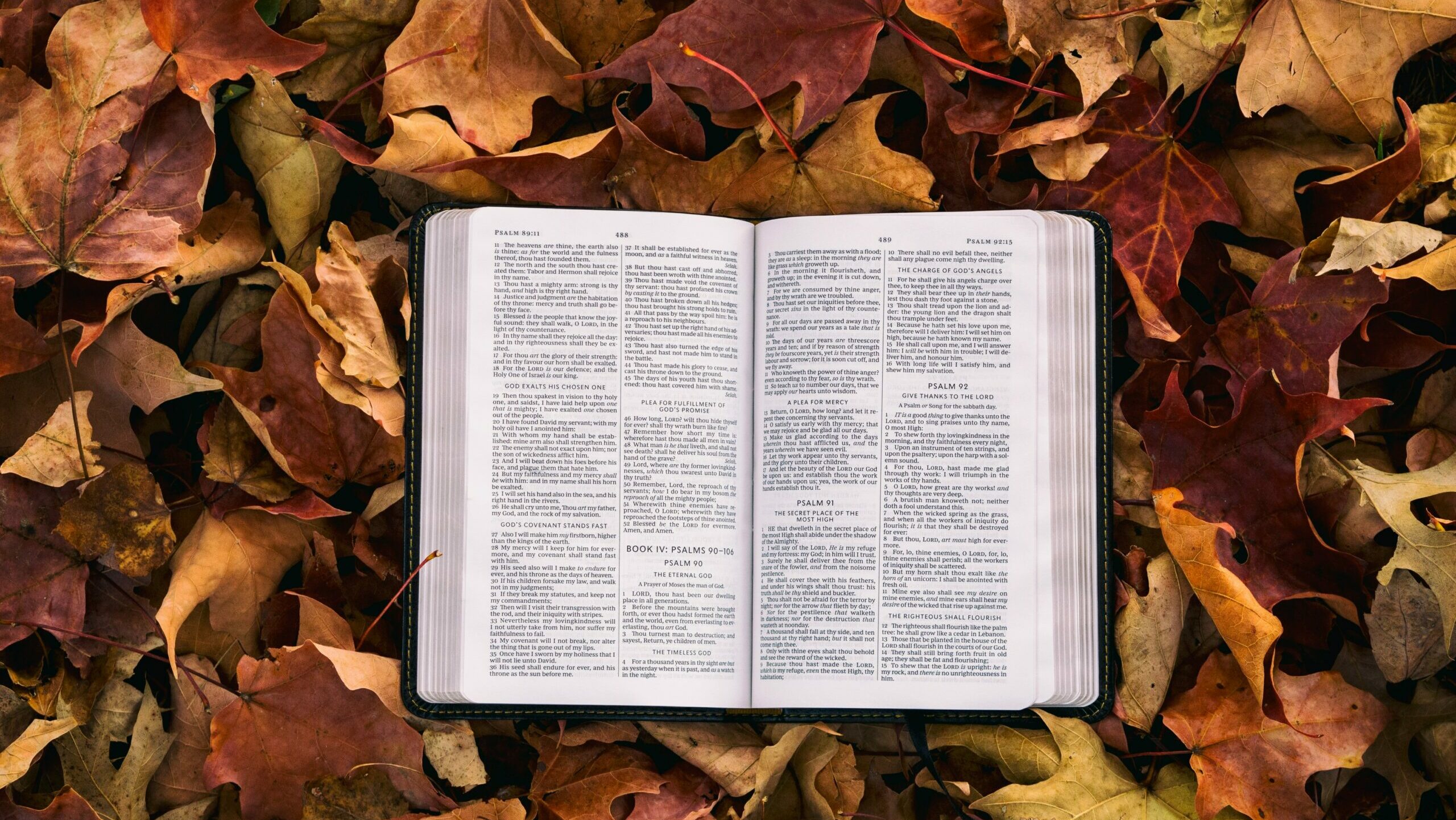
Since the highest intent of the Sabbath Day has always been—and will always be—for image-bearing creatures to bask in the worship of God, the question should naturally become, “how can we faithfully observe the perpetual intent of the Sabbath Day until Christ returns or calls us home?” In the providence of God, I would suggest that He has given us one of the most compelling answers to this question within the pages of Scripture, and particularly within the opening four verses of Psalm 92. As we’re told in the Spirit-inspired superscription of Psalm 92, this is “A Psalm; A Song for the Sabbath Day.” If the Sabbath Day is truly perpetual from creation to consummation, then we would surely do well to pattern our observance of the Sabbath after the example set forth by this unnamed Psalmist. Consider the following declarations in Psalm 92:1-4.
It is good to give thanks to the Lord,
And to sing praises to Your name, O Most High;
2 To declare Your lovingkindness in the morning,
And Your faithfulness every night,
3 On an instrument of ten strings,
On the lute,
And on the harp,
With harmonious sound.
4 For You, Lord, have made me glad through Your work;
I will triumph in the works of Your hands.[4]
In his exposition of this Psalm, Ligon Duncan argues that “the message of Psalm 92:1-4 is that public [Sabbath] Day worship is a sheer delight to the Believer.”[5]According to Duncan and others, we can say that the Psalmist had a public Sabbath Day worship service in view for at least the following reasons: (1) on the one hand, the language of “morning” and “evening” in verse 2 aligns with the morning and evening sacrifices that were intensified on the Sabbath Day; (2) on the other hand, verse 3 contains explicit references to the instruments that the Levites played during corporate worship in the Old Covenant Tabernacle and in the Old Covenant Temple (cf. 1 Chron. 15:16; 2 Chron. 5:12).[6]
We may reside under the New Covenant; our worship services may look drastically different than what our Old Covenant brethren experienced, but do we really believe that we can go wrong by following their pattern of prioritizing AM and PM worship services? In fact, couldn’t we go so far to say that Christians should be even more inclined to gather in the AM and PM out of the joyful realization that we stand on the other side of the cross, we see God’s glorious plan of redemption all the more clearly, and we clearly behold the substance of what those shadows were designed to typify for thousands of years before Christ’s coming? What better way to cherish the Sabbath’s perpetuity—and what better way to treasure the Sabbath’s ultimate intent—than for local churches to provide AM and PM worship services on the weekly Sabbath Day?!
Congregations in the twenty-first century would do well to provide AM and PM Sabbath day worship services out of a zeal to reflect the perpetual intent of the weekly Sabbath day.
Stay in touch with CBTSeminary
For more information about CBTS, go to CBTSeminary.org
Consider giving to CBTSeminary to help us train the next generation of gospel ministers.
Apply to CBTS today to be sharpened for a lifetime of faithful ministry.
Follow CBTS on our socials: X | Instagram | Facebook | YouTube
Sign up for our newsletter and receive monthly updates related to the Seminary.
[1] To access my full-length case for Sabbatarianism, consider my six-part sermon series here: https://www.sermonaudio.com/series/200059.
[2] Ryan M. McGraw, The Day of Worship: Reassessing the Christian Life in Light of the Sabbath (Grand Rapids, MI: Reformation Heritage Books, 2011), 26-27.
[3] “Of Religious Worship and the Sabbath Day– Chapter 22,” The 1689 Baptist Confession of Faith, accessed July 21, 2026, https://www.the1689confession.com/1689/chapter-22.
[4] Unless otherwise noted, all in-text citations from Scripture are derived from the New King James Version.
[5] Ligon Duncan’s wonderful sermon on Psalm 92 can be accessed via the following link: https://ligonduncan.com/a-song-for-the-sabbath-713/.
[6] A fascinating Jewish-centered perspective on the connection between various instruments and Old Covenant corporate worship can be found at “Harp and Lyre,” Jewish Encyclopedia, accessed July 21, 2026, https://www.jewishencyclopedia.com/articles/12412-psaltery.

Dewey Dovel is a pastor of Emmanuel Reformed Baptist Church in SeaTac, Washington. He also serves as a co-host of The Covenant Podcast, a fellow of Savoring the Savior Books, and a visiting lecturer at multiple theological institutions. Above all, Dewey is blessed to be a follower of Jesus Christ, a husband, and the father of two daughters.