by Sam Waldron | Jun 13, 2012 | Ecclesiology, Regulative Principle
Not only does the regulative principle of the church apply to its government, tasks, and worship, it also applies to its doctrine. The church may neither add to nor subtract from the doctrines of the Bible. It must confess (in its identity as the pillar and support of the truth—1 Tim. 3:15) all that the Bible says and only what the Bible says. Surely the Westminster Confession is correct when it makes this point at chapter 20 and paragraph 2:
God alone is Lord of the conscience, and hath left it free from the doctrines and commandments of men, which are, in anything, contrary to his Word; or beside it, if matters of faith, or worship. So that, to believe such doctrines, or to obey such commands, out of conscience, is to betray true liberty of conscience: and the requiring of an implicit faith, and an absolute and blind obedience, is to destroy liberty of conscience, and reason also.
I regret to say that the 1689 Baptist Confession of Faith changed this admirable, clear, and helpful statement to read as follows: “God alone is Lord of the conscience, and hath left it free from the doctrines and commandments of men which are in anything contrary to his word, or not contained in it.” This revision obscures the crucial distinction implied in the Westminster between how God is the Lord of the conscience the rest of life (where the commands of legitimate human authorities have an important and necessary role to play) and matters of faith and worship where they do not.
In church doctrine it is not enough that doctrine be consistent with the Scriptures. Doctrine must be required by Scripture. It must be able to be inferred from Scripture “by good and necessary consequence.” Certain of the Marian doctrines of modern Roman Catholicism (like her bodily assumption to heaven at the end of her life) are (arguably) consistent with Scripture, but they cannot be deduced from Scripture by good and necessary consequence. They are barred by the regulative principle from holding a place in the church’s doctrine. Certain views or hypotheses of modern science may be consistent with Scripture, but they cannot be deduced from Scripture by good and necessary consequence. We may hold them quite strongly as our private opinions or convictions, but they must not be made a part of church doctrine.
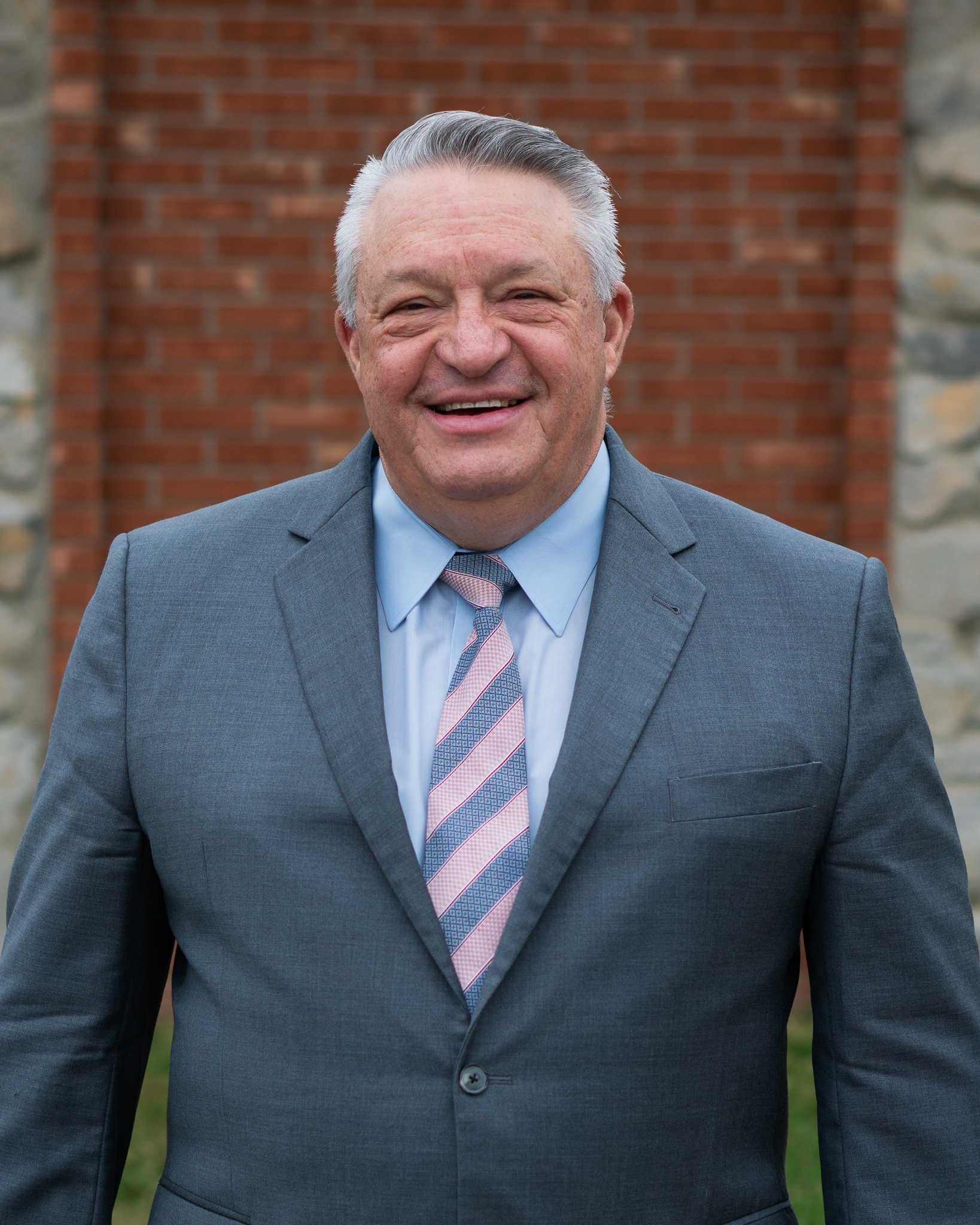
Dr. Sam Waldron is the Academic Dean of CBTS and professor of Systematic Theology. He is also one of the pastors of Grace Reformed Baptist Church in Owensboro, KY. Dr. Waldron received a B.A. from Cornerstone University, an M.Div. from Trinity Ministerial Academy, a Th.M. from Grand Rapids Theological Seminary, and a Ph.D. from Southern Baptist Theological Seminary. From 1977 to 2001 he was a pastor of the Reformed Baptist Church of Grand Rapids, MI. Dr. Waldron is the author of numerous books including A Modern Exposition of the 1689 Baptist Confession of Faith, The End Times Made Simple, Baptist Roots in America, To Be Continued?, and MacArthur’s Millennial Manifesto: A Friendly Response.
by Sam Waldron | Jun 8, 2012 | Ecclesiology, Regulative Principle
Having dealt with the application of the regulative principle to the government and tasks of the church, here I touch on its application …
III. For the Worship of the Church
The regulative principle of worship is often seen as repressive and negative. In actuality it is positive and liberating. It requires that the great elements of gospel worship ordained in the Word of God have the central place in the worship of the church. It is often when churches feel that their worship is dull and lifeless and traditional that they begin to search for some new ceremony, program, or innovation to liven things up. What a sad testimony this is to the carnality and ignorance of such churches!
My brethren, the way to life and power and reality in the worship of God is not the way of innovation and novelty. It is the way back to the great, central requirements of gospel worship. If people and churches languish and die under those ordinances, then they ought to die; and nothing else will be sufficient to resurrect them to spiritual life.
We must maintain the centrality of the reading and proclamation of the Word in the worship of God. If anything was central in the churches of the New Testament, this was (1 Tim. 4:13; Acts 2:42; 20:7-9; 1 Cor. 14). This means that the predominant place in the worship of God should be given to the proclamation and reading of His Word. This may mean longer services and sermons. So be it.
We must maintain the centrality of the congregational singing and praise of God in your worship. This, too, is a prominent part of New Testament worship (Matt. 26:30; 1 Cor. 14:15, 26; Eph. 5:19; Col. 3:16).
We must also maintain the centrality of both pastoral and congregational prayer in your worship (Acts 2:42; 1 Cor. 14:13-17). How can we say that we believe in the absolute sovereignty of God in salvation and the building of the church and not meet statedly as a church to pray for His blessing and help?
Let me finally encourage you to maintain the centrality of the great ordinances of the church in your worship. Make certain baptism, the joining of men and women to the defined membership of the church, the Lord’s Day, the Lord’s Supper, the election of officers, church discipline are prominent aspects of your church life.
Dr. Sam Waldron is the Academic Dean of CBTS and professor of Systematic Theology. He is also one of the pastors of Grace Reformed Baptist Church in Owensboro, KY. Dr. Waldron received a B.A. from Cornerstone University, an M.Div. from Trinity Ministerial Academy, a Th.M. from Grand Rapids Theological Seminary, and a Ph.D. from Southern Baptist Theological Seminary. From 1977 to 2001 he was a pastor of the Reformed Baptist Church of Grand Rapids, MI. Dr. Waldron is the author of numerous books including A Modern Exposition of the 1689 Baptist Confession of Faith, The End Times Made Simple, Baptist Roots in America, To Be Continued?, and MacArthur’s Millennial Manifesto: A Friendly Response.
by Sam Waldron | Jun 6, 2012 | Ecclesiology, Regulative Principle
In my previous blog post I dealt with the application of the regulative principle to the government of the church. Here we take up a second important application.
II. For the Tasks of the Church
I remind you again that fundamental to the regulative principle of the church was its peculiar identity as the house or temple of God. The church is subject to the special regulation of the Word of God precisely because of its unique identity in human society. Neither the family, nor even the state is subject to anything akin to the regulative principle. The unique identity of the church directly leads us to the unique identity of its functions or tasks in the world.
Now it is not my purpose to expound in detail here the subject of the tasks of the church. Neither is it my purpose to deal in any kind of thorough way with the sphere sovereignty of the church, the family, and the state as the three major institutions which by divine ordination compose and regulate human society. I do think it is obvious to anyone with an appreciation of the development of the doctrine of sphere sovereignty in the Reformed tradition that God has given distinct tasks to the family, the state, and the church. This is both the general teaching of the Bible and the plain implication of the regulative principle itself. This suggests to me three plain and closely related duties of the church.
First, it requires that the church carefully fulfill its distinct tasks. The church must clearly define and understand the peculiar functions God has given it. The church must put forth its resources and strength in the completion of those tasks. I understand those tasks to the fulfillment of the Great Commission and the maintenance of the public worship of God in its worship. Related to this are benevolent responsibilities especially to God’s people.
Second, the church must carefully avoid usurping or having thrust upon it functions that are properly those of the state or the family. The danger is precisely the same as that pointed out in one of the arguments for the regulative principle. The introduction of extra-biblical practices into worship inevitably tends to nullify and undermine God’s appointed worship. In the same way the introduction of extra-biblical functions into the church inevitably tends to nullify and undermine God’s appointed tasks. If the temple of God feels a need to function as a political party or as a general educational institution, there will be an inevitable tendency to forget its unique and exalted identity as the temple of God.
Third, the church must carefully refrain from abdicating its own peculiar tasks and permitting other spheres of society to fulfill its own unique functions. This is the great reason that para-church organizations are proliferating. But no other institution can fulfill and certainly can fulfill so well the tasks of the church as the church itself. We are told constantly today that the church cannot do the things that God has ordained that it should do. I do not believe it. In fact, I believe that only the church can adequately perform its divinely ordained tasks. Only the church can maintain the public worship of God. Only the church can fulfill the Great Commission. Only the church can disciple, baptize, and teach the disciples to observe all Christ’s commandments. Only the church can properly train its own leadership. What kind of sense does it make to allow universities or colleges not under the oversight of local church to train the future leadership of the church? Clearly, if anything falls within the sphere of the church it is the training of its own future preachers and teachers.
My brethren, it is crucial that you appreciate the implications of the regulative principle for the tasks of the church. It is only when you begin to appreciate it that, I am convinced, you will begin have a vision for what the church of Christ should be. It is only then that you will begin to grasp practically why Paul said, “To Him be glory in the church and in Christ Jesus to all generations forever and ever. Amen” (Eph. 3:21).
Dr. Sam Waldron is the Academic Dean of CBTS and professor of Systematic Theology. He is also one of the pastors of Grace Reformed Baptist Church in Owensboro, KY. Dr. Waldron received a B.A. from Cornerstone University, an M.Div. from Trinity Ministerial Academy, a Th.M. from Grand Rapids Theological Seminary, and a Ph.D. from Southern Baptist Theological Seminary. From 1977 to 2001 he was a pastor of the Reformed Baptist Church of Grand Rapids, MI. Dr. Waldron is the author of numerous books including A Modern Exposition of the 1689 Baptist Confession of Faith, The End Times Made Simple, Baptist Roots in America, To Be Continued?, and MacArthur’s Millennial Manifesto: A Friendly Response.
by Sam Waldron | Jun 1, 2012 | Ecclesiology, Regulative Principle
A clear understanding of and a thorough commitment to the regulative principle of the church is, I am convinced, absolutely crucial if biblical church reformation is ever to become a reality in our churches. The regulative principle is intended, as we have seen, to govern the whole of the church’s life both as an institution and as an assembly. Let me trace out its significance for four areas of church life in this and following blogs.
I. For the Government of the Church
Puritans who held the regulative principle have historically been committed to the jus divinum. In other words, they have been committed to the concept that there is a divinely ordained form of church government given us in the Bible. Historically, Anglicans (beginning with Hooker’s treatise on the government of the Church of England) and many others since then have argued that God has left the church free within very general principles to construct its own government. Richard Hooker in his work, Of the Laws of Ecclesiastical Polity, expressly denies the regulative principle of the Puritans. One writer says, “Its object is to assert the right of a broad liberty on the basis of Scripture and reason.”1
Hooker’s views have simply anticipated the views of many evangelicals today. But such views can only be entertained while one remains in ignorance of the identity of the church as the house of God and the special regulative principle appropriate to the House of God. Once these things are understood the superficial and even profane character of the view espoused by Hooker is obvious.
Thus, my first observation is simply this. In all your ordering of the order and government of the churches over which the Holy Spirit has made you overseers see to it that you remember that your church is the house of God. It is not your house to be ordered in accord with your own traditions, imaginations, or whims. It is God’s house to be ordered as He has expressly revealed in the Scriptures. Your elders’ meetings, your church meetings, your ministerial commands, have no right to alter or add to the government of the church revealed in the Bible. You must impress on yourself, your fellow-elders, and your church the great reality that only God has the right to regulate the proceedings of His house.
My second observation grows out of the first. If you are to remember that the church is the house of God and conscientiously endeavor to order it according to the mind of Christ, you must believe that the Word of God is a sufficient revelation of the way the church is to be ordered. Only a deep-rooted confidence in Scripture will make you search the Scriptures as you must so that your ministry will properly order the church of Christ.
My third observation is that there ought to be no standing office in the church of Christ, but those two standing offices appointed and regulated in the Scriptures. If you are not a biblically qualified and recognized elder or a deacon, you have no true office in the church of Christ. I am, of course, not denying that the church through its elders may designate persons who will assist the pastors and deacons like book-keepers, secretaries, and even Sunday School Superintendents. I am not denying that the elders of the church may have certain specialized ministries like pastor for theological education in my case. I am simply saying that if you are not an elder or deacon, you have no right to rule and by right no authority in the church of Christ. You are simply a servant of the officers of the church. New offices must not be created in the church.
My fourth observation is that the two offices of elder or deacon must be ordered in the way God has ordained in the Scriptures. Those who hold them must be biblically qualified. The relations between the elders and deacons must be biblically ordered. Deacons must understand their peculiar tasks and that they are subordinate to the elders in the execution of their office. Wherever it is biblically possible there ought to be a plurality of elders in any local church. The relation of the officers and members of the church must be biblically ordered so that the church understands both its duty to submit to its officers and its duty to take congregational action on issues like church-discipline and the election of church-officers.
1The New Schaff-Herzog Encyclopedia of Religious Knowledge, (Funk & Wagnalls, New York, 1909), vol. V, p. 360.
Dr. Sam Waldron is the Academic Dean of CBTS and professor of Systematic Theology. He is also one of the pastors of Grace Reformed Baptist Church in Owensboro, KY. Dr. Waldron received a B.A. from Cornerstone University, an M.Div. from Trinity Ministerial Academy, a Th.M. from Grand Rapids Theological Seminary, and a Ph.D. from Southern Baptist Theological Seminary. From 1977 to 2001 he was a pastor of the Reformed Baptist Church of Grand Rapids, MI. Dr. Waldron is the author of numerous books including A Modern Exposition of the 1689 Baptist Confession of Faith, The End Times Made Simple, Baptist Roots in America, To Be Continued?, and MacArthur’s Millennial Manifesto: A Friendly Response.
by Sam Waldron | May 30, 2012 | Ecclesiology, Regulative Principle
Chapter 1, paragraph 6 of the 1689 Confession provides an important clarification of the regulative principle.
…there are some circumstances concerning the worship of God, and government of the church, common to human actions and societies, which are to be ordered by the light of nature and Christian prudence, according to the general rules of the Word, which are always to be observed.
When the Confessions says, therefore, that what is not commanded in public worship is forbidden, we are speaking of the substance and parts of worship, not its circumstances. Note paragraphs two through six of Chapter 22 and especially paragraphs 2, 3, and 5.
2 Religious worship is to be given to God the Father, Son, and Holy Spirit, and to him alone; not to angels, saints, or any other creatures; and since the fall, not without a mediator, nor in the mediation of any other but Christ alone.
3 Prayer, with thanksgiving, being one part of natural worship, is by God required of all men. But that it may be accepted, it is to be made in the name of the Son, by the help of the Spirit, according to his will; with understanding, reverence, humility, fervency, faith, love, and perseverance; and when with others, in a known tongue.
5 The reading of the Scriptures, preaching, and hearing the Word of God, teaching and admonishing one another in psalms, hymns, and spiritual songs, singing with grace in our hearts to the Lord; as also the administration of baptism, and the Lord’s supper, are all parts of religious worship of God, to be performed in obedience to him, with understanding, faith, reverence, and godly fear; moreover, solemn humiliation, with fastings, and thanksgivings, upon special occasions, ought to be used in an holy and religious manner.
While the parts and substance of public worship are divinely limited, God has left the circumstances of worship to be determined by the light of nature, Christian prudence, and the general rules of Scripture. This distinction naturally and necessarily suggests this question: How may we distinguish between the parts of worship and its circumstances? This is a difficult and important question. Much of the contemporary opposition to and revision of the regulative principle is based on problems and objections raised by the distinction between the parts and circumstances of worship.1 To it I have several responses.
First, Pastor Bob Fisher in his teaching on this subject points out that Chapter 1, Paragraph 6 of the Confession limits these “circumstances concerning the worship of God, and government of the church” to things “common to human actions and societies”. We have seen that it is the unique identity of the church which requires its special regulation. It makes sense, then, that those things which the church has in common with other societies should be regulated in the same way that those societies are governed. Pastor Fisher mentioned the times of the meetings (as long as the Lord’s Day is observed), the place of the meetings, the posture in which people attend the meetings, whether standing or seated on the floor or chairs, the order of the meetings, if the meeting involves singing whether that singing is accompanied by a guitar or a piano or a pitch-pipe or a flute as illustrations of such circumstances.
Second, 1 Corinthian 14 contains two examples of such general rules which God demands that we apply to our specific circumstances. They are the rules of edification and order (vv. 26 and 40). God demands that these two rules be followed, but He has not given us a detailed list of what they mean in every situation and culture.
Third, the circumstances of corporate worship and church government must be understood in light of what we believe to be the parts or elements of worship. Once those parts or elements of worship are defined it becomes much easier to see what things are the circumstances required to carry out or implement those elements of worship. For instance, once we understand that corporate worship requires the assembly of the church for among other things the hearing of the proclamation of the Word of God, it will follow that such circumstances as place, posture, and time will have to be worked out in such a way as to best implement that part of worship. In my view, as well, once it is determined that singing the praise of God is a part of worship (as I believe it to be2), then the issues of circumstance which must be decided become clear. Will there be musical accompaniment? How shall the songs be pitched if there is not? Who will lead the singing? How will everyone know what to sing? Will a song sheet, hymnal, overhead projector, or PowerPoint presentation be used? How long shall we sing? How many songs shall we sing?
Fourth, churches may differ as to where the line is drawn between circumstances and parts of worship without ceasing to be true churches. Just as churches may differ from us on certain doctrinal matters without becoming heretical, so also some differences on this issue of the regulative principle ought not to be a cause of division between churches. Reasonable differences should not be made the source of division. Let the elders of each church be fully assured in their own mind. Differences in application of the regulative principle may be tolerated as long as each church recognizes its unique identity as the house of God and holds seriously to the regulative principle. We may (and must!) be charitable in such things, as long as the substance of the regulative principle is sincerely embraced.
Fifth, a godly fear will result from a genuine embrace of the principle that we must worship corporately only as God has appointed. This must certainly inject an element of caution and conservatism into what we justify as legitimate circumstances of corporate worship. Such caution must not, of course, lead us to adopt the strictest and most conservative application of the regulative principle. Such a reactionary position leads too often to the contradiction of other principles of Scripture.
1Gore in Covenantal Worship, 47-51, rejects the regulative principle partly because of difficulties he sees with this distinction. Frame in Worship in Spirit and Truth, 40-41, bases much of his revision of the principle on similar difficulties.
2Interestingly, Frame does not believe it to be a part of worship, but believes it is a kind of mode by which we do other parts of worship. Cf. Worship in Spirit and Truth, 57.
Dr. Sam Waldron is the Academic Dean of CBTS and professor of Systematic Theology. He is also one of the pastors of Grace Reformed Baptist Church in Owensboro, KY. Dr. Waldron received a B.A. from Cornerstone University, an M.Div. from Trinity Ministerial Academy, a Th.M. from Grand Rapids Theological Seminary, and a Ph.D. from Southern Baptist Theological Seminary. From 1977 to 2001 he was a pastor of the Reformed Baptist Church of Grand Rapids, MI. Dr. Waldron is the author of numerous books including A Modern Exposition of the 1689 Baptist Confession of Faith, The End Times Made Simple, Baptist Roots in America, To Be Continued?, and MacArthur’s Millennial Manifesto: A Friendly Response.