Few men have ever experienced such a direct call from God, but few men have ever faced such persecutions and difficulties.

Few men have ever experienced such a direct call from God, but few men have ever faced such persecutions and difficulties.
Men may not presume to call themselves into the ministry. Isaiah did not just decide to become a prophet. David did not anoint himself or call himself to be king. Those prophets in the Old Testament who called themselves were false prophets.
*Note: This series has been developed from a manuscript that was used to preach a sermon on May 10, 2026, at Emmanuel Reformed Baptist Church (SeaTac, WA). The title of that sermon was “A Case for AM and PM Sabbath Day Worship Services,” and it can be accessed here....

The daily rhythms of Israel were systematically structured around morning and evening sacrifices to God, all of which served as a constant reminder that sinners could not approach a holy God apart from substitutionary atoning sacrifice.

Congregations in the twenty-first century would do well to provide AM and PM Sabbath day worship services out of a zeal to reflect the perpetual intent of the weekly Sabbath day.
When we survey the landscape of American Evangelicalism—and even the landscape of confessional Christianity in our nation—we quickly discover that we live in an era where worship services are being increasingly less prioritized.

What happens when people do not leave Christ or the faith; they simply leave you and your church? I want to address why this is so painful and then give some counsel about how to respond.

One of the greatest hindrances to our joyful submission to God in every part of life is our tendency toward avoidance of hardships and difficulties because we fear people.

“Christian contentment is ultimately centered on a life of joy.”
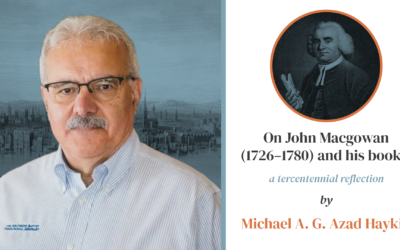
In many ways, the great theological battle of that era was over the received doctrine of there being three co-eternal and co-equal persons in the one Godhead. Macgowan was not ashamed to defend this traditional understanding of God.
-transparent+cropped.png)
Join our mailing list to receive the latest news and updates from CBTS.