“Elect infants dying in infancy are regenerated and saved by Christ through the Spirit; who worketh when, and where, and how he pleases; so also are all elect persons, who are incapable of being outwardly called by the ministry of the Word.”
1689 LBCF 10:3.
There is a straightforward implication of this statement. It is that for the Confession there is an important qualification here to exclusivism—the doctrine that men may only be saved by believing in Christ. This great truth—and it is a crucial gospel teaching—does not apply to infants and the mentally incompetent.
This implication is important, but it is also delicate. I mean that the Confession does not want to “crack the door” to other theories which further impinge upon and even deny the foundational truth tht men may only be saved by believing the gospel. What about those theories which say that if men live up to the light they have, or conduct themselves according to the law of nature, then even without the gospel they may be saved.
Paragraph 4 of the Confession directly rejects such theories:
“Others not elected, although they may be called by the ministry of the Word, and may have some common operations of the Spirit, yet not being effectually drawn by the Father, they neither will nor can truly come to Christ, and therefore cannot be saved: much less can men that receive not the Christian religion be saved; be they never so diligent to frame their lives according to the light of nature and the law of that religion they do profess.”
1689 LBCF 10:4.
There is none righteous, no not one. No one without special revelation lives up to general revelation or the light of nature. Only the gospel is the instrument of transforming the hearts of men so that they do not always go astray from God.
But in the history of even Reformed theology other false ideas have been based on the fact that infants and the mentally incompetent may be saved. Some draw bad and unnecessary deductions from infant salvation. They argue for the doctrine of “immediate regeneration.” This is the doctrine that regeneration is without (or unmediated by) the Word. Here is how they argue. ‘Since infants are immediately regenerated, the Word is not necessary to regeneration, so the regeneration of adults is also immediate.’
Of course, this contradicts the multitude of passages that we looked at previously. These explicitly teach that effectual calling and regeneration are accomplished by the Spirit powerfully applying the Word to the hearts of men.
The doctrine of regeneration without the Word leads to other serious errors. “Some are saved years before hearing the gospel.” “Some are regenerated who yet live in sin.” “There may be a gap between regeneration and faith.”
All of this warns us against speculating about the mysterious doctrine that “elect infants dying in infancy” are saved.
The problems with such reasoning are many. The Bible is not clear infants about how infants are regenerated. Perhaps in some miraculous fashion the Word is the means of their salvation. Even if infants are regenerated without the Word, it does not follow that adults are or may be. In fact, this contradicts the Confession at 10:4. Deductions from and speculations about infant regeneration must be resisted.
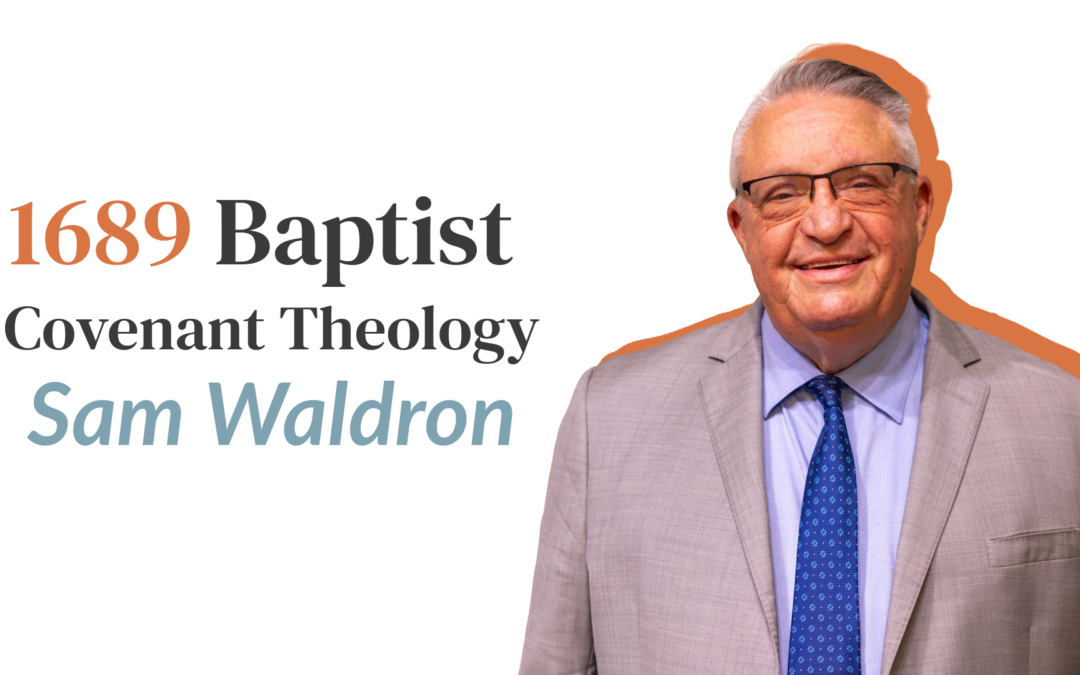
Welcome to Confessing the Faith, a theological and devotional walk through the 1689 Baptist Confession of Faith. I am your host, Sam Waldron, pastor of Grace Reformed Baptist Church in Owensboro, KY and President of Covenant Baptist Theological Seminary.
Paragraph 3 of Chapter 10 raises the mysterious and controversial issues of “elect infants dying infancy.” So far I have not commented on the biblical basis for this doctrine. For me, the question of its biblical basis is difficult.
For myself I am not convinced by many of the passages which are sometimes cited to prove the salvation of infants dying in infancy. Such passages do not seem clear enough to me to ground this doctrine. They certainly are not clear enough to prove the doctrine of the universal salvation of infants dying in infancy.
I think if you consider the matter seriously you may come to the same conclusion as myself. In my view there are good reasons why God may have left this issue shrouded in some mystery for the wicked sons of Adam.
But a practical question remains. What shall we say to those who mourn the death of an infant? The Scriptures may not be explicit, but there is much by way of implication that may be of comfort to grieving parents. Several truths may guide and comfort them.
1st Truth: The sinful guilt of infants must not be denied or undermined. This guilt is real (Psa 51:4, 5; 58:3; Prov 22:15; Eph 2:1-3). There is no so-called age of accountability taught in the Bible before which children are not sinful or accountable for their sins. Neither are the children of believers are less depraved or regenerate. It is certainly true, however, that their guilt is greatly limited as compared to adults (Luke 12:47,48; James 4:17; 2 Cor 5:10, 11).
2nd Truth: The character of God—His mercy, justice, goodness, power and sovereignty—should comfort the grieving parent. God will be and do what is good and just. He is good and He does good. [Gen 18:25: Shall not the Judge of all the earth deal justly?] Nothing can prevent Him from saving them. [John 3:8: The wind blows where it wishes … so is everyone who is born of the Spirit.]
3rd Truth: God’s Purposes of Mercy to Us, His children provide comforting considerations. God’s purposes of mercy toward His children generally include benefits for their children. [Exod 20:5-6 I, the LORD your God, am a jealous God, punishing the children for the sin of the fathers to the third and fourth generation of those who hate me, but showing love to a thousand generations of those who love me…] God’s purposes of mercy toward His children generally include benefits for their children. [Prov 20:7 A righteous man who walks in his integrity– How blessed are his sons after him.] [Psalm 112:1-2 How blessed is the man who fears the LORD, Who greatly delights in His commands. His descendants will be mighty on earth; The generation of the upright will be blessed.] God does so love His children as to frequently embrace their children in his saving purposes.
Such considerations do not satisfy carnal curiosity or rebellious grief. Yet they may serve to calm the aching heart of the submissive, child of God.
Let the grieving mother and father take refuge in their God and in these truths.

Dr. Sam Waldron is the Academic Dean of CBTS and professor of Systematic Theology. He is also one of the pastors of Grace Reformed Baptist Church in Owensboro, KY. Dr. Waldron received a B.A. from Cornerstone University, an M.Div. from Trinity Ministerial Academy, a Th.M. from Grand Rapids Theological Seminary, and a Ph.D. from Southern Baptist Theological Seminary. From 1977 to 2001 he was a pastor of the Reformed Baptist Church of Grand Rapids, MI. Dr. Waldron is the author of numerous books including A Modern Exposition of the 1689 Baptist Confession of Faith, The End Times Made Simple, Baptist Roots in America, To Be Continued?, and MacArthur’s Millennial Manifesto: A Friendly Response.