by CBTS Student | Jun 15, 2026 | Practical Theology
*The following contribution is a poem authored by CBTS Alumnus, Ryan Parsons.
Will we be pastors, my brothers, or pulpiteers?
For whom will we labor and spend all our years?
Is it love of His flock that compels us to preach?
Is it shepherd-like care for His blood-bought sheep?
Is it labor that drives us down to our knees?
Do we cry out “O God, my God, help me, please”?
Will we toil by day and wrestle all night
Till He sends forth His blessing and help from on high?
Who is sufficient for this ministry?
Who, though a sheep, can shepherd His sheep?
Are we our own wells from which we draw strength?
Can we by our gifts sustain or give faith?
Can we heal their hearts or bind up their wounds?
Be hope in their homes and their strength renew?
Is it our desire to spend and be spent?
Will we hasten to go or wait to be sent?
Will we prove to be gifts to our Master’s dear Bride?
Will we live, will we die for those for whom Christ died?
Will we strive for holiness, humility?
Exemplify grace for His people to see?
Are our homes in order, managed in love?
Tended after the pattern of our Brother above?
Will we endeavor for Him to give all our years?
Offering ourselves, our blood, and our tears
In His strength, by His grace, for our short time here?
Will we be pastors, my brothers, or pulpiteers?
About the Author

Ryan recently celebrated his tenth anniversary with his dear wife, and they have five children.
He is a member of Grace Reformed Baptist Church in Owensboro, Kentucky, and is an alumnus of CBTS.
Stay in touch with CBTSeminary
For more information about CBTS, go to CBTSeminary.org
Consider giving to CBTSeminary to help us train the next generation of gospel ministers.
Apply to CBTS today to be sharpened for a lifetime of faithful ministry.
Follow CBTS on our socials: X | Instagram | Facebook | YouTube
Sign up for our newsletter and receive monthly updates related to the Seminary.
This blog post is authored by a student of Covenant Baptist Theological Seminary.
by Ron Miller | Jun 8, 2026 | Worship
*The following blog post was originally delivered as a sermon to Covenant Baptist Church (Clarksville, TN) by Pastor Ron Miller.
Introduction
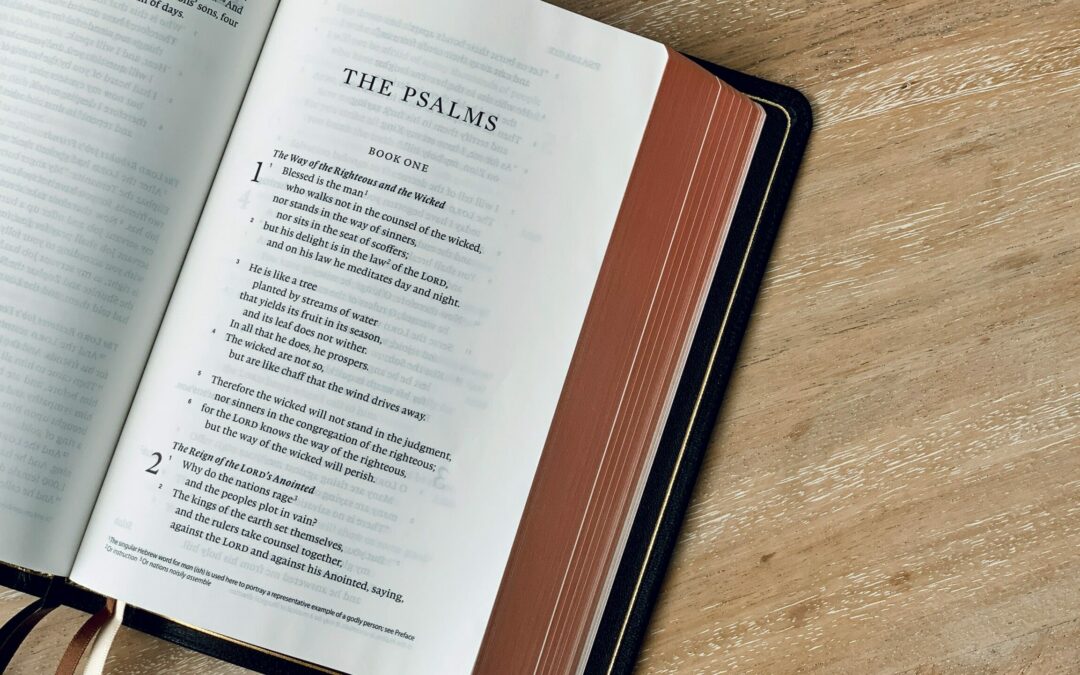
Why am I preaching on this subject? I want to refresh your minds and souls with the benefits of singing psalms in public worship. May God refresh us today. May he strengthen us to continue singing psalms to his glory. For 3000 years, God’s gathered people have sung psalms to him and each other. Undoubtedly, sometimes their songs were from the heart, loud, and sincere. At other times, they may have merely gone through the motions, with hearts and minds detached from the sung Word of God. And we wrestle in worship as they did. Worship is work – that’s why one of the main Old Testament words for worship is “service”. Worship is the happy work of a servant giving his master his due. So I hope this short study will rekindle in us the fire of psalm-singing.
Psalms are currently a part of our song service to God. And I am not convinced from Scripture that only psalms may be sung in worship. That position, the predominant practice of the church through the centuries, is often called “exclusive psalmody” or EP for short. The Scottish Presbyterian church was once famous for this practice, and some of them still worship this way. I know a Reformed Baptist church or two that does this.
But we also sing “songs of human composure” as they were once called. We tend to use the word “hymn” now for these non-psalter selections. So I am, in this sermon, advocating for an end to “exclusive hymnody”. That is, churches ought to be singing psalms along with these non-inspired songs. God has placed a large book of sacred song in the middle of our Bibles, and we ought to continue using it!
Definition
In order to be as clear as possible, I want to define a few terms.
Psalms – the 150 Holy Spirit-inspired songs of David and others. This collection of poetic prayers found in the middle of our Old Testaments was written for the primary purpose of singing to God in public worship. Another word for this collection is a psalter. When I use the word “psalm” in this sermon, I’m not referring to uninspired songs written in a way similar to the book of Psalms.
Singing – producing musical sounds with the voice. We know it when we hear it. Singing is not merely thoughts or meditation. It is not praying or reading. And although the psalms can be legitimately used in those ways, God’s primary purpose in giving them was for singing. The word psalm means song.
Public Worship – the gathering of a local church, normatively on the Lord’s Day, to give glory to God as he has commanded. Not private worship, family, Bible study, or Sunday School; these may or may not include the singing of psalms. But I am only addressing the gathered worship of a local body of Christ.
So I’m teaching today about vocalizing portions of the books of Psalms in gathered worship. Nothing else.
Duty
The Old Testament Scriptures show that singing and musical instrumentation were not always a part of God’s proper public worship. For over 3000 years, those who feared God gathered together to call on his name without singing to him. But when David became king, God spoke through the prophets and added priestly singing with instruments to Old Testament public worship.
As an element of worship, singing was predicted in the Old Testament for the New Testament age. In Isaiah, Jeremiah, Zephaniah, and Zechariah, there are many predictions that in the new covenant, believers will sing to God. Incredibly, these texts also say that God himself will sing over them and with them. Then, moving to the New Testament, we learn that Christ sang and continues to sing in settings of corporate worship. (Matthew 26:20 at the institution of the Lord’s Supper and Hebrews 2:11-12 in the heavenly church, which we join when we gather for public worship, Heb 12.) The New Testament church also sang. So it is the church’s duty in gathered worship to sing. But should we sing Old Testament psalms in New Testament worship?
Yes, for two basic reasons: by precedent and precept (or example and command).
- Examples: Christ sang psalms at the last supper. The Jews only sang what God gave them to sing. It was their practice before and during the time of Christ (and still is today) to sing Psalms 113-118 at various points in the Passover meal. The Acts 4 phrase “lifted their voices together” is, to my mind, a record of the church singing; the contents are Ps. 2 and Ps. 102. But more than examples, there are:
- Certain commands: Eph. 5:19 and Col. 3:16 both contain the command to sing “psalms and hymns and spiritual songs”. This seems clear. But it would be good for us to reflect on this phrase a bit before we go on.
What do these 3 words mean? There are two basic understandings. The first is rooted in the fact that each of these 3 words are general words describing songs. They are found in both Christian and secular literature and seem to have a broad usage. If this view is correct, then the command is to sing all kinds of various songs, including Old Testament God-inspired psalms. So sing, not so much because the word psalms in the verse refers to Old Testament psalms, but because we’re to sing the widest variety of types of song.
The second view is that all 3 words refer to the psalter. This view might strike you as odd. But the 3 words used are the words that name the psalms in the Septuagint, the Greek translation of the OT. This is the Bible that the New Testament writers constantly quote. This approach understands the 3 words to describe the various kinds of psalms. This view has the advantage of trying to derive the meaning of the words not from general Greek literature but from Scriptural usage. Also, this phrase “psalms, hymns, and songs” is modified by the word spiritual. Used in this construction, the word “spiritual” means “inspired by the Spirit,” and it modifies or describes all 3 words for song. This leads to the view, of course, that these verses command the church to sing inspired psalms, that is, all kinds of psalms from the Scriptures.
I’m not certain which view is correct, although I lean toward the second view. But whichever is correct, they both command that the Old Testament psalter be sung in New Covenant worship. As the puritan Thomas Manton said, “the singing of psalms is a duty of the gospel”.
Benefits
I hope rehearsing these will encourage you to sing the psalms with increasing fervor to God.
- Singing Psalms gives us a conscience at rest about worship. When we sing psalms, we are obeying God in worship. His instructions are clear, and we don’t need to allow doubt or fear to enter into our singing. When we sing psalms, we are pleasing God and can enter his presence without fear.
- Singing Psalms gives us a sense of our connection to the entire church. When we sing psalms, we stand in the line of faithful men and women who have sung these same songs as the worshiping body of Christ. For 3000 years, this has gone on. And when we feel alone in our culture or disconnected from the past, let us remind ourselves that as Christians we sing what Christians sang; what the early church sang; what a long line of faithful worshipers sang. Psalms remind us that we are part of the uncountable host of the church of God.
- Singing Psalms aids our Scripture memorization. Who of us couldn’t improve in this? Singing the psalms in English has the benefit of matching syllables to notes, and many of the lines even rhyme. These things help us to store the Word of God in our hearts. Singing the psalms to make the Word of Christ dwell in you richly. And in a special way, the psalms are the prayers, the words, the songs of Jesus Christ.
- Singing Psalms teaches us more about our Old Covenant roots. Some of the psalms contain culturally difficult things. But rather than avoiding them, we should learn to sing with understanding. Remember, New Testament Christianity is rooted in Israelite history and culture. Jesus was a Jew. The great acts of salvation in the Old Testament picture the fuller salvation of the New Testament that happened in an Israelite context. So learning to sing the psalms is learning to inform ourselves about God’s work in sending a Savior, in having a chosen people, and in how he loves, saves, and preserves them.
- Singing Psalms leaves us with no doubts about the truths we are singing. I hope you evaluate the songs we sing (or you listen to outside of church). They must contain truth and not error. Only the truth glorifies God and sanctifies men. Falsehoods and mere sentimentality don’t honor God or edify each other. When we sing the psalms, we don’t have to wonder if what they say is true. We do have to actively engage our minds to receive that truth, but we don’t have to worry about falsehood. Calvin “when we sing them, we are certain that God puts in our mouths these words, as if he himself were singing in us to exalt his glory”.
- Singing Psalms will convict sinners. The psalms make a clear-cut distinction between the righteous and the wicked; about the true God and idols; about the end of those who fear God and those who are fools. This sharp distinction is so counter-cultural. It will likely seem culturally insensitive or politically incorrect. But it is Bible! And it is the truth. And when they hear it sung, unbelievers are confronted and perhaps, by the grace of God, will be convicted of their need for Christ. They won’t get that by singing endless praise ditties. But the uncompromising psalms are filled with what they need to be saved.
- Singing Psalms allows us to respond to God in a variety of situations and with a full range of emotions. Athanasius said, “The psalms embrace the whole life of man, the affections of his mind and the feelings of his soul.” They are filled with a variety of situations and emotional responses by the psalmist. Are you facing victory or defeat, joy or sadness, oppression or sin, or doubt or death or loss or prayers answered? There is a psalm for you. The psalms are authentic, human experience joined with the protection of knowing they are also inspired by the HS. So the psalms are safe guides to speaking with God in all kinds of situations and all kinds of emotional states. And because they are safe guides, they also train us in singing honestly to God. Whether it’s praise or confession or sorrow or complaint or thanks or trust, the psalms teach us how to do this like Christ.
Stay in touch with CBTSeminary
For more information about CBTS, go to CBTSeminary.org
Consider giving to CBTSeminary to help us train the next generation of gospel ministers.
Apply to CBTS today to be sharpened for a lifetime of faithful ministry.
Follow CBTS on our socials: X | Instagram | Facebook | YouTube
Sign up for our newsletter and receive monthly updates related to the Seminary.
Ron has been pastor of Covenant Baptist Church since July of 2017. Pastor Ron is thankful for being raised in a Christian home where God called him to salvation at an early age. He loves his wife, public worship, and pastoring this local church. He has a special interest in aiding theological education in North and South America and in teaching Baptist history. Ron is the host of the weekly podcast Particular Pilgrims.
by Jon English Lee | Jun 8, 2026 | Systematic Theology
A proper understanding of the relationship between the law and the gospel is crucial for any minister hoping to be effective in his preaching and counseling. Indeed, a flawed understanding of the relationship between law and gospel leads to all sorts of problems:
Errors in this doctrine have spawned dispensationalism, theonomy, the New Perspective on Paul, hypercovenantalism, legalism, antinomianism, shallow evangelism, shallower sanctification, worship errors and unbiblical mysticism.[1]
Regarding the importance properly understanding the law and the gospel, Charles Bridges once wrote in his excellent work The Christian Ministry that:
The mark of a minister “approved unto God, a workman that needeth not to be ashamed,” is, that he “rightly divides the word of truth.” …This revelation is divided into two parts—the Law and the Gospel—essentially distinct form each other; though so intimately connected, that an accurate knowledge of neither can be obtained without the other.”[2]
And Sinclair Ferguson likewise concurs:
Each and every minister worth his salt must wrestle both intellectually and experientially, as well as hermeneutically, homiletically, and pastorally, with the issue of the relationship between the law and the gospel.[3]
Because such a proper understanding is so important, and because there is such a lack of teaching on the subject in both seminaries and in many churches, below I have compiled a list of resources for those seeking to grow in this area. If you have others to suggest, please list them in the comment section. Happy Reading!
Most Recommended Law/Gospel Resources:
Theological/Exegetical
Law/Gospel & Pastoral Ministry:
Stay in touch with CBTSeminary
For more information about CBTS, go to CBTSeminary.org
Consider giving to CBTSeminary to help us train the next generation of gospel ministers.
Apply to CBTS today to be sharpened for a lifetime of faithful ministry.
Follow CBTS on our socials: X | Instagram | Facebook | YouTube
Sign up for our newsletter and receive monthly updates related to the Seminary.
[1] “The Law and the Gospel,” by Fred Malone. http://founders.org/fj58/the-law-and-the-gospel/.
[2] The Christian Ministry by Charles Bridges (Banner of Truth, 1997), 222.
[3] In the foreword of: Stephen J. Casselli, Divine Rule Maintained: Anthony Burgess, Covenant Theology, and the Place of the Law in Reformed Scholasticism, Studies on the Westminster Assembly (Grand Rapids, Michigan: Reformation Heritage Books, 2016), xi.
Jon English serves as Academic Dean and Professor of Systematic and Historical Theology at Covenant Baptist Theological Seminary. Previously he served as Pastor of Discipleship for Morningview Baptist Church in Montgomery, Alabama. He has earned a Bachelor’s degree from Auburn University Montgomery, a Masters of Divinity from The Southern Baptist Theological Seminary, and a PhD in Systematic and Historical Theology from SBTS. Jon English is a member of the Evangelical Theological Society and an Ecclesial fellow for the Center for Pastor Theologians.
Course taught at CBTS: The Decalogue & the Sabbath in Redemptive History
by Jon English Lee | Jun 8, 2026 | Systematic Theology
Is there a biblical argument for the existence and use of creeds, confessions, and statements of faith by church? That is, why does a church have the authority to require of its members subscription to a document outside of the Bible? To answer that question I will highlight several presuppositions behind and implications from the New Testament as it relates to false teachers and the proper use of doctrine.
The authority of scripture is not what false teachers often deny.
In Paul’s pastoral epistles we don’t see any false teachers debating Paul about the authority of scripture. Rather, the authority of scripture is assumed by both parties. However, Paul makes clear that by confessing invalid interpretations, those false teachers have swerved from the faith of the Bible (e.g., 1 Tim 1:19-20; 4:1-3; 2 Tim 2:15-18).
Paul assumes there are false interpretations of scripture.
Related to the previous point, Paul assumes that there are valid and invalid interpretations of scripture. We must seek to “rightly handle” the Bible (1 Tim 2:15), and avoid leading people into “further ungodliness” by contorting scripture in an unbiblical way (1 Tim 2:16). There are right and wrong ways to read scripture, which
is a claim that many postmodern sensibilities would find distasteful.
Confessions help clarify biblical truth by affirming and negating the validity of various interpretations of scripture.
Confessions help churches teach their members how to both spot and avoid those invalid interpretations about which Paul warned his readers. For example, Paul urges the church in Thessolonika to “So then, brothers, stand firm and hold to the traditions that you were taught by us, either by our spoken word or by our letter” (2 Thess 2:15). Paul has given them a theological interpretive framework and a body of doctrine in the form of his written and spoken tradition.
False teachers are crafty and cunning; they will use biblical language in inventive ways to undermine the very truth that they claim to defend. Confessions allow for the collective wisdom of the church throughout history to be used to edify the saints with biblical truth, to expose false teaching, and to protect against heresy.
Confessing the faith with a summary of biblical doctrine follows the biblical example.
Several passages in scripture offer us examples of the early church’s confessional summaries that were crafted to clarify valid and invalid interpretations of biblical truth. As D. Matthew Allen writes:
“In 1 Corinthians 15:3-5, Paul declared: “For I delivered to you as of first importance what I also received: that Christ died for our sins in accordance with the Scriptures, that he was buried, that he was raised on the third day in accordance with the Scriptures, and that he appeared to Cephas, then to the twelve” (ESV). In 1 Timothy 3:16, he wrote: “Great indeed, we confess, is the mystery of godliness: He was manifested in the flesh, vindicated by the Spirit, seen by angels, proclaimed among the nations, believed on in the world, taken up in glory” (ESV). These are early creedal statements. Creedal fragments are also found in Philippians 2:6-11, 1 Peter 3:18 and 1 John 2:22, 5:1, among other passages. The writer of Hebrews instructs us to “hold fast our confession” and “the confession of our hope” (Heb. 4:14, 10:23; 3:1; ESV).”
Thus we see that having a confession of faith helps clarify what interpretations of scripture are valid and invalid based on the collected wisdom found in church history. Having creeds and confessions also follows several examples that we see found in scripture. Confessions enable congregations to catechize their congregations while at the same time provide an apologetic against false teachings.
Stay in touch with CBTSeminary
For more information about CBTS, go to CBTSeminary.org
Consider giving to CBTSeminary to help us train the next generation of gospel ministers.
Apply to CBTS today to be sharpened for a lifetime of faithful ministry.
Follow CBTS on our socials: X | Instagram | Facebook | YouTube
Sign up for our newsletter and receive monthly updates related to the Seminary.
Jon English serves as Academic Dean and Professor of Systematic and Historical Theology at Covenant Baptist Theological Seminary. Previously he served as Pastor of Discipleship for Morningview Baptist Church in Montgomery, Alabama. He has earned a Bachelor’s degree from Auburn University Montgomery, a Masters of Divinity from The Southern Baptist Theological Seminary, and a PhD in Systematic and Historical Theology from SBTS. Jon English is a member of the Evangelical Theological Society and an Ecclesial fellow for the Center for Pastor Theologians.
Course taught at CBTS: The Decalogue & the Sabbath in Redemptive History

by Sam Waldron | Jun 8, 2026 | Systematic Theology
The Bible in many places speaks of the fact that the instrument of effectual calling is the Word of God or, in other words, the gospel of Christ. Listen to some of the many passages which say this:
2 Thessalonians 2:14 It was for this He called you through our gospel, that you may gain the glory of our Lord Jesus Christ.
1 Peter 1:23 for you have been born again not of seed which is perishable but imperishable, that is, through the living and enduring word of God…And this is the word which was preached to you.
James 1:17 Every good thing given and every perfect gift is from above, coming down from the Father of lights, with whom there is no variation or shifting shadow. 18 In the exercise of His will He brought us forth by the word of truth, so that we would be a kind of first fruits among His creatures. …. 21 … in humility receive the word implanted, which is able to save your souls.
1 John 5:1 Whoever believes that Jesus is the Christ is born of God …. 4 For whatever is born of God overcomes the world; and this is the victory that has overcome the world — our faith. 5 Who is the one who overcomes the world, but he who believes that Jesus is the Son of God?
Romans 1:16 For I am not ashamed of the gospel, for it is the power of God for salvation to everyone who believes, to the Jew first and also to the Greek.
Romans 10:14 How then will they call on Him in whom they have not believed? How will they believe in Him whom they have not heard? And how will they hear without a preacher?
Hebrews 4:12 For the word of God is living and active and sharper than any two-edged sword, and piercing as far as the division of soul and spirit, of both joints and marrow, and able to judge the thoughts and intentions of the heart.
To many, it has seemed a denial of the sovereignty of effectual calling to say that it is through the Word. They think this means that the only power put forth in such a calling is the persuasion of the Word and that the result is left up to the sinner. That is not what these passages teach. Rather, the power of God is put forth through the Word in effectual calling. Let me illustrate. The lamp in my study will not light up without the electricity flowing through the cord. Take away either the bulb or the electricity, and I will remain in darkness. The gospel is the light bulb. Effectual calling is the electricity.
Or consider this illustration. Only the key of the gospel fits the lock of the human heart. Yet by itself that key will not turn the rusty lock of the human heart and open it to God’s salvation. It takes the power of the hand of God to turn the key and break the rust off the lock of the human heart and bring it to salvation.
Stay in touch with CBTSeminary
For more information about CBTS, go to CBTSeminary.org
Consider giving to CBTSeminary to help us train the next generation of gospel ministers.
Apply to CBTS today to be sharpened for a lifetime of faithful ministry.
Follow CBTS on our socials: X | Instagram | Facebook | YouTube
Sign up for our newsletter and receive monthly updates related to the Seminary.
Dr. Sam Waldron is the Academic Dean of CBTS and professor of Systematic Theology. He is also one of the pastors of Grace Reformed Baptist Church in Owensboro, KY. Dr. Waldron received a B.A. from Cornerstone University, an M.Div. from Trinity Ministerial Academy, a Th.M. from Grand Rapids Theological Seminary, and a Ph.D. from Southern Baptist Theological Seminary. From 1977 to 2001 he was a pastor of the Reformed Baptist Church of Grand Rapids, MI. Dr. Waldron is the author of numerous books including A Modern Exposition of the 1689 Baptist Confession of Faith, The End Times Made Simple, Baptist Roots in America, To Be Continued?, and MacArthur’s Millennial Manifesto: A Friendly Response.