*The following blog post was originally delivered as a sermon to Covenant Baptist Church (Clarksville, TN) by Pastor Ron Miller.
Introduction
Why am I preaching on this subject? I want to refresh your minds and souls with the benefits of singing psalms in public worship. May God refresh us today. May he strengthen us to continue singing psalms to his glory. For 3000 years, God’s gathered people have sung psalms to him and each other. Undoubtedly, sometimes their songs were from the heart, loud, and sincere. At other times, they may have merely gone through the motions, with hearts and minds detached from the sung Word of God. And we wrestle in worship as they did. Worship is work – that’s why one of the main Old Testament words for worship is “service”. Worship is the happy work of a servant giving his master his due. So I hope this short study will rekindle in us the fire of psalm-singing.
Psalms are currently a part of our song service to God. And I am not convinced from Scripture that only psalms may be sung in worship. That position, the predominant practice of the church through the centuries, is often called “exclusive psalmody” or EP for short. The Scottish Presbyterian church was once famous for this practice, and some of them still worship this way. I know a Reformed Baptist church or two that does this.
But we also sing “songs of human composure” as they were once called. We tend to use the word “hymn” now for these non-psalter selections. So I am, in this sermon, advocating for an end to “exclusive hymnody”. That is, churches ought to be singing psalms along with these non-inspired songs. God has placed a large book of sacred song in the middle of our Bibles, and we ought to continue using it!
Definition
In order to be as clear as possible, I want to define a few terms.
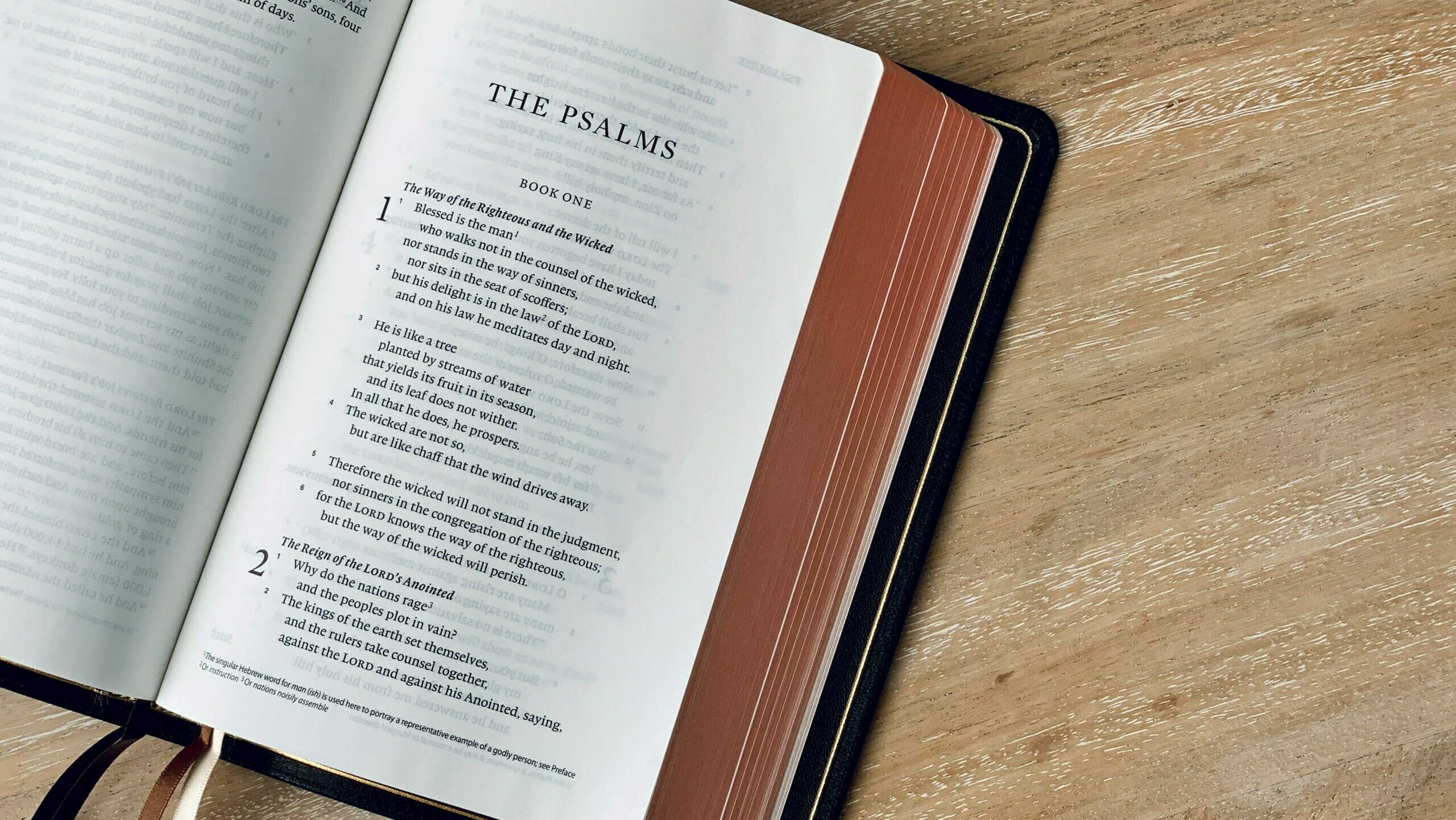
Psalms – the 150 Holy Spirit-inspired songs of David and others. This collection of poetic prayers found in the middle of our Old Testaments was written for the primary purpose of singing to God in public worship. Another word for this collection is a psalter. When I use the word “psalm” in this sermon, I’m not referring to uninspired songs written in a way similar to the book of Psalms.
Singing – producing musical sounds with the voice. We know it when we hear it. Singing is not merely thoughts or meditation. It is not praying or reading. And although the psalms can be legitimately used in those ways, God’s primary purpose in giving them was for singing. The word psalm means song.
Public Worship – the gathering of a local church, normatively on the Lord’s Day, to give glory to God as he has commanded. Not private worship, family, Bible study, or Sunday School; these may or may not include the singing of psalms. But I am only addressing the gathered worship of a local body of Christ.
So I’m teaching today about vocalizing portions of the books of Psalms in gathered worship. Nothing else.
Duty
The Old Testament Scriptures show that singing and musical instrumentation were not always a part of God’s proper public worship. For over 3000 years, those who feared God gathered together to call on his name without singing to him. But when David became king, God spoke through the prophets and added priestly singing with instruments to Old Testament public worship.
As an element of worship, singing was predicted in the Old Testament for the New Testament age. In Isaiah, Jeremiah, Zephaniah, and Zechariah, there are many predictions that in the new covenant, believers will sing to God. Incredibly, these texts also say that God himself will sing over them and with them. Then, moving to the New Testament, we learn that Christ sang and continues to sing in settings of corporate worship. (Matthew 26:20 at the institution of the Lord’s Supper and Hebrews 2:11-12 in the heavenly church, which we join when we gather for public worship, Heb 12.) The New Testament church also sang. So it is the church’s duty in gathered worship to sing. But should we sing Old Testament psalms in New Testament worship?
Yes, for two basic reasons: by precedent and precept (or example and command).
- Examples: Christ sang psalms at the last supper. The Jews only sang what God gave them to sing. It was their practice before and during the time of Christ (and still is today) to sing Psalms 113-118 at various points in the Passover meal. The Acts 4 phrase “lifted their voices together” is, to my mind, a record of the church singing; the contents are Ps. 2 and Ps. 102. But more than examples, there are:
- Certain commands: Eph. 5:19 and Col. 3:16 both contain the command to sing “psalms and hymns and spiritual songs”. This seems clear. But it would be good for us to reflect on this phrase a bit before we go on.
What do these 3 words mean? There are two basic understandings. The first is rooted in the fact that each of these 3 words are general words describing songs. They are found in both Christian and secular literature and seem to have a broad usage. If this view is correct, then the command is to sing all kinds of various songs, including Old Testament God-inspired psalms. So sing, not so much because the word psalms in the verse refers to Old Testament psalms, but because we’re to sing the widest variety of types of song.
The second view is that all 3 words refer to the psalter. This view might strike you as odd. But the 3 words used are the words that name the psalms in the Septuagint, the Greek translation of the OT. This is the Bible that the New Testament writers constantly quote. This approach understands the 3 words to describe the various kinds of psalms. This view has the advantage of trying to derive the meaning of the words not from general Greek literature but from Scriptural usage. Also, this phrase “psalms, hymns, and songs” is modified by the word spiritual. Used in this construction, the word “spiritual” means “inspired by the Spirit,” and it modifies or describes all 3 words for song. This leads to the view, of course, that these verses command the church to sing inspired psalms, that is, all kinds of psalms from the Scriptures.
I’m not certain which view is correct, although I lean toward the second view. But whichever is correct, they both command that the Old Testament psalter be sung in New Covenant worship. As the puritan Thomas Manton said, “the singing of psalms is a duty of the gospel”.
Benefits
I hope rehearsing these will encourage you to sing the psalms with increasing fervor to God.
- Singing Psalms gives us a conscience at rest about worship. When we sing psalms, we are obeying God in worship. His instructions are clear, and we don’t need to allow doubt or fear to enter into our singing. When we sing psalms, we are pleasing God and can enter his presence without fear.
- Singing Psalms gives us a sense of our connection to the entire church. When we sing psalms, we stand in the line of faithful men and women who have sung these same songs as the worshiping body of Christ. For 3000 years, this has gone on. And when we feel alone in our culture or disconnected from the past, let us remind ourselves that as Christians we sing what Christians sang; what the early church sang; what a long line of faithful worshipers sang. Psalms remind us that we are part of the uncountable host of the church of God.
- Singing Psalms aids our Scripture memorization. Who of us couldn’t improve in this? Singing the psalms in English has the benefit of matching syllables to notes, and many of the lines even rhyme. These things help us to store the Word of God in our hearts. Singing the psalms to make the Word of Christ dwell in you richly. And in a special way, the psalms are the prayers, the words, the songs of Jesus Christ.
- Singing Psalms teaches us more about our Old Covenant roots. Some of the psalms contain culturally difficult things. But rather than avoiding them, we should learn to sing with understanding. Remember, New Testament Christianity is rooted in Israelite history and culture. Jesus was a Jew. The great acts of salvation in the Old Testament picture the fuller salvation of the New Testament that happened in an Israelite context. So learning to sing the psalms is learning to inform ourselves about God’s work in sending a Savior, in having a chosen people, and in how he loves, saves, and preserves them.
- Singing Psalms leaves us with no doubts about the truths we are singing. I hope you evaluate the songs we sing (or you listen to outside of church). They must contain truth and not error. Only the truth glorifies God and sanctifies men. Falsehoods and mere sentimentality don’t honor God or edify each other. When we sing the psalms, we don’t have to wonder if what they say is true. We do have to actively engage our minds to receive that truth, but we don’t have to worry about falsehood. Calvin “when we sing them, we are certain that God puts in our mouths these words, as if he himself were singing in us to exalt his glory”.
- Singing Psalms will convict sinners. The psalms make a clear-cut distinction between the righteous and the wicked; about the true God and idols; about the end of those who fear God and those who are fools. This sharp distinction is so counter-cultural. It will likely seem culturally insensitive or politically incorrect. But it is Bible! And it is the truth. And when they hear it sung, unbelievers are confronted and perhaps, by the grace of God, will be convicted of their need for Christ. They won’t get that by singing endless praise ditties. But the uncompromising psalms are filled with what they need to be saved.
- Singing Psalms allows us to respond to God in a variety of situations and with a full range of emotions. Athanasius said, “The psalms embrace the whole life of man, the affections of his mind and the feelings of his soul.” They are filled with a variety of situations and emotional responses by the psalmist. Are you facing victory or defeat, joy or sadness, oppression or sin, or doubt or death or loss or prayers answered? There is a psalm for you. The psalms are authentic, human experience joined with the protection of knowing they are also inspired by the HS. So the psalms are safe guides to speaking with God in all kinds of situations and all kinds of emotional states. And because they are safe guides, they also train us in singing honestly to God. Whether it’s praise or confession or sorrow or complaint or thanks or trust, the psalms teach us how to do this like Christ.
Stay in touch with CBTSeminary
For more information about CBTS, go to CBTSeminary.org
Consider giving to CBTSeminary to help us train the next generation of gospel ministers.
Apply to CBTS today to be sharpened for a lifetime of faithful ministry.
Follow CBTS on our socials: X | Instagram | Facebook | YouTube
Sign up for our newsletter and receive monthly updates related to the Seminary.
Ron has been pastor of Covenant Baptist Church since July of 2017. Pastor Ron is thankful for being raised in a Christian home where God called him to salvation at an early age. He loves his wife, public worship, and pastoring this local church. He has a special interest in aiding theological education in North and South America and in teaching Baptist history. Ron is the host of the weekly podcast Particular Pilgrims.