by Sam Waldron | Nov 2, 2015 | Reformed Theology
I’ve dealt with four misunderstandings of Calvinism related to the doctrine of total depravity. Now I am dealing with a number of misunderstandings related to the doctrine of unconditional election. Here are the third and fourth of those (and the seventh and eighth overall).
II. Misunderstandings related to Unconditional Election
(3) Calvinists steal assurance of salvation from God’s people!
Wrong! This assertion is exactly and precisely the opposite of the truth. It is Arminians who make assurance of salvation impossible. I remember seeing John Wesley quoted in support of assurance of salvation. But whatever John Wesley believed, since he believed in falling from grace, he did not and could not consistently believe in genuine assurance of salvation. Real assurance of salvation is only possible if the genuine Christian cannot fall from grace. If a genuine Christian can fall from grace, then you can have assurance that you are Christian today, but you can have no assurance that you will be a Christian tomorrow! This is no true assurance of salvation at all. Only someone who believes that salvation is a gift of the sovereign God and the fruit of sovereign election can be certain that the salvation he has today he will have on the day he dies!
But Arminians probably make this assertion that Calvinists steal assurance of salvation from God’s people! because they think that connecting salvation with election makes it into a mysterious matter about which one can never be certain. But this is simply a misunderstanding. The London Baptist Confession of Faith (3:6; 10:1) teaches what the Bible clearly says and that is that someone’s election is made clear by the results of that election in his life. One can know that one is elect from the fruits of election in their life. Here is 3:6 of the 1689:
As God hath appointed the elect unto glory, so he hath, by the eternal and most free purpose of his will, foreordained all the means thereunto; wherefore they who are elected, being fallen in Adam, are redeemed by Christ, are effectually called unto faith in Christ, by his Spirit working in due season, are justified, adopted, sanctified, and kept by his power through faith unto salvation; neither are any other redeemed by Christ, or effectually called, justified, adopted, sanctified, and saved, but the elect only.
Of course, such teaching simply reflects the clear assertions of the Bible. Faith, hope, and love, and true conversion under the power of the gospel are according to the Apostle Paul the tell-tale marks of divine election in a person’s life.
1 Thessalonians 1:3 constantly bearing in mind your work of faith and labor of love and steadfastness of hope in our Lord Jesus Christ in the presence of our God and Father, 4 knowing, brethren beloved by God, His choice of you; 5 for our gospel did not come to you in word only, but also in power and in the Holy Spirit and with full conviction; just as you know what kind of men we proved to be among you for your sake.
Listen also to the Canons of Dort on this subject:
FIRST HEAD: ARTICLE 12. The elect in due time, though in various degrees and in different measures, attain the assurance of this their eternal and unchangeable election, not by inquisitively prying into the secret and deep things of God, but by observing in themselves with a spiritual joy and holy pleasure the infallible fruits of election pointed out in the Word of God – such as, a true faith in Christ, filial fear, a godly sorrow for sin, a hungering and thirsting after righteousness, etc.
(4) Calvinists teach the damnation of infants!
Once more this is simply false. Many famous Calvinists believe in the salvation of all infants dying in infancy. Spurgeon a century ago and Al Mohler are two examples of such Calvinists. Others think that God has shrouded this whole matter in mystery and says little or nothing directly about it in Scripture. They adopt an optimistic agnosticism about the matter. No Calvinists of whom I am aware affirm the damnation of infants.
The Ninth and Tenth Misunderstandings
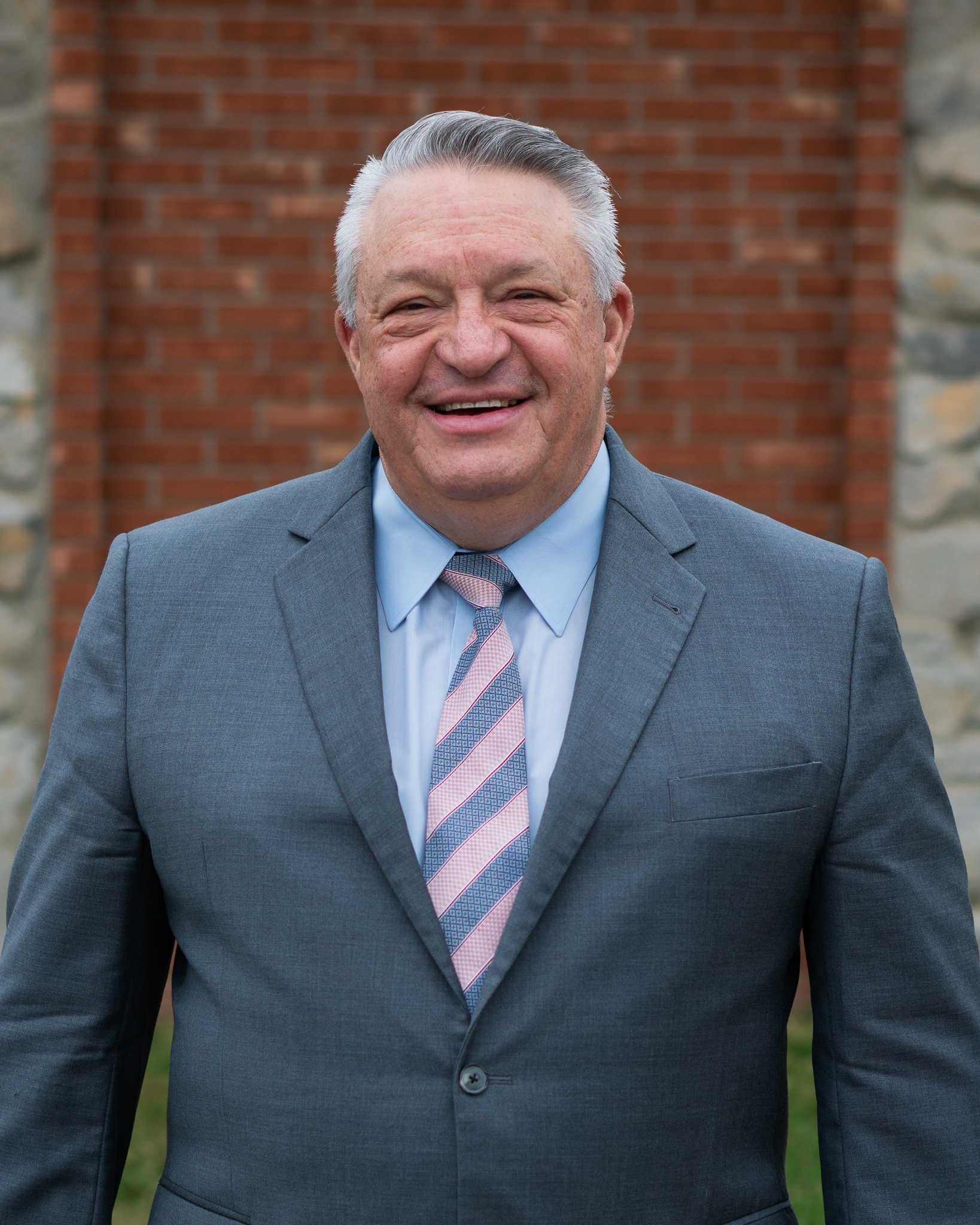
Dr. Sam Waldron is the Academic Dean of CBTS and professor of Systematic Theology. He is also one of the pastors of Grace Reformed Baptist Church in Owensboro, KY. Dr. Waldron received a B.A. from Cornerstone University, an M.Div. from Trinity Ministerial Academy, a Th.M. from Grand Rapids Theological Seminary, and a Ph.D. from Southern Baptist Theological Seminary. From 1977 to 2001 he was a pastor of the Reformed Baptist Church of Grand Rapids, MI. Dr. Waldron is the author of numerous books including A Modern Exposition of the 1689 Baptist Confession of Faith, The End Times Made Simple, Baptist Roots in America, To Be Continued?, and MacArthur’s Millennial Manifesto: A Friendly Response.
by Sam Waldron | Oct 30, 2015 | Reformed Theology
I’ve dealt with four misunderstandings of Calvinism related to the doctrine of total depravity. In this blog I begin to deal with a number related to the doctrine of unconditional election. Here are the first two:
- Misunderstandings related to Unconditional Election
(1) Calvinists are fatalists!
I looked up the dictionary definition of fatalism, but I think it has little to do with what the people who make this charge actually mean. Let me tell you what I think they mean. I think they mean to say that Calvinists think that nothing we do changes our final destiny. I think they mean that there is no relationship between how a person acts and where he will spend eternity. I think they mean that somehow a person’s destiny in eternity is fixed regardless of how he responds to the gospel here in this life. If that is what they mean by fatalism, then it has nothing to do with mainstream Calvinism. Calvinists believe that the promises of the gospel are true for any person who will receive them by faith. The promise of Acts 16:31 is true without exception: “They said, “Believe in the Lord Jesus, and you will be saved, you and your household.”” Believe on the Lord Jesus Christ and you shall be saved is absolutely true for everyone. The person who repents of his sins and believes in the Lord Jesus Christ will be saved without exception. Election does not mean that God is free not to keep His gospel promises. It does not mean that He may not save you even if you believe in Christ. Listen to the first systematic statement of the doctrines of grace, the Canons of Dort:
SECOND HEAD: ARTICLE 5. Moreover, the promise of the gospel is that whosoever believes in Christ crucified shall not perish, but have eternal life….
(2) Calvinists believe the elect will be saved no matter what we or they do!
Once more this is absolutely not what the doctrines of grace teach. Consider these words of chapter 3 of the 1689 Baptist Confession:
God is neither the author of sin nor hath fellowship with any therein; nor is violence offered to the will of the creature, nor yet is the liberty or contingency of second causes taken away, but rather established …
Here the Confession makes clear that God honors human liberty and the contingency (conditionality) of second causes in the working out of His eternal plan. This means that what people do does matter! The Confession teaches this because it is absolutely the teaching of the Bible. 2 Timothy 2:10 gives us Paul’s doctrine of the election: “For this reason I endure all things for the sake of those who are chosen, so that they also may obtain the salvation which is in Christ Jesus and with it eternal glory.” If Paul believed that the elect would be saved no matter what they or we do, how could he have uttered these sentiments? Election does not mean that the elect will be saved no matter what we or they do. It means that they and we will certainly do certain things! It means missionaries will suffer. It means that the elect will believe. It means that both of these things will happen, and in this way the elect will be saved!
The Seventh and Eight Misunderstandings
Dr. Sam Waldron is the Academic Dean of CBTS and professor of Systematic Theology. He is also one of the pastors of Grace Reformed Baptist Church in Owensboro, KY. Dr. Waldron received a B.A. from Cornerstone University, an M.Div. from Trinity Ministerial Academy, a Th.M. from Grand Rapids Theological Seminary, and a Ph.D. from Southern Baptist Theological Seminary. From 1977 to 2001 he was a pastor of the Reformed Baptist Church of Grand Rapids, MI. Dr. Waldron is the author of numerous books including A Modern Exposition of the 1689 Baptist Confession of Faith, The End Times Made Simple, Baptist Roots in America, To Be Continued?, and MacArthur’s Millennial Manifesto: A Friendly Response.
by Sam Waldron | Oct 28, 2015 | Reformed Theology
I. Misunderstandings related to Total Depravity
(3) Total depravity means that men are as bad as they can be!
Once more this is not mainline Reformed teaching. While it is true that men can do no spiritual or saving good, the Reformed tradition has recognized that unconverted men can and do perform what is often called acts of civil righteousness. It was better that Ahab outwardly responded to Elijah’s rebuke than if he had not, but it did not mean that Ahab had truly repented or truly done anything spiritually good. Here is the language of 1 Kings 21:27-29: “It came about when Ahab heard these words, that he tore his clothes and put on sackcloth and fasted, and he lay in sackcloth and went about despondently. 28 Then the word of the LORD came to Elijah the Tishbite, saying, 29 “Do you see how Ahab has humbled himself before Me? Because he has humbled himself before Me, I will not bring the evil in his days, but I will bring the evil upon his house in his son’s days.”” Thus, I agree with E. H. Palmer who in his book on the five points of Calvinism said that, while men are not as bad as they can be, they are as bad off as they can be. Total depravity is not absolute depravity!
(4) Total inability means that, even though men want to be saved, they cannot be saved or come to Christ!
Once more this is a total misunderstanding of the doctrines of total depravity and total inability. May I quote the Confession once more?
Man, by his fall into a state of sin, hath wholly lost all ability of will to any spiritual good accompanying salvation; so as a natural man, being altogether averse from that good, and dead in sin, is not able by his own strength to convert himself, or to prepare himself thereunto.
Total inability absolutely does not mean that men want to be saved, but they just cannot be because they are totally depraved. Total inability consists in an indisposition of the will to any spiritual good. It means that men are “averse” to good. It means that “the cannot’s” of John 6 are a way of describing “the will not” of John 5:40: “and you are unwilling to come to Me so that you may have life.” Total inability means that nobody really wants to be saved apart from the grace of God working in their hearts.
The Fifth and Sixth Misunderstandings
Dr. Sam Waldron is the Academic Dean of CBTS and professor of Systematic Theology. He is also one of the pastors of Grace Reformed Baptist Church in Owensboro, KY. Dr. Waldron received a B.A. from Cornerstone University, an M.Div. from Trinity Ministerial Academy, a Th.M. from Grand Rapids Theological Seminary, and a Ph.D. from Southern Baptist Theological Seminary. From 1977 to 2001 he was a pastor of the Reformed Baptist Church of Grand Rapids, MI. Dr. Waldron is the author of numerous books including A Modern Exposition of the 1689 Baptist Confession of Faith, The End Times Made Simple, Baptist Roots in America, To Be Continued?, and MacArthur’s Millennial Manifesto: A Friendly Response.
by Sam Waldron | Oct 26, 2015 | Reformed Theology
I. Misunderstandings related to Total Depravity
(2) Calvinists do not believe in human responsibility!
This assertion is also a slander on authentic Calvinism. Calvinists not only believe that men have a natural liberty, but they also agree that men are responsible for their actions because of that natural liberty.
The reason why Arminians claim that Calvinists deny human responsibility is that they have adopted what amounts to a Pelagian premise into their theology. They believe that responsibility assumes ability. The notion that responsibility for doing something assumes ability to do something is not true—if you are talking about moral ability. The Bible in many places teaches that men cannot come to Christ, but it still holds them responsible to do so.
John 6:44 No one can come to Me unless the Father who sent Me draws him; and I will raise him up on the last day.
John 6:65 And He was saying, “For this reason I have said to you, that no one can come to Me unless it has been granted him from the Father.”
I am in agreement with the great Calvinists Jonathan Edwards and Andrew Fuller who made a distinction between natural and moral ability. I think in making this distinction they are simply enlarging on what the Confession already teaches. Human responsibility assumes natural ability, but it does not assume moral ability. God does not tell us to run one minute miles. He does tell us to do things which He has given us the natural ability to do. We are able to love and trust and be sorry. We have the natural ability to do such things. But we do not have the moral ability to love and trust and be sorry about the right things. Thus, God tells us to do things that, because of sin, we do not have the moral ability to do. John 5:40 rebukes the Jews precisely for not coming to Christ for salvation: “and you are unwilling to come to Me so that you may have life.”
The Third and Fourth Misunderstandings
Dr. Sam Waldron is the Academic Dean of CBTS and professor of Systematic Theology. He is also one of the pastors of Grace Reformed Baptist Church in Owensboro, KY. Dr. Waldron received a B.A. from Cornerstone University, an M.Div. from Trinity Ministerial Academy, a Th.M. from Grand Rapids Theological Seminary, and a Ph.D. from Southern Baptist Theological Seminary. From 1977 to 2001 he was a pastor of the Reformed Baptist Church of Grand Rapids, MI. Dr. Waldron is the author of numerous books including A Modern Exposition of the 1689 Baptist Confession of Faith, The End Times Made Simple, Baptist Roots in America, To Be Continued?, and MacArthur’s Millennial Manifesto: A Friendly Response.
by Sam Waldron | Oct 23, 2015 | Reformed Theology
I have arranged my treatment of 21 Misunderstandings of Calvinism in the order of
T-U-L-I-P.
I.Misunderstandings related to Total Depravity
The first of the five points of Calvinism is total depravity. This point includes the idea of total inability which (to quote 9:3 of the 1689 Baptist Confession) is the idea that “Man, by his fall into a state of sin, hath wholly lost all ability of will to any spiritual good accompanying salvation; so as a natural man, being altogether averse from that good, and dead in sin, is not able by his own strength to convert himself, or to prepare himself thereunto.”
A number of misunderstandings of this point must be refuted. The first is this
(1)Calvinists do not believe in free will!
It certainly is true that Calvinists do not believe in what most people call (usually with a great deal of confusion) free will. Sometimes I have heard respectable Calvinists say that they believe in free agency rather than free will. As for myself and many other Calvinists, we prefer to say that we believe in free will properly defined. What is a proper and biblical definition of free will? It is the one given in the 1689 Baptist Confession in chapter 9, paragraph 1: “God hath endued the will of man with that natural liberty and power of acting upon choice, that it is neither forced, nor by any necessity of nature determined to do good or evil.” Here free will is defined as the power of acting upon choice. This is the natural liberty of the human. Such a view of free will is suggested by a number of texts:
Matthew 17:12 but I say to you that Elijah already came, and they did not recognize him, but did to him whatever they wished (willed). So also the Son of Man is going to suffer at their hands.”
James 1:14 But each one is tempted when he is carried away and enticed by his own lust.
Deuteronomy 30:19 “I call heaven and earth to witness against you today, that I have set before you life and death, the blessing and the curse. So choose life in order that you may live, you and your descendants,
As I implied above, mankind still possesses this natural liberty or ‘free will.’ This is implied by an analysis of the outline of Chapter 9 of the Confession. It may be outlined as follows:
I.The Definition of Human Freedom, par. 1
II.The States of Human Freedom, par. 2-5
A.Free will in the State of Innocency, par. 2
B.Free Will in the State of Sin, par. 3
C.Free Will in the State of Grace, par. 4
D.Free Will in the State of Glory, par. 5
The force of this outline is that paragraphs 2-5, including and especially paragraph 3, do not function as a negation of the definition of human freedom given in paragraph 1. All of these paragraphs simply tell us the four states in which the natural liberty or free will of man may exist.
But, of course, mankind does not in the state of sin possess the spiritual or moral liberty to use his “free will” to choose what is right. His will is tied to his sinful nature so that he cannot will any spiritual good. Thus, Jesus teaches in Matthew 7:17-18: “So every good tree bears good fruit, but the bad tree bears bad fruit. A good tree cannot produce bad fruit, nor can a bad tree produce good fruit.” All this means that I agree with Walt Chantry that man’s will is free, yet bound. So it is not true to say that Calvinists do not believe in free will.
My intention in this blog is not to condemn all denunciations of free will in our preaching. We often assume, properly it seems to me, an Arminian definition of free will in such legitimate denunciations. I am saying that when it comes to calm and careful theological discussion that it is better to affirm that we believe in free will properly defined. This will give us the better basis for affirming, as I will argue in my next post, that we do believe in human responsibility.
The Second Misunderstanding
Dr. Sam Waldron is the Academic Dean of CBTS and professor of Systematic Theology. He is also one of the pastors of Grace Reformed Baptist Church in Owensboro, KY. Dr. Waldron received a B.A. from Cornerstone University, an M.Div. from Trinity Ministerial Academy, a Th.M. from Grand Rapids Theological Seminary, and a Ph.D. from Southern Baptist Theological Seminary. From 1977 to 2001 he was a pastor of the Reformed Baptist Church of Grand Rapids, MI. Dr. Waldron is the author of numerous books including A Modern Exposition of the 1689 Baptist Confession of Faith, The End Times Made Simple, Baptist Roots in America, To Be Continued?, and MacArthur’s Millennial Manifesto: A Friendly Response.