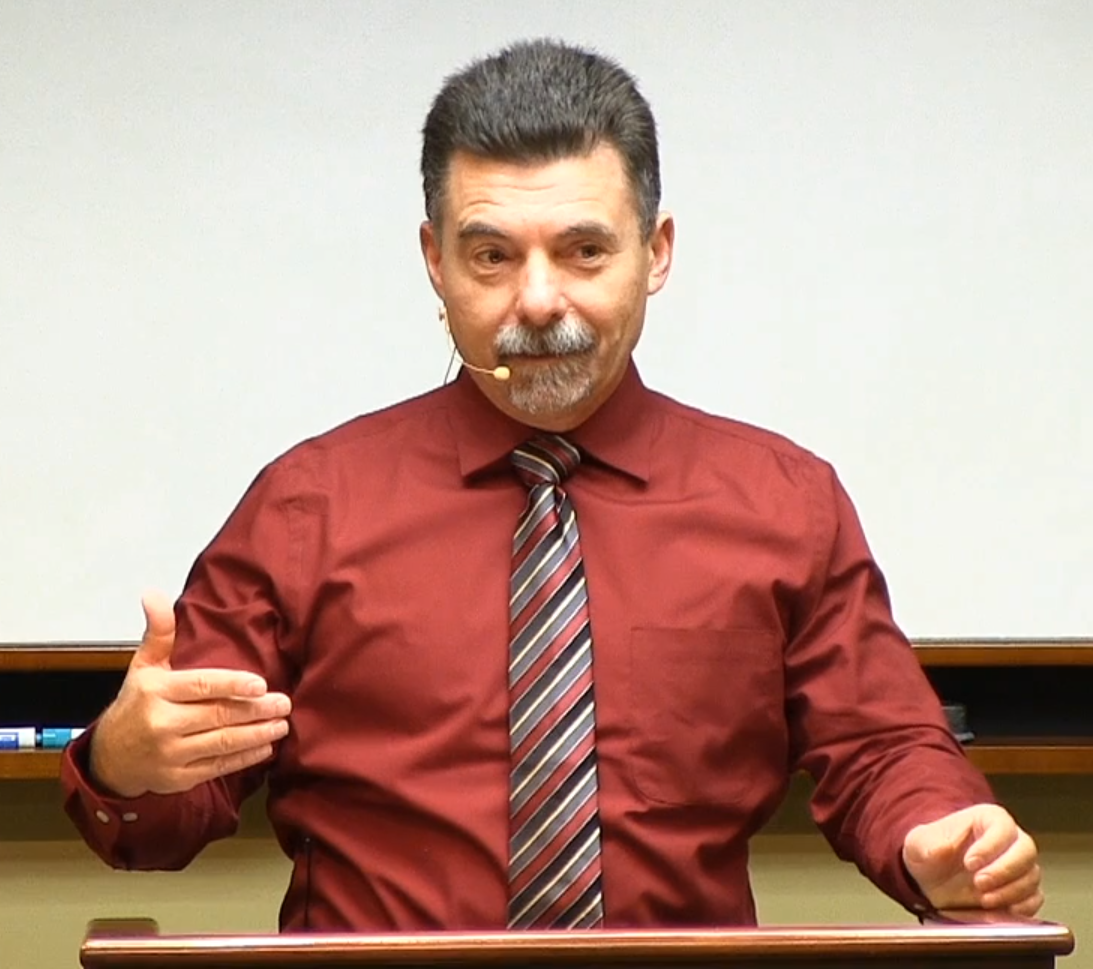
by Richard Barcellos | Jun 4, 2011 | Hermeneutics, Historical Theology
Brief survey of the history of hermeneutics – 11. Renaissance and Reformation
The theological methodology of the post-Reformation Reformed orthodox: The theological methodology of the post-Reformation Reformed orthodox was, in the first place, exegetical. In order to get a firmer grip on their methodology, we will examine it from the vantage point of what it is not – 1. a hyper-syllogistic method; 2. an Aristotelian, rationalistic method; and 3. a universal method – and what it is – 4. a pre-critical method; 5. an exegetically-based method; 6. a redemptive-historically sensitive method; and 7. a multi-sourced method. The last four mentioned methodological characteristics are especially visible in the writings of John Owen, one of the premiere post-Reformation Reformed scholastics.[1]
1. Not a Hyper-Syllogistic Method: Their method was not reduced to syllogistic argumentation ad nauseam. In fact, Muller claims that “[f]ew of the orthodox or scholastic Protestants lapsed into constant or exclusive recourse to syllogism as a method of exposition.”[2] Syllogistic argumentation was utilized, but mostly in polemic contexts and not as an exegetical tool. Logic–the science of necessary inference–was utilized by the Reformed orthodox in the drawing out of good and necessary conclusions from the text of Scripture,[3] but it was a servant and not lord of the interpreter. Muller says that “the drawing of logical conclusions appears as one of the final hermeneutical steps in the [Reformed orthodox exegetical] method…”[4]
2. Not an Aristotelian, Rationalistic Method: The Protestant scholasticism of the post-Reformation era must be distinguished from rationalism. The Reformed orthodox did not place human reason above, or even equal to, divine revelation.[5] The place and function of reason was subordinate to the authority of Scripture. Reason was an instrument not an axiomatic principle.[6] The Protestant scholastics utilized a modified (or Christian) Aristotelianism “that had its beginnings in the thirteenth century.”[7] Muller explains:
It is important to recognize what this use entailed and what it did not. The Christian Aristotelianism of the Protestant orthodox drew on rules of logic and devices such as the fourfold causality in order to explain and develop their doctrinal formulae—and only seldom, if ever, to import a full-scale rational metaphysics or physics into their theology. Contrary to what is sometimes claimed, the fourfold causality (i.e., first, formal, material, and final causes) does not imply a particular metaphysic. Specifically, it is not by nature “deterministic.” One can use the model to delineate the soteriological patterns of the eternal decree of God and its execution in time; one can also use the model to describe the sources and effects of human sinfulness and human moral conduct; or one can use the model to explain how a carpenter makes a table. The large-scale result of Christian Aristotelianism was not, in other words, a fundamentally Aristotelian Christianity: Aristotle would have disowned this hybrid philosophy with its infinite God who created the world out of nothing! There was, certainly, less imposition of rational metaphysics on theology in the seventeenth-century orthodox affirmations of divine eternity, omniscience, and immutability than there is in the twentieth-century claims of a changing God whose very being is in flux and who lacks foreknowledge of future contingency![8]
Van Asselt says, “[the] facile equation of Scholasticism and Aristotelianism is no longer tenable.”[9]
3. Not a Universal Method: As well, simply because an author utilized the scholastic method in some of his writings did not mean he used it in all of them. For instance, Muller offers Beza as an example.[10] Elsewhere, Muller says, “In the cases of Perkins, Ames, Voetius, and Baxter, works of piety and works of scholastic theology emanated from the same pens.”[11] Muller goes on to say:
…there is no clear division between Protestant scholasticism and federal theology. Theologians who wrote works of piety that followed a “positive” or “catechetical” method also wrote more technical and academic works using the scholastic method – and many of the scholastic, as well as “positive” works were covenantal in their theology.[12]
This observation applies to Johannes Cocceius and John Owen. Owen utilized the scholastic method in some treaties and a more practical, pastoral approach in others. Both Cocceius and Owen utilized the federal model as well as the loci model. Also, within the body of Owen’s Biblical Theology, he utilizes the scholastic method but also ridicules it.[13] This obviously shows that Owen could use a method he fully realized was abused by others and that the scholastic method was just that–a method and not a theology.
4. A Pre-Critical Method: The Reformed orthodox obviously predate the Enlightenment and the critical assault on the Holy Scriptures. The Enlightenment gave birth to, among other things, a rationalistic approach to the interpretation of Scripture. This can be seen, for instance, in the early developments of biblical theology.[14] Typical Enlightenment rationalism and anti-supernaturalism is evidenced in the following statements made by Benjamin Jowett, a Greek professor at Oxford in the mid-nineteenth century. David C. Steinmetz quotes Jowett and comments:
Jowett argued that “Scripture has one meaning–the meaning which it had in the mind of the Prophet or Evangelist who first uttered or wrote, to the hearers or readers who first received it.”[15] Scripture should be interpreted like any other book and the later accretions and venerated traditions surrounding its interpretation should, for the most part, either be brushed aside or severely discounted. “The true use of interpretation is to get rid of interpretation, and leave us alone in company with the author.”[16]
Jowett obviously reduces meaning to the intent of the human author alone. In critical hermeneutical theory, there was no room whatsoever for the medieval concept of “double literal sense”[17] or for the Reformation and post-Reformation concepts of sensus literalis (literal sense), analogia Scripturae (analogy of Scripture), analogia fidei (analogy of faith), and scopus Scripturae (scope of Scripture).[18] In post-modern thought, man, the reader, is king of interpretation; in the modern/Enlightenment theory man, the author, was. In the Middle Ages, however, and in the Reformation and post-Reformation eras, though through differing hermeneutical principles, the meaning of Scripture was not determined by the human author’s intent alone or the reader. Ultimately, the meaning of Scripture was determined by God, the author of Scripture.[19]
5. An Exegetically-Based Method[20]: Though the Reformed orthodox were confessionally one in a historical sense (i.e., the Belgic Confession, the Heidelberg Catechism, the Canons of Dordt, and in Britain in the Westminster Assembly’s Confession of Faith and Larger and Shorter Catechisms, Savoy Declaration, Second London Confession of Faith), this did not mean they viewed the exegetical task as complete and, therefore, unnecessary, nor that there was no room for disagreement over the exegesis of individual texts. Muller comments:
the biblicism of the seventeenth-century orthodox must not be read as an era of dogmatizing exegesis devoid of careful textual analysis and devoid of any variety in interpretation among those of an orthodox confessional persuasion. Instead, the age ought to be viewed as the great age of Protestant linguistic study and Judaica, of the textual analysis that led to such monumental productions as the London Polyglot Bible. …the Protestant orthodoxy must be recognized as producing highly varied and diverse exegetical works and commentaries, ranging from text-critical essays, to textual annotations, theological annotations, linguistic commentaries based on the study of cognate languages and Judaica, doctrinal and homiletical commentaries, and, indeed, all manner of permutations and combinations of these several types of effort.[21]
Biblical exegesis, in fact, experienced a revival of sorts within the Reformed orthodox of the seventeenth century. Muller says:
Contrary to much of the “received wisdom” concerning the seventeenth century, the era of orthodoxy was a time of great exegetical, textual, and linguistic development in Protestantism–and, indeed, it was the orthodox exegetes who were responsible for the major monuments to biblical scholarship.[22]
Carl R. Trueman says, “…the seventeenth century witnessed a remarkable flourishing of linguistic and exegetical studies, driven by both the positive and the polemical exigencies of Protestantism’s commitment to scripture, in the original languages, as being the very Word – and words – of God.”[23] Trueman continues elsewhere:
A high view of the authority and integrity of the biblical text as God’s word written was [a] major factor in fuelling the development of careful attention both to the biblical languages and other cognate tongues, and to issues of textual history and criticism. The idea that the seventeenth-century Reformed were interested neither in careful exegesis nor in the literary and linguistic contexts of the Bible is simply untrue. Indeed, the linguistic and exegetical work of this century was far more elaborate than that which had marked the earlier Reformation. …the exegesis of the Reformed Orthodox is far from the dogmatically-driven Procusteanism[24] [sic] of popular mythology.[25]
6. A Redemptive-Historically Sensitive Method: Not only were the Reformed orthodox exegetically driven, their hermeneutic was a whole-Bible hermeneutic, evidenced in such concepts as their highly nuanced view of sensus literalis (literal sense), analogia Scripturae (analogy of Scripture), analogia fidei (analogy of faith), and scopus Scripturae (scope of Scripture).[26] It is of vital importance to understand the nuances involved with these concepts in order to properly understand the Reformed orthodox. We will explore these concepts in our next post.
[1] We will discuss Owen below.
[2] Muller, “Calvin and the “Calvinists”,” I:369.
[3] Cf. Muller, PRRD, II:497-500 for a discussion of the use of logic in interpretation.
[4] Muller, PRRD, II:501.
[5] Cf. WCF 1:10 for confessional embodiment to this conviction.
[6] Muller, “Calvin and the “Calvinists”,” I:374.
[7] Muller, “Sources of Reformed Orthodoxy,” 55. Cf. van Asselt, “The Fundamental Meaning of Theology,” 322, where he says that the Reformed theology of the late sixteenth century (i.e., Franciscus Junius) critically received the Christian tradition.
[8] Muller, “Sources of Reformed Orthodoxy,” 55.
[9] van Asselt, “The Fundamental Meaning of Theology,” 329, n. 42.
[10] Muller, “Calvin and the “Calvinists”,” I:370.
[11] Muller, “Calvin and the “Calvinists”,” II:145.
[12] Muller, “Calvin and the “Calvinists”,” II:146.
[13] Cf. Rehnman, Divine Discourse, Chapter 4, “Faith and Reason,” especially the sections “The Abuse of Reason in Theology” and “A Contextual Line of Explanation,” 119-28 and the “Conclusion” to my dissertation.
[14] See below.
[15] Benjamin Jowett, “On the Interpretation of Scripture,” Essays and Reviews, 7th ed. (London: Longman, Green, Longman and Roberts, 1861), 378, quoted in David C. Steinmetz, “The Superiority of Pre-Critical Exegesis,” Theology Today (April 1980): 27.
[16] Steinmetz is quoting Jowett, “On the Interpretation of Scripture,” 384. Cf. Steinmetz, “The Superiority of Pre-Critical Exegesis,” 27.
[17] Steinmetz, “The Superiority of Pre-Critical Exegesis,” 31.
[18] We will discuss these below.
[19] This, of course, does not imply that pre-critical exegesis always arrived at God’s meaning of the text. Cf. Packer, Quest for Godliness, 98, for a brief discussion of the Puritans as pre-modern exegetes.
[20] Cf. Muller, “Sources of Reformed Orthodoxy,” 46-48; Muller, PRRD, II:482ff; Packer, Quest for Godliness, 98; and Thomas D. Lea, “The Hermeneutics of the Puritans,” JETS 39/2 (June 1996): 273.
[21] Muller, “Calvin and the “Calvinists”,” II:132-33.
[22] Muller, “Sources of Reformed Orthodoxy,” 46.
[23] Trueman, John Owen, 8-9.
[24] Tending to produce conformity by violent or arbitrary means.
[25] Trueman, John Owen, 37; Cf. Muller, PRRD, II:482ff. for a fascinating discussion of the practice of exegesis among the Reformed orthodox.
[26] Packer lists six governing principles of interpretation for the English Puritans: 1. Interpret Scripture literally and grammatically. 2. Interpret Scripture consistently and harmonistically. 3. Interpret Scripture doctrinally and theocentrically. 4. Interpret Scripture christologically and evangelically. 5. Interpret Scripture experimentally and practically. 6. Interpret Scripture with a faithful and realistic application. Cf. Packer, Quest for Godliness, 101-5. Cf. Barry Howson, “The Puritan Hermeneutics of John Owen: A Recommendation,” WTJ 63 (2001): 354-57.
Dr. Richard Barcellos is associate professor of New Testament Studies. He received a B.S. from California State University, Fresno, an M.Div. from The Master’s Seminary, and a Th.M. and Ph.D. from Whitefield Theological Seminary. Dr. Barcellos is pastor of Grace Reformed Baptist Church, Palmdale, CA. He is author of Trinity & Creation, The Covenant of Works, and Getting the Garden Right. He has contributed articles to various journals and is a member of ETS.
Courses taught for CBTS: New Testament Introduction, Biblical Hermeneutics, Biblical Theology I, Biblical Theology II.
by Richard Barcellos | May 27, 2011 | Hermeneutics, Historical Theology
The Renaissance: The Renaissance was a very complex humanist movement within Europe during the fourteenth and fifteenth centuries. Two of the most important contributions it gave to the Reformation were a return to critical scholarship and philology. What the Renaissance gave to the Reformation, then, was an academic climate of questioning the status quo and seeking to arrive at conclusions based on primary documents. Pelikan comments:
The insistence of humanistic scholars on an understanding of the biblical text based on a fresh reading of the Hebrew and Greek originals …acted as a catalyst in the reconsideration of the doctrine of authority during the age of the Reformation.[1]
This insistence led to the study of Hebrew and Greek grammar, the study of Augustine, and most importantly, the study of Paul and the Bible.
The Reformation: The Reformation was both a break with the negative elements of the past (especially the late medieval doctrine of ecclesiastical authority and the system of human merit theology) and a continuation of the discussion that had been taking place from the beginning. The Bible took center stage at the Reformation due, in part, to the influence of the Renaissance. With this came a renewed interest in Bible interpretation and historical theology, both from primary sources. The maxim ad fontes[2] produced intensified study in the original sources of the Christian tradition – the Bible first and foremost and, secondarily, the Apostolic Fathers, Patristics, and Augustine.
Neither Luther nor Calvin invented or discovered doctrines that had never been discussed before.[3] Luther’s discovery of the gospel of justification sola fide was, first and foremost, a biblical doctrine and a doctrine that all true Christians had believed from the beginning. It had been eclipsed by a system of human merit theology and sacerdotalism, but this does not mean that it never existed prior to Luther.
Calvin was no innovator himself. He built his system of theology on his understanding of Christian Scripture controlled by “the rule of faith.” He produced commentaries that are still influential in our day. The Reformers saw themselves as part of a long line of Christian interpreters, utilizing what they could from previous generations and repudiating, sometimes viciously, what they could not. Though Calvin sought to be a corrector of what he viewed as wrong with elements of the past, on the main, he assumed into his interpretive method the method handed down to him by his university professors – the scholastic method, in distinction from scholastic theology (more on this below).
Mention has been made of how some view the history of Christian interpretation in a mostly negative light. This assessment is, primarily, a post-Enlightenment phenomenon. David Steinmetz, in his book Calvin in Context, discusses Calvin’s interpretation of Isaiah 6:1ff. in the light of the history of interpretation prior to Calvin.[4] Prior to his discussion of the history of interpretation and Isaiah’s text, he notes this about F. W. Farrar.
In 1885 Frederic W. Farrar, chaplain to Queen Victoria and later Dean of Canterbury, delivered the Bampton Lecutres at Oxford on the subject of the history of interpretation. The book is a triumph of what the late Sir Herbert Butterfield of Cambridge called “Whig” historiography. Farrar admired about the past precisely those elements in it most like the present and regarded the present, indeed, as the inevitable culmination of all that was best in the past. The history of exegesis became for Farrar the history of “more or less untenable” conceptions of the Bible, “a history of false suppositions slowly and progressively corrected.” Not surprisingly, Farrar admired Antioch over Alexandria, Luther over Thomas Aquinas, Calvin over Luther, and the moderns [Enlightenment/post-Enlightenment interpreters] over all. Farrar catalogued with obvious delight every strained allegory, every factual inaccuracy, every philological howler committed by precritical exegetes in the name of biblical interpretation. While he admitted that ancient commentaries are full of practical instruction aimed at moral and spiritual edification and that much of this instruction is “of the highest intrinsic value,” he nevertheless warned that frequently such material “has but a slender connexion with the text on which it is founded.”[5]
Steinmetz goes on to show that Calvin’s exegesis of the Isaiah pericope is very similar to the history of interpretation on this text and even goes so far as to say, “While the precritical exegesis of Isaiah 6 is not an exegesis we can simply adopt, it is still not accurate to regard it as arbitrary and strained, of value only for its homiletical asides.”[6] Steinmetz interacts with Farrar after his discussion of Calvin on Isaiah 6 and the history of precritical interpretation on this text:
It is difficult to recognize the exegesis of Isaiah 6 we have just examined in the general description of the history of exegesis which Farrar offered. To be sure, it is true that the older consensus on the historical-critical setting of Isaiah 6 would find few supporters among modern commentators, but the older discussion of these questions does not seem arbitrary or strained, even by modern standards. The judgment of Christian commentators that Isaiah saw the glory of Christ was an exegetical conclusion forced on the commentators by the New Testament itself, though there was a tendency on the part of some commentators–including Calvin–to soften the hard edges of that exegesis.[7]
Farrar assumed critical, Enlightenment categories while interpreting the history of interpretation. This gave his history a slant or bias in a certain direction and explains his overly negative assessment of most of what took place prior to the modern era. Steinmetz concludes:
It is no answer to Farrar to point out that there is a good deal in ancient commentaries which is surprisingly modern even from a historical-critical or philological viewpoint, or to argue that the modern reader can find insight into the “literal” sense of the text in precritical commentaries. That is to admit his principle that precritical exegesis is good in the proportion that it anticipates or agrees with modern exegesis. Nor is it an answer to reply with a tu quoque [Latin, “thou also”] and to list the exegetical atrocities which have been committed from time to time in the name of the historical-critical method, though such a list is disquietingly easy to compile.
The principal value of precritical exegesis is that it is not modern exegesis; it is alien, strange, sometimes even, from our perspective, comic and fantastical. Precisely because it is strange, it provides a constant stimulus to interpreters, offering exegetical suggestions they would never think of or find in any modern book, forcing them again and again to a rereading and reevaluation of the text. But if they immerse themselves not only in the text but also in these alien approaches to the text, they may learn in time to see with eyes not their own sights they could scarcely have imagined and may learn to hear with ears not their own voices too soft for their own ears to detect.[8]
Not only has this modern, Enlightenment mindset infected Farrar it has infected others who look down upon, not only the Reformers, but the post-Reformation Reformed orthodox, as we shall see next.
[1] Jaroslav Pelikan, Reformation of Church and Dogma (Chicago and London, University of Chicago Press, 1985), 8.
[2] Latin for to the sources.
[3] Cf. David C. Steinmetz, Luther in Context (Grand Rapids: Baker Books, 1995) and David C. Steinmetz, Calvin in Context (New York: Oxford University Press, 1995).
[4] Steinmetz, Calvin in Context, 95-109.
[5] Steinmetz, Calvin in Context, 95. Steinmetz is quoting from Fredric W. Farrar, History of Interpretation (Grand Rapids: Baker Book House, 1979).
[6] Steinmetz, Calvin in Context, 107.
[7] Steinmetz, Calvin in Context, 107.
[8] Steinmetz, Calvin in Context, 107.
Dr. Richard Barcellos is associate professor of New Testament Studies. He received a B.S. from California State University, Fresno, an M.Div. from The Master’s Seminary, and a Th.M. and Ph.D. from Whitefield Theological Seminary. Dr. Barcellos is pastor of Grace Reformed Baptist Church, Palmdale, CA. He is author of Trinity & Creation, The Covenant of Works, and Getting the Garden Right. He has contributed articles to various journals and is a member of ETS.
Courses taught for CBTS: New Testament Introduction, Biblical Hermeneutics, Biblical Theology I, Biblical Theology II.
by Richard Barcellos | Apr 29, 2011 | Hermeneutics, Historical Theology
Antioch: Silva says, “We would not be exaggerating greatly if we described the progress of biblical exegesis as the gradual abandonment of allegorical interpretation.”[1] The Antiochene school arose as “a fairly systematic program aimed at debunking the more objectionable features of Origen’s approach.”[2] It is obvious from subsequent history that it failed at this task.
A school at Antioch was established toward the end of the third century by Lucian (circa A.D. 240-312). It became the rival school to Alexandria. Antioch’s most respected pupils were Theodore of Mopsuestia (circa A.D. 350-428) and John Chrysostom (circa A.D. 354-407). As noted above, the Antiochene school utilized aspects of literalism, typology, and allegory, though certainly not like the Alexandrians. Where did the Antiochenes get their brand of literalism from? Dockery suggests, “It is likely that wherever the synagogue’s influence was felt, the church’s interpretation of Scripture had a tendency toward literalism. Certainly this was the case at Antioch.”[3] Granting Dockery’s claim, we see once again how contemporary factors contribute to hermeneutical practice.
Antioch’s unique contribution to the history of Christian hermeneutics is stated clearly and succinctly by Dockery, when he says, “the distinctive feature in the Antiochene hermeneutical method was theoria.”[4] Theoria was a complex method of interpretation. It is, therefore, simplistic to label Antioch as the literal school. As we are learning, things aren’t always as simple and clear-cut as we might think. Theoria involved aspects of what we would call literalism, a modified form of allegory, and typology.[5] Also, between individual authors there were various expressions of these hermeneutical methods.
If we asked the question: What is the Antiochene school’s over-arching hermeneutical contribution to the history of Christian interpretation? The expanded answer would be the further development of a typological interpretation of the Old Testament in the light of the first advent of Christ and the New Testament Scriptures. Dockery says, “Perhaps, as Rowan A. Greer has suggested, it is better to think of typological exegesis as the normative method of Antiochene exegesis.”[6] Dockery continues:
Typology, rightly conceived, asserts that since Christ is the culmination of the line of Abraham and of David and is the fulfillment of the hope of Israel, the Old Testament description of Israel’s history, institutions, worship, and prophetic message often anticipate the life and work of Christ. Chrysostom and the Antiochene school distinguished allegorical interpretation from typological interpretation in two primary ways. Typological interpretation attempted to seek out patterns in the Old Testament to which Christ corresponded, while allegorical exegesis depended on accidental similarity of language between two passages. Second, typological interpretation depended on a historical interpretation of the text. The passage, according to the Antiochenes, had only one meaning, the literal (extended by theoria[7]), and not two as suggested by the allegorists. In the typological approach, the things narrated by the text had to be placed in relationship to things which were not in the text, but which were still to come.[8]
The Antiochene theory of typology was fueled by their view of the fulfillment which took place at the first advent of Christ and how Christ and the Apostles interpreted the Old Testament.
The major difference between Alexandria and Antioch, in terms of exegetical conclusions, occurred while interpreting the Old Testament. Their understandings of the Gospels and the rest of the New Testament was very similar. Once again, the major issue was the interpretation of the Old Testament and its relation to the New. Alexandria utilized allegory of the Neoplatonic variety; Antioch utilized typology of the New Testament variety.
Finally, as with the Alexandrians, the Antiochenes adhered to the rule of faith which kept them within orthodox bounds on the essential doctrines of the Christian faith.
[1] Silva, “Has the Church Misread the Bible?,” 47.
[2] Silva, “Has the Church Misread the Bible?,” 47.
[3] Dockery, Biblical Interpretation, 105. Dockery references Rowan A. Greer, Theodore of Mopsuestia: Exegete and Theologian (London: Faith, 1961), 86-88.
[4] Dockery, Biblical Interpretation, 107.
[5] See the discussion in Hall, Reading Scripture, 160-63.
[6] Dockery, Biblical Interpretation, 110.
[7] We will be confronted with this concept – literal-extended meaning – in subsequent discussion.
[8] Dockery, Biblical Interpretation, 118-19.
Dr. Richard Barcellos is associate professor of New Testament Studies. He received a B.S. from California State University, Fresno, an M.Div. from The Master’s Seminary, and a Th.M. and Ph.D. from Whitefield Theological Seminary. Dr. Barcellos is pastor of Grace Reformed Baptist Church, Palmdale, CA. He is author of Trinity & Creation, The Covenant of Works, and Getting the Garden Right. He has contributed articles to various journals and is a member of ETS.
Courses taught for CBTS: New Testament Introduction, Biblical Hermeneutics, Biblical Theology I, Biblical Theology II.
by Richard Barcellos | Apr 25, 2011 | Hermeneutics, Historical Theology
Introduction: Our study of the Patristics has set the stage for a brief discussion on the schools of Alexandria and Antioch. In one sense, they are a natural development of things already in place. In fact, Bradley Nassif claims, “Origen did not invent his interpretive techniques but borrowed them from a complex hermeneutical environment [Christian and non-Christian] that was already present in his day.”[1] Both Christian allegory and Christian typology pre-date these schools of thought. These two schools have sometimes been pitted against each other. Silva says:
This description, however, leaves out a series of interesting and suggestive bits of information. It is simplictic, for example, to view Origen and the Antiochenes as representing two opposite approaches more or less exclusive of each other. As we shall see, Origen used and defended literal interpretation on a number of occasions. Moreover, certain exegetical features that we would quickly dismiss as in some sense “allegorical” were consciously adopted as legitimate by the Antiochene exegetes.[2]
Silva goes on to give two examples of allegory by Antiochenes – Chrysostom and Theodoret. Chrysostom interprets Jesus’ making wine from water as “changing wills that are weak and inconsistent.” Theodoret takes the dew from heaven and the fatness of the earth of Genesis 27:39 this way: “…according to the higher interpretation they depict the divinity of the Lord Christ by means of the expression dew; and by the fatness of the earth, his humanity received from us.”[3]
More recent studies have uncovered less discontinuity in their hermeneutical methods. What used to be seen as an antithetical pendulum is now seen as a sort of mini-pendulum with more continuity than previously thought. Whereas the Alexandrians were seen as primarily allegorists and the Antiochians were seen as primarily literalists further study has shown that the two schools, though certainly not one and the same, have more in common than a first glance approach might conclude. Both schools developed in similar historical, theological, and philosophical contexts and were, as are we, affected by those contexts. As stated above, both Christian allegory (Alexandria) and Christian typology (Antioch) had the same goal – the Christian use of the Old Testament.
[1] Bradley Nassif, “Origen,” in DMBI, 793.
[2] Silva, “Has the Church Misread the Bible?,” 47.Cf. Christopher A. Hall, Reading the Scripture with the Church Fathers (Downers Grove, IL: InterVarsity Press, 1998), 157.
[3] Silva, “Has the Church Misread the Bible?,” 47.
Dr. Richard Barcellos is associate professor of New Testament Studies. He received a B.S. from California State University, Fresno, an M.Div. from The Master’s Seminary, and a Th.M. and Ph.D. from Whitefield Theological Seminary. Dr. Barcellos is pastor of Grace Reformed Baptist Church, Palmdale, CA. He is author of Trinity & Creation, The Covenant of Works, and Getting the Garden Right. He has contributed articles to various journals and is a member of ETS.
Courses taught for CBTS: New Testament Introduction, Biblical Hermeneutics, Biblical Theology I, Biblical Theology II.
by Richard Barcellos | Mar 1, 2011 | Hermeneutics, Historical Theology
Introduction: Christian hermeneutics includes a study of those interpreters and schools of interpretation in the Christian theological tradition who, in fact, may not be Christian in the soteriological sense. This field of study usually starts with the second century A.D. and carries on into the present era. In our study of Christian hermeneutics, we will select some highlights along the historical continuum to introduce students to the main practitioners and interpretive schools. We will concentrate on the Apostolic Fathers/Patristics, the schools of Alexandria and Antioch, the four-fold method (quadriga) of the Middle Ages, the Renaissance and Reformation, the Reformed orthodox of the post-Reformation era, the Enlightenment, nineteenth-century Germany, Princeton Seminary prior to and including Geerhardus Vos, and briefly look at the end of the twentieth century. This will give us a wide-ranging look at the key players and key movements.
It is of interest to note that, at least in the past, historical Christian interpretive methods have received a highly negative assessment from conservative Evangelicals. Patristic methods, for example, have been down-played as models for us to emulate. In the words of C. S. Lewis, a sort of “chronological snobbery” seems to be part of the reason for this. The Middle Ages are viewed as casting a dark shadow over the church in terms of hermeneutical method (and just about everything else). Though all agree that the Reformers got back to the Bible, their immediate successors, the post-Reformation Protestant Scholastics, so the theory goes, supposedly left the Bible and substituted it with a neo-Aristotilian, Confessional/Dogmatic Scholasticism that utilized careless proof-texting, an ad nauseam hyper-syllogistic form of argumentation, and left the Christocentric hermeneutical emphasis of Calvin. Some even view the post-Reformation Protestant Scholastics as precursors of the rationalistic Enlightenment.[1]
This highly negative assessment of the history of Christian interpretive method has been challenged and is slowly being qualified and modified in our day.[2] Granted, no one is so naive to assert that all interpretive methods throughout the history of the church are equally valid or that there are no bad examples. What is being recognized, however, is that we have much to learn from the history of Christian hermeneutics and we need to sit humbly at the feet of those who have gone before us and carefully listen.
As will be noted below, the Enlightenment caused a revolution in hermeneutical theory. It sought to make hermeneutics an objective science and effectively took God out of the hermeneutical equation. The meaning of biblical texts was limited to what the interpreter thought the human author (or editors) intended. In the name of objectifying hermeneutics, a subjective principle was smuggled into Evangelicalism as a cure-all for interpretive conclusions. Human authorial intent became the goal and end-all of biblical interpretation. However, in order to determine human authorial intent, interpreters became dependent upon background sources, which are neither infallible, nor objective. Pre-Enlightenment/pre-critical interpreters did not limit the meaning of texts to the human author. Human authorial intent as the end-all of interpretation is a post-Enlightenment phenomenon and, in essence, has caused several generations of Evangelical interpreters to shun pre-critical hermeneutical practitioners as worthy examples of biblical interpretation. As Moises Silva says, “…the popular assumption [is] that the Christian church, through most of its history, has misread the Bible.”[3] Our brief survey will attempt to show that a more positive assessment is warranted.
[1] Cf. Richard C. Barcellos, The Family Tree of Reformed Biblical Theology: Geerhardus Vos and John Owen – Their Methods of and Contributions to the Articulation of Redemptive History (Owensboro, KY: RBAP, 2010), 53-107.
[2] See the relevant discussions in Dockery, Biblical Interpretation Then and Now, Moises Silva, “Has the Church Misread the Bible?,” Dennis E. Johnson, Him We Proclaim and Richard C. Barcellos, The Family Tree of Reformed Biblical Theology, specifically, 66-78.
[3] Silva, “Has the Church Misread the Bible?,” 33. Cf. 34-37 for Silva’s discussion of F. W. Farrar’s negative assessment of most of the church’s interpretive history. Cf. David C. Steinmetz, Calvin in Context (New York: Oxford University Press, 1995), 95-109, for Steinmetz’s discussion of “Calvin and Isaiah” in the context of the history pre-critical exegesis. Steinmetz takes Farrar to task (esp. pp. 95 and 107).
Dr. Richard Barcellos is associate professor of New Testament Studies. He received a B.S. from California State University, Fresno, an M.Div. from The Master’s Seminary, and a Th.M. and Ph.D. from Whitefield Theological Seminary. Dr. Barcellos is pastor of Grace Reformed Baptist Church, Palmdale, CA. He is author of Trinity & Creation, The Covenant of Works, and Getting the Garden Right. He has contributed articles to various journals and is a member of ETS.
Courses taught for CBTS: New Testament Introduction, Biblical Hermeneutics, Biblical Theology I, Biblical Theology II.