*Editor’s Note: The following is Part 1 in a five-part series on the Nicene Creed authored by Dr. Brandon Rhea. To read the other installments in this series, click on the following numbers: 1, 2, 3, 4, 5.
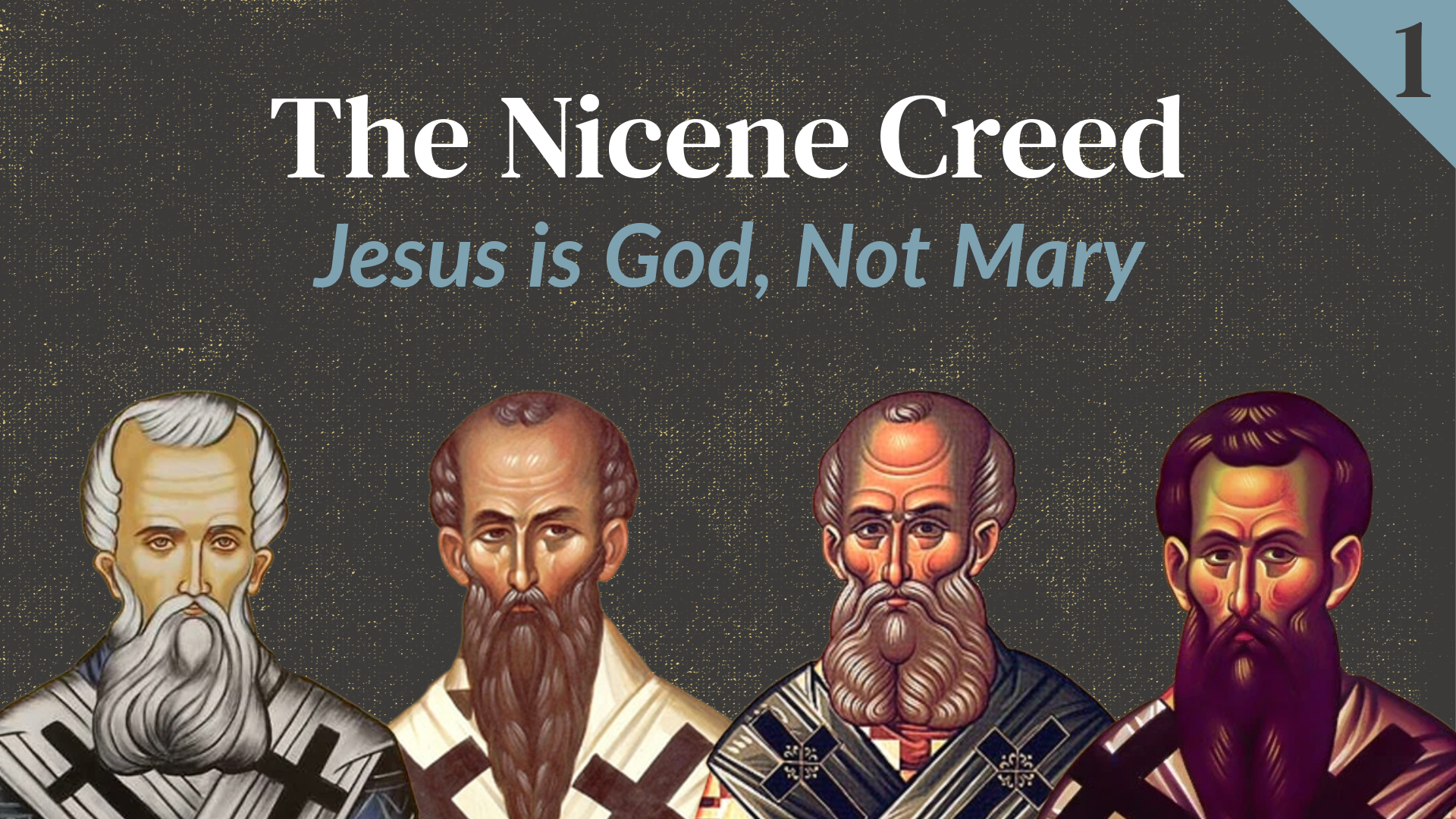
Christians celebrated the 1700th anniversary of the Nicene Creed in 2025. At the beginning of the fourth century, the deity of Christ became a battleground in the church. Arius of Alexander began teaching that Jesus was not God. For Arius, only God the Father was eternal, and the Son was created by Him. Thus, if Jesus is not God, then we should not worship Him. During this time, Constantine became the ruler of the Roman Empire and allowed Christianity to flourish. He called a church council in 325 A.D. at Nicaea to discuss whether Jesus is divine. This council produced a creed, but it did not stop Arianism from spreading. In fact, over the next several decades, some of the Caesars confessed Arianism, and a large group populated the church. In 381 A.D., God providentially gave a death blow to it. At the Council of Constantinople, the leaders condemned Arianism and updated the Nicene Creed to be more precise. We call this Creed the Nicene Creed today.
The first part says,
We believe in one God,
the Father almighty,
maker of heaven and earth,
of all things visible and invisible.
And in one Lord Jesus Christ,
the only Son of God,
begotten from the Father before all ages,
God from God,
Light from Light,
true God from true God,
begotten, not made;
of the same essence as the Father.
Through him all things were made.
Protestant denominations confess this creed, and the Roman Catholic Church and Orthodox churches have adopted it. All of us share this truth: Jesus is God. As Colossians 1:15-17 says, “He is the image of the invisible God, the firstborn over all creation. For by Him all things were created that are in heaven and that are on earth, visible and invisible, whether thrones or dominions or principalities or powers. All things were created through Him and for Him. And He is before all things, and in Him all things consist.”[1] Jesus is the “image of the invisible God” meaning He shares the same essence as the Father. Moreover, He is the “firstborn over all creation,” not as a created being, but as the One who has preeminence or prestige. Additionally, Jesus is the Creator who made all things seen and unseen. Finally, Jesus is eternal and has no beginning or end since He is God. Consequently, we must worship Him.
Why address this topic? Roman Catholics confess the Nicene Creed too, but they mean something different than we Reformed Baptists.[2] While confessing Jesus’ deity, they simultaneously treat Mary as if she is a god whom we should worship. It’s like talking to a Mormon elder who says he believes in God and in salvation by grace, but his understanding of those terms is different than ours. Since we are remembering the 17th hundred anniversary of the Nicene Creed, some Christians may conclude that Roman Catholics are our brothers and sisters in Christ, because we hold to the same creed.
To show that Roman Catholics worship Mary, I want to begin with the five dogmas of the church. A dogma is a doctrine which must be believed to be orthodox. First, they believe Mary is the Mother of God. This was established in 431 A.D. to affirm that Jesus is God, and many Protestants confess it too. To put it another way, one historian said “the one who gives birth to the One who is God.”[3] Unfortunately, this statement has been twisted to support worshiping Mary. The second dogma is the perpetual virginity of Mary, which was stated in 553 A.D. Catholics believe Mary never had relations with Joseph and did not have any children besides Jesus. Of course, the Bible says Jesus had half-brothers and sisters. Third, Catholics confess the Immaculate Conception. In 1854, the Pope proclaimed this teaching which says Mary was born without the stain of original sin. Why? Rome teaches since Jesus was born without sin, Mary had to be without sin in order to not stain Him. Fourth, the Pope proclaimed the assumption of Mary in 1950. This dogma says Mary ascended to heaven without death since she did not have original or personal sin. She, therefore, is morally perfect. Finally, the Pope gave her the title “Queen of Heaven” in 1954.
How does the Catholic Church’s veneration of Mary touch on the deity of Jesus? Since they worship Mary, they make her the fourth person of the Trinity. They give praise, honor, and devotion to her which should only be reserved for God. In 1943 Pope Pius XII venerated Mary. I want to highlight five things from that document. First, he considered Mary to be the mother of the church since she is the mother of the head of the church. “Thus she who, according to the flesh, was the mother of our Head, through the added title of pain and glory became, according to the Spirit, the mother of all His members.” Second, he gives Mary’s prayers as the reason for the outpouring of the Spirit at Pentecost. “She it was who through her powerful prayers obtained that the Spirit of our Divine Redeemer, already given on the Cross, should be bestowed, accompanied by miraculous gifts, on the newly founded Church at Pentecost.”[4]
Third, Pius XII saw her as a co-mediatrix. She mediates us to Christ, and then Christ mediates between her and the Father. Usually, Catholics explain it like this. If a child wants something from his father, he first goes to his mother, because if his mother advocates for him, then the father will be more inclined to grant the request. Hence, Christians must go to Mary, so that Mary will go to Christ to get our request granted. This teaching depicts Jesus as being unkind and distant. The Catholic Church diminishes the humanity of Christ by denying that He is “a merciful and faithful high priest,” who has experienced this world in the flesh. For that reason, according to Rome, we cannot go before the throne of grace in His name, but we must ask His mother. Mary has to be omniscient and omnipresent in order to hear the prayers of everyone all around the world. To that end, worshiping Mary blasphemes Jesus.
To be fair, Pope Leo XIV declared that the title of Co-mediatrix and Co-redemptrix should not be used anymore since it confuses Jesus’ role as our Mediator and Redeemer.[5] He, however, did not forbid praying to Mary and showing devotion to her. In practice, Rome still treats Mary as a mediator between sinners and Jesus, even if she does not hold the title.
Fourth, Pope Pius XII called Mary the Second Eve. R.C. Sproul explains the significance of this title. “Teaching that just as it was through one woman’s obedience that destruction came into the world, so it was through another woman’s obedience that redemption came into the world.”[6] To Catholics, Mary’s work is parallel to Christ’s. Her obedience reverses the disobedience of Eve.
Fifth and last, the Pope declared her to be a Second Abraham. Paul calls Abraham the father of all true believers in Romans 4:16. “Therefore it is of faith that it might be according to grace, so that the promise might be sure to all the seed, not only to those who are of the law, but also to those who are of the faith of Abraham, who is the father of us all.” Hence, Catholics believe Mary is the mother of the faithful. Yet there is no Scripture to support this teaching.
To claim they are not worshiping Mary, the Catholic Church makes a distinction. They say latria is worship but dulia is service. They insist their devotion is only dulia and not latria. The evidence proves contrary. First, the Church encourages Catholics to set up private shrines to Mary. You may have seen garden statues of her or a person will have an indoor place dedicated to praying to her. Second, Catholics have public shrines in her name. By making a pilgrimage there, they do penance and can earn indulgences. Yearly Catholics travel to Fatima, Portugal, because a crowd claimed to have seen the “Miracle of the Sun” and attributed it to Mary. Furthermore, many claimed to have been healed there through Mary’s intervention. A second public shrine can be found in Lourdes, France, where in 1858, a girl named Bernadette Soubirous testified to have seen a beautiful woman on several occasions. The woman called herself “the immaculate conception.”
The last proof is the lyrics to Ave Mary. It clearly treats Mary as a divine being on par with Jesus.
Hail, Mary, full of grace,
the Lord is with thee.
Blessed art thou amongst women
and blessed is the fruit of thy womb, Jesus.
Holy Mary, Mother of God,
pray for us sinners,
now and at the hour of our death.
Amen.
To illustrate how Mary is the cornerstone for many Catholics, I will tell you a story. I read about a pastor who talked to a nun. During their conversation, he described Mary as being a sinner who needed a Savior too. She had broken God’s law and needed to trust in Jesus to have forgiveness of sins and eternal life. The nun responded by putting both her hands on her neck and said, “You are strangling me with your words.”[7] Why would she say that? Her hope was founded on the sand of Mary instead of the rock of Jesus Christ.
Brethren, remember that Roman Catholicism is not biblical Christianity. They teach idolatry by worshiping Mary instead of worshipping God alone. They have infused paganism into the worship of God. Now they are polytheists who make Mary the Queen of Heaven. Even though they confess the Nicene Creed, they change the meaning of its words. Therefore, we cannot extend the right hand of fellowship. We cannot consider them to be true believers while they remain idolaters.
[1] All Scripture references are from the New King James Version.
[2] The idea for this blog series came after reading this insightful book, Mark Gilbert and Leonardo De Chirico, ed., The Nicene Creed (Sydney: Matthias Media, 2024).
[3] R.C. Sproul, Are We Together? A Reformed Baptist Analyzes Roman Catholicism (Sandford, FL: Ligonier Ministries: 2012), 104.
[4] As quoted in Sproul, Are We Together, 107-108.
[5] “Mater Populi Fidelis.” Accessed December 11, 2025. https://www.vatican.va/roman_curia/congregations/cfaith/documents/rc_ddf_doc_20251104_mater-populi-fidelis_en.html#_Toc201667036
[6] Sproul, Are We Together, 109.
[7] Gilbert and De Chirico, The Nicene Creed, 107.
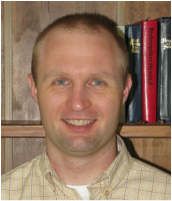
Brandon Rhea (Ph.D. Historical Theology at Midwestern Baptist Theological Seminary) is a pastor and an ACBC certified Biblical counselor. He met his wife, Karise, while doing pulpit supply in 2013-14. In April 2016, he accepted the call to pastor at Faith Baptist Church in Kirksville, Missouri. He loves history and has a heart for street preaching and evangelism. He is the author of “Spurgeon’s Forgotten Sabbatarianism” and teaches “Spurgeon on the Law & Sabbath” for Covenant Baptist Theological Seminary.