*Editor’s Note: The following is Part 3 in a five-part series on the Nicene Creed authored by Dr. Brandon Rhea. To read the other installments in this series, click on the following numbers: 1, 2, 3, 4, 5.
Many years ago, while open-air preaching in the Windy City, a young man stopped to talk with us. He was Roman Catholic and wanted to discuss theology. Since our hands and feet had become frozen on that crisp winter afternoon, we went to a coffee shop to talk. Over the course of our conversation, my friend with me shared the gospel to him. Then we answered objections. At the end of our amicable conversation, the young man wanted to pray with us. My friend stopped him. “We cannot pray with you, because you are not saved. You are not a Christian.” My friend’s words astounded the young man. He looked offended and bemused. Was this the right way to respond to him?
This article is the third of a five-part series on the Nicene Creed. Throughout my examination, I am asserting a simple truth. Even though Roman Catholics and Reformed Baptists confess the Nicene Creed, they do not agree on how to define the doctrines contained therein. Yes, we both confess the deity of Jesus Christ and the necessity of His atonement, but through the Catholic Church’s traditions, they pollute the gospel with drops of poison. To prove my point, let’s examine Colossians 1:19-20 and compare it to the Catholic’s teaching on the Mass.
“For it pleased the Father that in Him all the fullness should dwell, and by Him to reconcile all things to Himself, by Him, whether things on earth or things in heaven, having made peace through the blood of His cross.”[1]
Verse 19 says that “all the fullness should dwell” in Jesus. The phrase “the Father” is supplied to explain who was pleased by this action. It is another way of saying that Jesus is God. Jesus is omnipotent, omniscient, omnipresent, and holy like the Father. He has always been God and will always be God. In church history, however, a heresy developed called adoptionism. False teachers believed Jesus was born a normal person like you and me. He was not God in the flesh nor the Son of God. Yet being a mere man, He lived a sinless existence into His adulthood. At that time, God adopted Him and elevated Him to a divine status based upon His faithfulness. This teaching must be rejected, because God became man. Man did not become God.
What was Jesus’ purpose in the incarnation? Verse 20 says, “to reconcile all things to Himself, by Him, whether things on earth or things in heaven, having made peace through the blood of his cross.” Why reconciliation? When Adam and Eve sinned in the Garden of Eden, sin entered and corrupted the world. Romans 8:20-21 says that creation cries out and longs to be delivered from the curse imposed on it. Moreover, human beings need reconciliation since we have sinned against God and are at war against Him. Romans 5:10 says, “For if when we were enemies we were reconciled to God through the death of His Son, much more, having been reconciled, we shall be saved by His life.”
How does Jesus reconcile? He did it “through the blood of His cross.” After living the perfect life of obedience to the law, Jesus paid the debt for His elect on the cross. He took the curse of breaking the law, so that we could be given the reward for keeping the law which is eternal life. Jesus had to die, so that we could live. To accomplish this task, it required two things. First, He must be God. If Jesus is not the infinite God, then He is not able to pay for all of the sins of His people. Arianism, which denies Jesus’ deity, therefore, does not have a gospel. Second, Jesus must be a man. Being God, He cannot die. Hence, by taking upon Himself a human nature, He can be crucified and die according to the flesh. Gnosticism, which says Jesus only appeared to be a man but was not a human, does not have the true gospel either. If Jesus is not God and man, then we are not saved.
The Nicene Creed confesses Jesus’ work on the cross. It says,
For us and for our salvation
he came down from heaven;
he became incarnate by the Holy Spirit and the virgin Mary,
and was made human.
He was crucified for us under Pontius Pilate;
he suffered and was buried.
The third day he rose again, according to the Scriptures.
He ascended to heaven
and is seated at the right hand of the Father.
He will come again with glory
to judge the living and the dead.
His kingdom will never end.
Even though Roman Catholics confess Jesus’ death on the cross for our sins, they deny its sufficiency. To obtain salvation, Jesus cannot die once, but His sacrifice must be re-presented at the Mass. Rome teaches transubstantiation. Trans means “across” and substance means “essence.” They believe priests have the power to change the essence of the wine and bread into the body of Christ while keeping the outward elements as bread and wine. The elements, therefore, smell, taste, and feel like bread and wine, but it is really Jesus.
Instead of giving Jesus Christ preeminence at the Lord’s Supper, they give the bread and wine honor. On the altar, churches have a holy vessel called a tabernacle. Catholics genuflect towards it, because they think it contains Jesus. Their Catechism asserts, “The Holy Sacrifice, because it makes present the one sacrifice of Christ the Savior and includes the Church’s offering.”[2] According to Catholic teaching, at the Mass, Jesus is offered repeatedly to cover their sins. Also, the Catechism teaches, “Holy Communion, because by this sacrament we unite ourselves to Christ, who makes us sharers in his Body and Blood to form a single body.”[3] To be united to Jesus, a person must go to Mass. The sacrament unites people irrespective if they have been born again by the Spirit.
How do we respond to such claims? I am with John Knox who declared the Mass to be idolatry. Catholics worship the bread and wine rather than Jesus Christ whom the bread and wine represent. Moreover, they blaspheme Jesus’ name, because they think His once and for all sacrifice 2000 years ago is not sufficient to cover our sins in the present. The Apostle Peter would disagree. 1 Peter 3:18 says, “For Christ also suffered once for sins, the just for the unjust, that He might bring us to God, being put to death in the flesh but made alive by the Spirit.” Jesus paid it all on the cross for sins past, present, and future. We cannot turn the elements into Jesus’ body, and He does not have to be re-sacrificed to save us. We are saved by faith in Him and not by partaking of the Mass. Attending Mass every day of your life will not give you peace with God. You must be born again and trust in Christ’s once for all sacrifice.
The Ligonier 2025 State of Theology shows there is confusion among professing Catholics about the role of Jesus’ sacrifice.[4] Statement 34 said, “Jesus Christ’s death on the cross is the only sacrifice that could remove the penalty of my sin.” 31% disagreed with that statement and 69% agreed. Do you see the inconsistency since the mass represents Christ’s sacrifice for pardon today? In addition, statement 35 says, “Only those who trust in Jesus Christ alone as their Savior receive God’s free gift of eternal salvation.” 42% of Catholics disagreed while 58% agreed. To be justified—declared righteous—before God according to Catholic teaching, a person must have faith in Christ and perform good works. The works makes one sanctified which is necessary to be declared righteous by God. Rome teaches justification by Jesus and your works. Reformed Baptists, however, teach justification by faith in Jesus’ works and not your own.
Both Catholics and Reformed Baptists confess the Nicene Creed’s teaching about Jesus being God and coming to die for our sins. Yet in the white margins of the Creed, the Catholic Church smuggles in a false gospel which Reformed Baptists must reject. We, therefore, are not a part of the same universal church.
[1] All Scripture references are from the New King James Version.
[2] Catechism Of The Catholic Church, 1330.
[3] Ibid., 1331.
[4] See https://thestateoftheology.com.
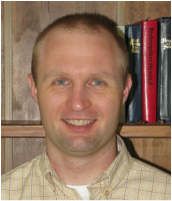
Brandon Rhea (Ph.D. Historical Theology at Midwestern Baptist Theological Seminary) is a pastor and an ACBC certified Biblical counselor. He met his wife, Karise, while doing pulpit supply in 2013-14. In April 2016, he accepted the call to pastor at Faith Baptist Church in Kirksville, Missouri. He loves history and has a heart for street preaching and evangelism. He is the author of “Spurgeon’s Forgotten Sabbatarianism” and teaches “Spurgeon on the Law & Sabbath” for Covenant Baptist Theological Seminary.