Though he slay me, yet will I trust in him: (Job 13:15 KJV)
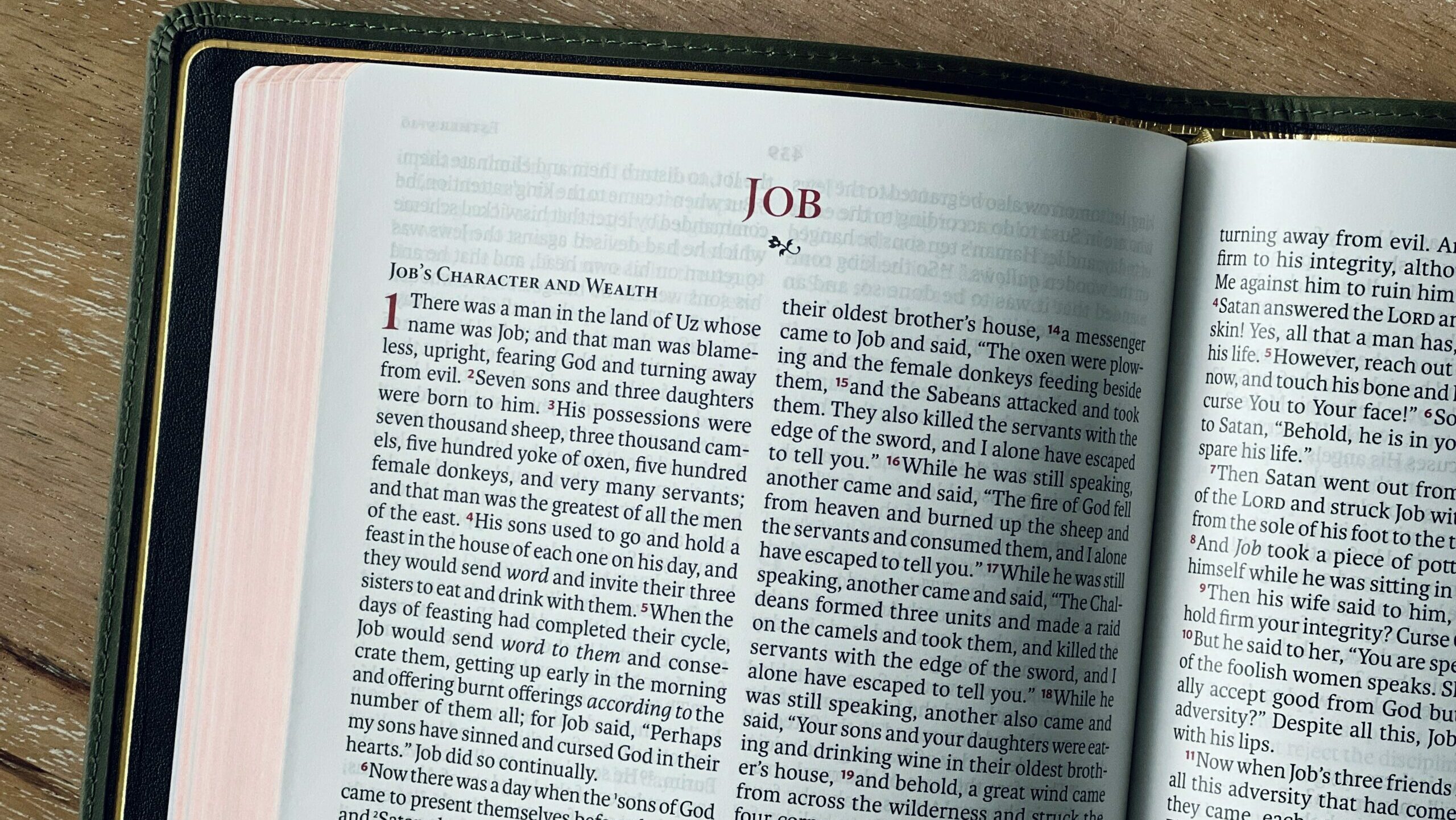
One of the wonderful benefits of preaching consecutive, expository sermons through a book of the Bible is that you get to beloved texts in their context and are forced to exegete them accordingly. There have been some beloved texts that I found not to mean what I always thought they meant, but the most surprising one to me was Job 13:15, a text which I had quoted many times over the years in sermons and counseling, “Though he slay me, yet I will trust in him.” It seems to be a great statement of unswerving, courageous faith. “No matter what God does, I will still trust him!” But this is probably not what the text says.
The passage is part of a larger discourse which begins in chapter 12. One of the helpful ways to read Job is to keep in view the discourse cycles. One of Job’s friends will make a speech and then Job will respond. That is the pattern. So Job 12 starts with Job’s typical sarcasm (12:1-6). Then in 12:7-25 Job unfolds what could be called, “Theology 101.” God is sovereign, God is wise, God is strong. Job asserts that every echelon of society, everyone in society, small or great, is under the sovereign might of God and subject to his disposal. All true, but any notes of love or mercy are strangely missing. Maybe they aren’t strangely missing, they are missing because Job cannot see them at this point.
Job then sharply rebukes his friends in 13:1-6. This too is common in the book of Job. Job tells them in no uncertain terms that he knows what they know and that they aren’t smarter than he is. Additionally, they smear him with lies, they are worthless physicians and if they really wanted to help they would simply shut up. He then pleads for them to hear him. Job charges his friends in verses 7-12 with speaking falsely for God. They think they are defending him, but they are really offending him. Job then scathingly asks how it will go with them when it is their turn to sit in the hot seat and be examined by God. He then discards their advice as cheap and meaningless words.
The next section is where our beloved text is found (13-16). The main point of Job’s speech here is that he is going to argue his case before God no matter what. He is fiercely determined to state his case, i.e., his innocence, “I will take my flesh in my teeth; I will take my life in my hands” (13:14, TNK). The NASB has this as a question, although many other translations take it as a statement of fact. Job is saying he is going to bite the bullet and make his case, no matter how dangerous. This too is a recurring theme in Job. Job believes he is in the right but he also knows that God is bigger and stronger and he is no match to argue with God. Job feels that if he is allowed to argue his case, then it will turn out for his vindication (see e.g., 13:18). It is at this point that our beloved text emerges. The NASB, NIV and ESV follow the KJV, “Though He slay, I will hope in Him.” (It is hard to depart from beloved traditional translations!).
However, the text probably does not say this. There is a variant reading here, called in the Hebrew text a Ketib Qere. The Ketib reads, “If he were to slay me I would have no hope.” The Qere reads, “Though he slay me, yet I will trust in him.” The second reading (the Qere) appears to be an effort to soften the harshness of the text and insert some hope rather than hopelessness. The following translations have adopted the more likely original reading (the Ketib):
Behold, he will slay me; I have no hope: Nevertheless I will maintain my ways before him. (ASV)
Behold, he will slay me; I have no hope; yet I will defend my ways to his face. (RSV)
He may well slay me; I may have no hope; Yet I will argue my case before Him. (TNK)
The reading, “He may well slay me” fits better with Job’s next statement, which is “nevertheless, I will argue my case before Him.” If the reading is one of confident faith (“though he slay me I will hope in him”), then the concessive clause (the contrast, “nevertheless, yet, I will argue my way”) makes less sense. But if the original reading is more negative (the Ketib), it fits both the larger and more immediate context better. Even if God slays Job and leaves him hopeless, Job will not stop arguing his case before God. This, instead of being a statement of unswerving faith, is a statement of undeterred stubbornness and self-confidence in his own vindication. Job, at this point, mistakenly, thinks such an opportunity will be his salvation (13:16).
So what do we make of a beloved text that does not or may not say what we always thought it said? Our faith is in God’s Word as it is, not in what we think it is. We humble ourselves before the Word and accept it as it is. But we also realize that what we thought it said is often supported in other places. Job does have glimmers of hope in other texts. His faith does grow. He will assert his confidence in God. But we must let the text speak for itself and be as honest with it as possible. We then try to interpret it as it is. This will change the way certain passages apply to us because the meaning is not what we thought. But that’s OK. It is God’s Word and the Word of the Lord stands forever.
About the Author
Brian Borgman is the founding pastor of Grace Community Church. He earned a B.A. in Biblical Studies from Biola University (La Mirada, CA), a Master of Divinity from Western Conservative Baptist Seminary (Portland, OR) and a Doctor of Ministry from Westminster Seminary (Escondido, CA) and a ThM from Puritan Reformed Theological Seminary in Historical Theology. Brian and his wife Ariel have been married since 1987. They have three wonderful children, Ashley, Zach and Alex and three grandsons.

Stay in touch with CBTSeminary
For more information about CBTS, go to CBTSeminary.org
Consider giving to CBTSeminary to help us train the next generation of gospel ministers.
Apply to CBTS today to be sharpened for a lifetime of faithful ministry.
Follow CBTS on our socials: X | Instagram | Facebook | YouTube
Sign up for our newsletter and receive monthly updates related to the Seminary.