
Elders charged with caring for souls must be diligent in in helping them through regular pastoral biblical counseling. I have written elsewhere[1] defending the legitimacy of biblical counseling and presenting Scripture’s process for this duty; this chapter, adapted from a Founders Journal article,[2] focuses on the practical relationship of pastoral biblical counseling and a Reformed creedal—catechetical—confessional framework. So: while we’re not dealing specifically with the process of biblical counseling here, this chapter considers a means of accomplishing it faithfully.
Confessional Counseling is a Means of Biblical Counseling
For our purposes, confessional counseling is biblical counseling—not somehow editing the symbol[3] into Scripture, wedging the Confession into the canon’s proper place, or substituting God’s words with man’s—but rather summarizing the Bible concisely, while presenting it accessibly and usefully with doctrinally-robust faithfulness. The Confession is a framework, not the foundation; a guide, not the ground of faith. Just as faithful expositors may preach a sermon unpacking anything in Scripture from a single word to an entire book, we may counsel God’s word by employing faithful scaffolding and vantage points where God’s providence offers them.
This scaffolding is highly practical in nature. In the heat of the moment, counselees sometimes struggle to recall specific biblical applications, or to reproduce the structure of the Scriptural thought process they are still learning to redirect their struggles through. They’ve been viewing and handling their problems in unbiblical ways and must learn how to practice godliness according to Scripture’s truth. Thus, a confessional approach can provide a helpful reference point to which they may easily return. The confession simply marks out a path into the mind-renewing, life-directing wisdom found in its specific biblical citations.
No Christian in his right mind would dream of replacing Scripture—God’s inspired, all-sufficient, inerrant, authoritative, sacred word—with a mere document of human construction, however august and honored its position in church history. Thus I use the concept of “confessional counseling” strictly to emphasize the deeply theological nature of biblical counseling—and to point out that, given the biblical counselor’s proper dependence on systematic theology, the 1689 Second London Baptist Confession of Faith[4] (hereafter 2LC or 1689) may be considered, at one level, as an abbreviated-format systematic theology. Martyn Lloyd-Jones in Preaching and Preachers declared, “No type of preaching…should be non-theological”—which is precisely my point regarding biblical counseling, too. “Confessional counseling” here includes biblically-faithful creeds, confessions, and catechisms in this strict sense only, and is in no sense whatsoever intended to substitute, enhance, or displace Scripture as the ground of all godly counsel.
I suggest this method as simply one tool among many possibilities in a robust, faithful biblical counseling context. For example, men who would never meet with me in my study almost immediately engage me and the Bible in great detail and attentiveness with a hammer in hand fixing something or a bow in hand shooting something. Julie Lowe of CCEF wrote Building Bridges: Biblical Counseling Activities for Children and Teens[5]; it employs a similarly creative approach to engaging young people with God’s word. When I say “confessional counseling,” I intend merely an accessible way to meet and engage people where they are—“a means of edification in righteousness,” as Charles Spurgeon (1834–1892) described it in the preface of his reprint of the 1689.[6] Confessional counseling offers doctrinal instruction (biblical counseling is applied theology, after all!) while guiding practical implementation, because unapplied counsel is incomplete counsel…which means it isn’t counsel at all (James 1:22). It was said of Jonathan Edwards (1703–1758) that all his doctrine was application, and all his application was doctrine; quite so. We need all of God’s word for all of life, and the biblical counselor’s task is to grasp the word, give it well, and guide souls by its light to wholeness in Christ.
The Puritans often remarked that we are to teach “doctrine for life”[7] (1 Timothy 1:5). Quite so here. J.I. Packer (1926–2020) wrote that “The Puritans made me aware that all theology is also spirituality [which he defines a few lines down as “teaching for Christian living”]…If our theology does not quicken the conscience and soften the heart, it actually hardens both.”[8] William Ames (1576–1633) taught in The Marrow of Theology that “Theology is the doctrine or teaching of living to God,” as did William Perkins (1558–1602): “Theology is the science of living blessedly forever…the body of Scripture is a doctrine sufficient to live well” (A Golden Chain). Petrus van Mastricht (1630–1706) later agreed in Theoretical-Practical Theology that
Christian theology is best defined as the doctrine of living for God through Christ…[it] unites theory with practice, and is “a knowledge of truth that is according to godliness,” Titus 1:1…Indeed, the study of theology, to the extent that it is true theology, is not sufficient, unless…it is earnestly devoted to practical theology and to practice.
Approaching the Confession
The 1689 and its companion teaching document, The Baptist Catechism (1693), can help inform biblical counseling as differentiated practical applications of Scripture’s counsels and exhortations flow from their layout.[9] So—examine their respective tables of contents: they move from Scripture to God, from providence to man, then to covenant, Christ, effectual calling, the work and nature of salvation, life in Christ—living within “the true bounds of Christian freedom,”[10] as Samuel Bolton (1606–1654) called it in 1645, via the moral law— applications of the Second Table, life together in Christ’s church, and living in hope in view of last things. The catechism branches out in treating God’s moral law and the Lord’s prayer—sections especially fruitful for pastors and counselors.
Consider the Catechism’s treatment of the Seventh Commandment (Q. 75–77)—an extremely common point of sin for many Christians. After reciting the commandment (Q. 75), it asks what the commandment requires and forbids (Q. 76–77). Note how the positive statement of the doctrine is followed by its practical application in terms of what God desires from and denies to his people:
Q. 76. What is required in the Seventh Commandment?
A. The Seventh Commandment requireth the preservation of our own and our neighbor’s chastity, in heart, speech, and behaviour.
Q. 77. What is forbidden in the Seventh Commandment?
A. The Seventh Commandment forbiddeth all unchaste thoughts, words, and actions.
By way of case study, let us apply this wisdom gleaned from Scripture to the context of counseling a man indulging pornography. Whether married or single (Hebrews 13:4; 1 Corinthians 7:4), we have one actively failing to “preserve his own and his neighbor’s chastity” in godly expression of faithful marital love (1 Thessalonians 4:4). Instead, he has engaged in idolatrous (Romans 1:25; Ephesians 5:5) and filthy (Leviticus 18:27–28) self-love: polluting his heart in lustful thoughts (Proverbs 23:7), speech (Matthew 12:34b; Matthew 15:18), and actions (1 Peter 1:16). He “unchastely,” intemperately (1 Thessalonians 4:3) violates God’s holiness (Hebrews 12:14) by hidden (Proverbs 28:13) and open sin, loving the world and its perversions of God’s good design (1 John 2:15). He breaks faith with the wife of his youth (Malachi 2:15; Proverbs 5:18; cf. Proverbs 2:17) and invites God’s vengeance (1 Thessalonians 4:3–6) in his coveting another woman (Exodus 20:17; Matthew 5:27–28). In other words, “heart, speech, and behavior” have been infected and must be healed by divine grace.
The 1689 describes those who continue practicing any sin or cherishing any sinful lust as “perverting the main design of the grace of the gospel to their own destruction” (2LC 21.3; cf. 1 John 3:6), for “the moral law doth forever bind all” (2LC 19.5); while “not as a covenant of works, to be thereby justified or condemned, yet it is of great use to them as well as to others, in that as a rule of life, informing them of the will of God and their duty, it directs and binds them to walk accordingly…” (2LC 19.6; this paragraph merits careful reflection for biblical counseling purposes). He must learn to feel his sin’s weight—as the church father Anselm (1033–1109) wrote in his 11th century Cur Deus homo?,[11] he must learn to “consider…the greatness of the weight of sin.” He must learn to “hate it and forsake it because it is displeasing to God.”[12]
2LC signatory Hercules Collins’s (1646/47–1702) An Orthodox Catechism offers similar biblical instruction and pastoral counsel, very useful in biblical meditation, repentance, and learning holy obedience:
Q. 123. What is the meaning of the Seventh Commandment?
A. That God hates and abominates all sexual vileness and filthiness. Therefore, we must hate and detest the same. This also means that we must live temperately, modestly, and chastely, whether we are married or single.
Q. 124. Does God forbid nothing else in this Commandment but actual adultery and external acts of sexual sin?
A. No. Since our bodies and souls are the temples of the Holy Spirit, God will have us keep both in purity and holiness. Therefore, deeds, gestures, words, thoughts, filthy lusts, and whatever entices us to these, are all forbidden.[13]
The biblical counselor, in these confessional and catechetical statements, finds in brief compass Scripture’s core teaching on the subject[14]—so he may readily give “training in righteousness” (2 Timothy 3:16–17). Consider the scope of Scripture’s witness: in this example’s few paragraphs, I note at least twenty-two passages of Scripture referenced. The biblical counselor may begin helping his counselee in the biblical and catechetical process of putting off sin, renewing his mind by God’s word, and putting on righteousness (Ephesians 4:22–24) in the power of the Spirit (Romans 8:5–14).[15]
Applying the Confession Biblically
The counselee could write out and begin memorizing the cited verses, meditating on and writing down how they confront, explain, and rebuke his sin, along with the counsel they give in very specific steps, applications, thoughts, etc. From there he might search out cross-references or related passages, pondering how “the way of the treacherous is their ruin” (Proverbs 13:15) and specific ways his pattern of sin has strengthened[16] other sins such as lying (Ninth Commandment), worry/anxiety (First Commandment), discontented anger toward his family (Fifth and Sixth Commandments), objectifying women (which is really a sin against the imago Dei as per Genesis 1:27), sharing in the sins of others (1 Timothy 5:22b; Mark 12:31; Romans 13:10)—not only the actors and producers, but think here of how every click contributes to human trafficking, abortion, other broken homes, cultural decay, and so forth. “Unchastity” is thus seen not simply to be sexual immorality (Grk. porneia[17]) expressed in illicit viewing and self-gratification, but comprehensively giving way to sinful passions (1 Peter 2:11)—quite possibly revealing a heart which does not know Christ and thus invites the eternal wrath of God (Ephesians 5:5–6; Revelation 22:15; Matthew 5:27–30).
All of this is fodder for cultivating repentance (1 Timothy 1:8–10; Romans 2:4), encouraging and evaluating growth and change toward godliness by the Scripture’s objective standard, aimed at restoring heart and home—structured around biblical exposition and application via the catechism and confession. More might properly be said concerning a hedonistic, climax-crazed culture that hates marriage and worships self, such that children today have usually been exposed to pornography around eight years old, and are frequently properly classified as addicted to illicit material by around eleven years old. That factors in hugely, counselor: practically speaking, that twenty-five-year-old newlywed husband could quite possibly have dealt with this sin for sixteen or seventeen years by the time he sits down with you.
Don’t overlook how deeply all this can affect a wife. Often, all sorts of accompanying temptations toward multiple forms of unbelief can present once a wife discovers her husband’s sin in accessing and pursuing illicit material. She may be tempted to believe he will never (and can never) change, or pressured to join him in its consumption as part of their intimacy. She may be tempted by thoughts that God cannot fix this problem. She may despair, tempted to see their situation as hopeless, her husband and marriage as a lost cause, and conclude that she is worthless and useless (body insecurity and image issues often arise here), and that she has nothing worth living for any longer. In her case, 2LC 3, 5, and 32 would be exceedingly fruitful places for reflection, study, and Scripture memory. Her situation is under God’s sovereignty: God’s decree comprehends all his ends and means, unto his glory, and God’s providence is his faithful, wise, holy outworking of his decree. God’s Spirit calls and conforms her to Christ through all of this, teaching her to abound in the hope of God’s presence and promises, particularly in the age to come.
In particular, 2LC 32.3 as the concluding summary statement of the entire 1689 calls her to trust in God’s word—particularly that Christ will return, his Day will come, and his purposes will be accomplished in stunning faithfulness. Thus the twin graces of repentance and faith should issue in forsaking sinful unbelief and fearing God (2 Corinthians 5:10–11), with a steady eye toward her identity in Christ. Sorrows should be framed in this light (2 Thessalonians 1:5–7; 2 Corinthians 4:16–18), fighting carnal security (Mark 13:33–37; Ephesians 5:15) all our days, fixing our hopes on Christ’s “glory to be revealed” (1 Peter 1:13; Revelation 22:20)—not the fading glories of fixing her husband (or herself), somehow proving herself to her husband, getting her head clear, or anything else short of entrusting herself to Christ. 2LC 32.3 presents multiple specific applications which shepherds may employ in the ministry of BC with troubled souls.
Guidance for Confessional Biblical Counseling
- Subordination: Ensure the symbol is subordinate to Scripture in practice. Your counsel must originate in and depend on God’s word, not man’s wisdom. This must be carefully communicated in both your words—how you affirm and emphasize the confession, creed, or catechism as beneficial; and in the work itself—how you actually counsel and apply the Bible, while demonstrating the symbol as a useful reference. The symbol functions to provide structure, not to override the substance of Scripture; it is a robust roadmap and reference point, but not divine revelation itself.
- Sufficiency: Ensure the Scripture is seen as sufficient, not the symbol. Without any jabs intended toward friends of differing persuasion, what I suggest in no sense argues for an integrationist methodology or philosophy of the care of souls. God’s people were not unhelped before Wilhelm Wundt (1832–1920)—or William Kiffin (1616–1701), Nehemiah Coxe (d. 1689), Benjamin Keach (1640–1704), Augustine of Hippo (354–430), the four ecumenical councils, the Reformers, or the Puritans. The symbol’s doctrines present didactic and diagnostic grids, serving strictly to jar the memory and train the mind to turn to the Word for needful wisdom and help, with understanding.
- Structure: Ensure your counsel is structured according to Scripture’s weighting. The Confession is wonderfully instructive in both its specificity—what it goes on record affirming—and its silence—what it simply omits. I do not posit any portion of Scripture as less inspired or useful than another (2 Timothy 3:15–16); but I do argue that since some parts of Scripture are “of first importance” (1 Corinthians 15:3–4), there must necessarily be some matters of secondary weight (cf. 2LC, 1.4–5, 7). Biblical counselors should also carefully consider and apply the concept of theological triage here.[18]
- Soundness: Ensure your counsel is scripturally sound. “It is required of stewards that they be found faithful” (1 Corinthians 4:2). Textual faithfulness is the only ground upon which lives may be changed (John 17:17)—and doctrinal faithfulness flows only from that sure foundation. Symbols are incredibly helpful, but they are not inspired and can be wrong.[19] Privilege Scripture, reason from Scripture, systematize Scripture, teach Scripture, memorize Scripture together, counsel Scripture, apply Scripture, and you will be doing confessional counseling.
A Few Practical Considerations:
- Start with Scripture in opening.
- Stay with Scripture in reasoning.
- Study Scripture with them in assessing and addressing.
- Show from Scripture in illustrating and relating.
- Speak from only one or two Scriptures when possible (simplicity strengthens sticking). Develop those texts with them; draw out doctrine; demonstrate application; deal patiently but plainly; and respectfully, lovingly require obedience to God’s word.
- Then bring in the confession, creed, or catechism, if needed. This is not a hard and fast rule, of course; methods are tools, not straightjackets. But see to it that you only bind the conscience only with Scripture. All else is secondary.
- Ultimately: deal with Scripture first, last, and most.
There is a categorical difference between a wonderfully informative but manmade and fallible summary of the Bible, and the inspired, infallible, inerrant, all-sufficient, authoritative, holy, eternal, and perfect word of the living God. The confession sends you to the Word as “the only sufficient, certain [that is, inerrant], and infallible rule of all saving knowledge, faith, and obedience”—which makes the holy Scriptures to be “most necessary, as the rule of faith and life” (2LC 1.1–2).
Stay in touch with CBTSeminary
For more information about CBTS, go to CBTSeminary.org
Consider giving to CBTSeminary to help us train the next generation of gospel ministers.
Apply to CBTS today to be sharpened for a lifetime of faithful ministry.
Follow CBTS on our socials: X | Instagram | Facebook | YouTube
Sign up for our newsletter and receive monthly updates related to the Seminary.
[1] My overview of the pastor’s care of souls in the ministry of biblical counseling is Authority and Application: An Introduction to Biblical Counseling. Originally in Theolog vol. 1, #1 (Sumpter, SC, 2021), pp. 80–94; revised under same title for The Greater Heritage’s “Ministry Helps” booklet series (Winter Springs, FL, 2023); available online at https://reformationdalton.com.
[2] This lecture began its life as a part of an expository series through the 1689 Second London Baptist Confession of Faith: “Counsel from the Confession? 1689 Eschatology and Pastoral Biblical Counseling,” in The Founders Journal, Issue 123, Winter 2021. See https://founders.org/articles/counsel-from-the-confession-1689-eschatology-and-pastoral-biblical-counseling/. This chapter, initially excerpted from that article for a Reformed Baptist Fellowship of Indiana pastors conference lecture, appears here in substantially revised and expanded form.
[3] The study of creeds, catechisms, and confessions of faith is called “symbolics.”
[4] I write as a confessionally Reformed Baptist pastor, so my primary frame of reference are the baptistic confessions and catechisms; other faithful Reformational streams include such symbols as the (Presbyterian) Westminster Confession and Shorter and Larger Catechisms, the (Congregationalist) Savoy Declaration of Faith, or the (Reformed) Three Forms of Unity.
[5] Julie Lowe, Building Bridges: Biblical Counseling Activities for Children and Teens (New Growth Press, 2020).
[6] Repr. in C.H. Spurgeon’s Autobiography, Compiled from his diary, letters, and records, by his wife and private secretary, 1854–1860 (Fleming H. Revell Company, 1899), II.159–161. His prefatory letter to his congregation is brief and rewards the time invested reading it.
[7] For more on this, see Joel Beeke and Mark Jones, A Puritan Theology: Doctrine for Life (Grand Rapids, MI: Reformation Heritage Books, 2012), 841–977; and J. I. Packer, A Quest for Godliness: The Puritan Vision of the Christian Life (Wheaton, IL: Crossway Books, 1990), 107–24, 191–218, 233–276.
[8] Packer, A Quest for Godliness, 15; William Ames (John Eusdyn, transl. and ed.), The Marrow of Theology (Grand Rapids: Baker Books, 1997), 77; William Perkins (Joel Beeke and Greg Salazar, eds.), The Works of William Perkins (Grand Rapids, MI: Reformation Heritage Books, 2018), VI.11; Petrus Van Mastricht, Theoretical-Practical Theology (Grand Rapids, MI: Reformation Heritage Books, 2018), I.66, 79, 95.
[9] Consult James Renihan’s excellent A Toolkit for Confessions: Helps for the Study of English Puritan Confessions of Faith (Palmdale, CA: Reformed Baptist Academic Press, 2017) for more on how the structure of Puritan confessions and catechisms reflects their theological substance and center.
[10] Samuel Bolton, The True Bounds of Christian Freedom, 1645; repr. Carlisle, PA: The Banner of Truth Trust, 2010.
[11] Anselm, Cur Deus homo? (translated as “Why the God-man?”), ch. 21; repr. in St. Anselm: Proslogium; Monologium; an Appendix in behalf of the fool by Gaunilon; and Cur Deus homo (Chicago: Open Court Publishing Company, 1903). While his “satisfaction” view of the atonement leaves something to be desired, the work provides an insightful glimpse into Medieval–era care of souls.
[12] From Richard Cecil’s 1798 A Catechism for Boys and Girls, Q. 78; repr. in Thomas Nettles, Teaching Truth, Training Hearts (Amityville, NY: Calvary Press Publishing, 1998), 94.
[13] Hercules Collins, An Orthodox Catechism: Being the Sum of the Christian Religion, Contained in the Law and the Gospel, for preventing the Canker and Poison of Heresy and Error (London, 1680).
[14] In this respect, the confession or catechism might function similarly to the popular Quick Scripture Reference for Counseling books by John Kruis (Grand Rapids, MI: Baker Books, 2013).
[15] The crème de la crème represented in the Reformed and Puritan experiential tradition here are Thomas Chalmers’s (1780–1847) The Expulsive Power of a New Affection, Thomas Watson’s (ca. 1620–1686) The Doctrine of Repentance, and John Owen’s (1616–1683) trilogy comprised of On the Mortification of Sin, On Temptation, and On Indwelling Sin in Believers.
[16] On this head, see my “Of Marriage: The 1689 Baptist Confession, chapter 25” in The Founders Journal (Winter 2020, #119), fn. 28. The principle of overeating as a gateway sin to indulging further lusts presents frequently in pornography use. My point is not managing over-indulgence vs. an appropriate indulgence in sexual sin (there’s no such thing!), but that “giving opportunity to the devil” (Ephesians 4:27) in one area invariably also cedes ground in other areas. Sexual sin never stays in a box.
[17] The major Greek lexicons—BDAG, TDNT, NIDNTT—all concur here.
[18] Al Mohler’s booklet The Pastor as Theologian sketches theological triage with clarity and brevity; it is available online at https://www.sbts.edu/press/the-pastor-as-theologian/.
[19] An obvious heretical example is the recent “Sparkle Creed.” Written for “Pride Month” by a United Church of Christ minister, it’s a blasphemous mutation of the Apostles’ Creed, anachronistically forcing historic Christian doctrines to carry water for perverse modern sexual categories.
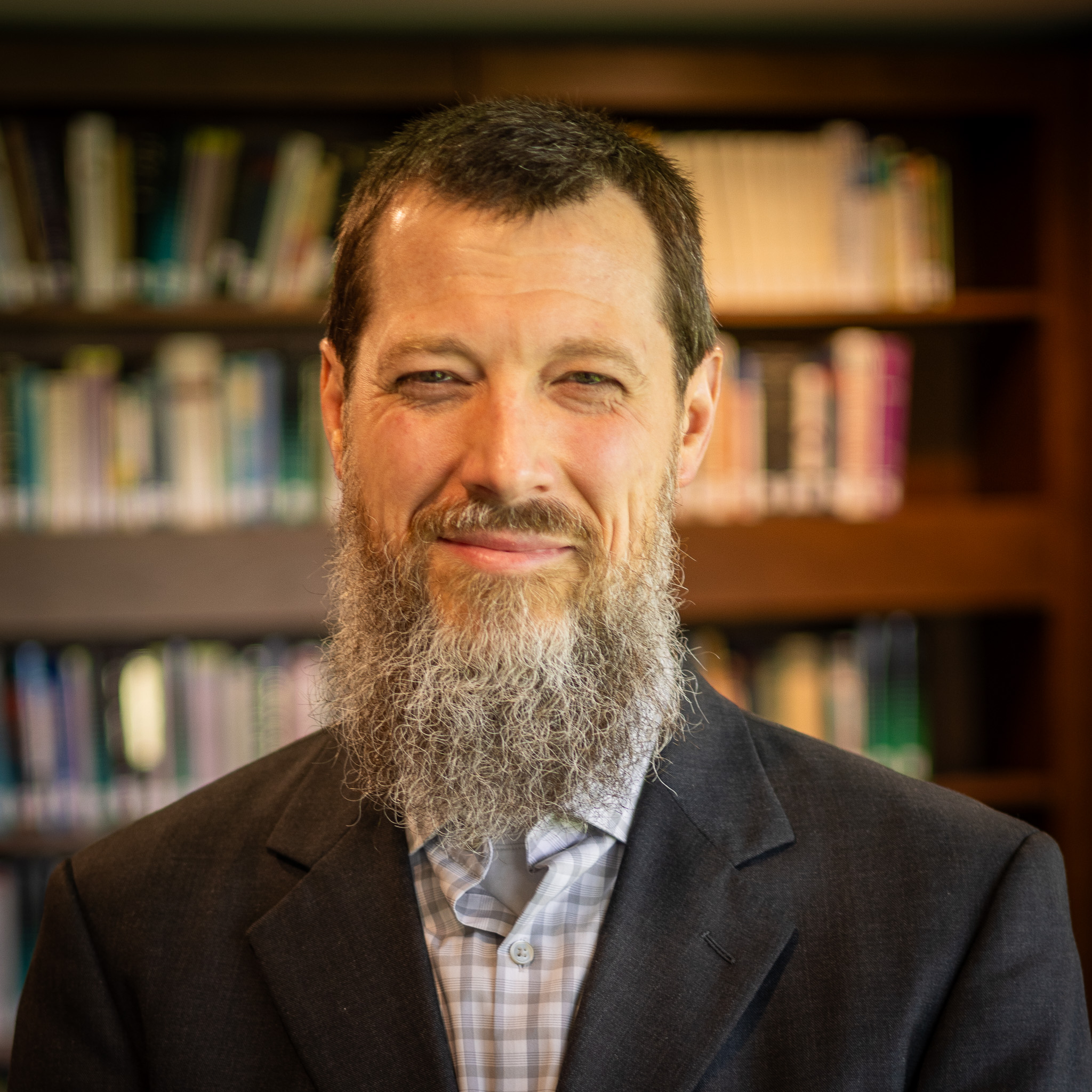
Reagan Marsh is husband to Kara, daddy to RG and AG, and founding pastor-teacher to Reformation Baptist Church of Dalton, GA. He contributed to The Jonathan Edwards Encyclopedia (Eerdmans), provided biographical introduction to J.P. Boyce’s A Brief Catechism of Bible Doctrine (Particular Baptist Heritage Books), coedited in The Works of John Flavel (The Banner of Truth), and writes regularly for The Founders Journal. Reagan authored What to Do After a Breakup: Responding to Pain and Loss Biblically and Authority and Application: An Introduction to Pastoral Biblical Counseling (both with The Greater Heritage), Analytical Outlines of the 1689 Second London Baptist Confession, and Analytical Outlines of Particular Baptist Confessions of Faith (available through Monergism.com), and contributed to Anchored in Truth: Reflections in Biblical Counseling (Soul Doctor Publications). He is coediting The Works of Hercules Collins (forthcoming, H&E), composing a biographical introduction for Hercules Collins’s An Orthodox Catechism (forthcoming, PBHB), and completing Guided Tours in the 1689 Second London Baptist Confession: An Introduction and Survey. A certified biblical counselor, Reagan took MATS and MDiv study at NOBTS and SBTS, and is a ThM candidate at CBTS under Tom Nettles (his thesis, Teaching, Tending, Training: The Pastoral Theology of Hercules Collins, 1646/1647–1702 is forthcoming, Wipf & Stock). He has served in gospel ministry since 1998.