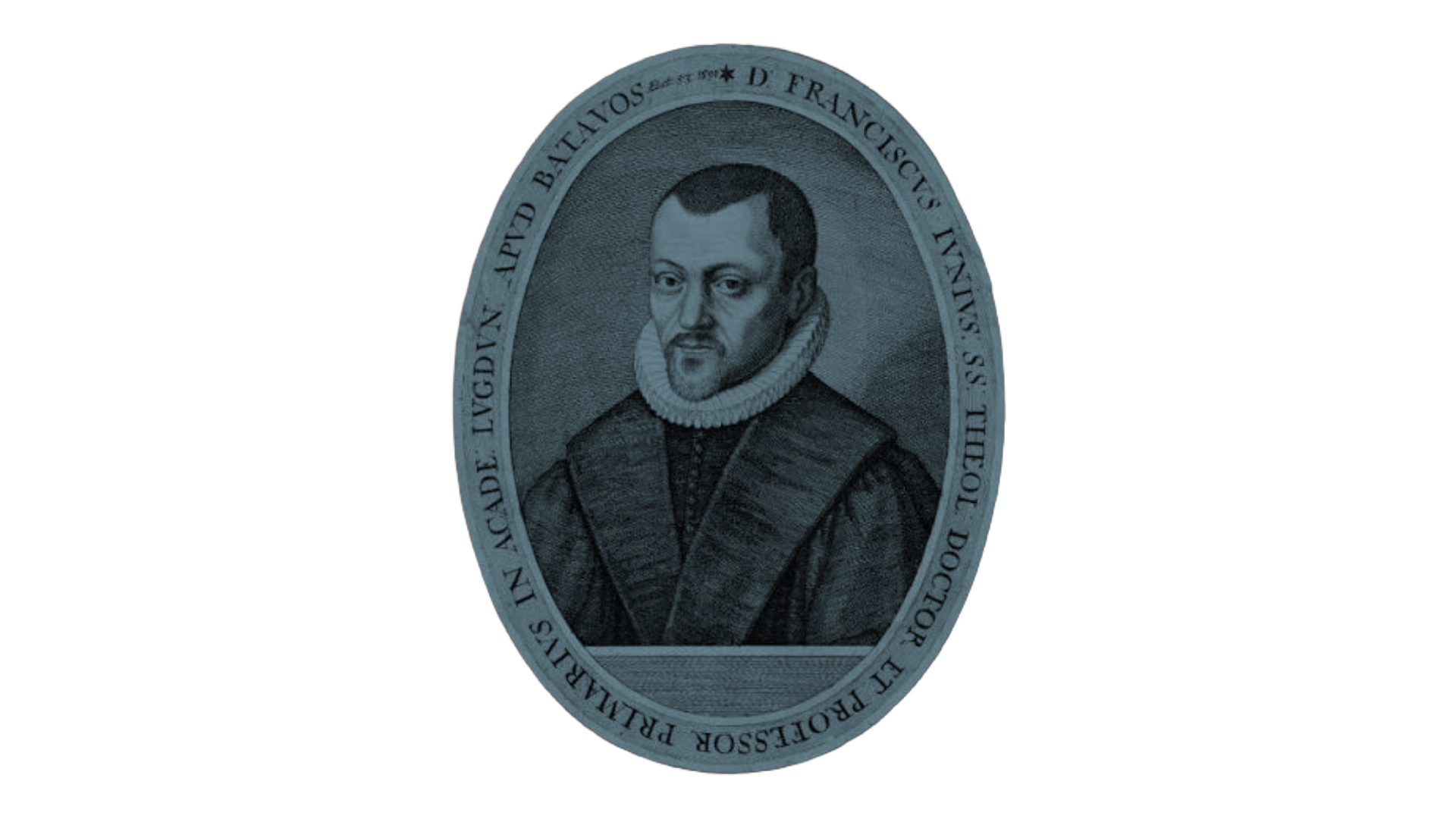
Most people who linger around reformed spaces have heard of Luther, Calvin, Beza, Zwingli, Turretin, Oecomlampadius. But few, I believe, have heard of Franciscus Junius. The French Reformer that seemed to always be where the action was happening. When I was first introduced to Junius at Westminster Seminary I had to read the recently translated A Treatise on True Theology, which included his short autobiography. I often quipped, half-seriously, in discussion that Junius is the ‘Forest Gump’ of the Reformation. In the movie, Forrest Gump as a young boy inspired Elvis to dance the way he did. He met JFK, was in Vietnam, did the famous march on Washington, and he caught the break-in at Watergate because he thought the electricity was out. Of course, Junius was considerably more learned than Forrest Gump, but he did seem to have a knack for finding himself at the center of some of the most consequential events of the Reformation.
Junius lived an extraordinarily courageous life living in the shadow of the changing of the world. Swept up in the Hugenot movement, he finds himself studying under Calvin, then living underground in Belgium as a pastor, at the same time helping kickstart the first Synod to adopt the Belgic confession, on top of being buddies with Zacharias Ursinus (author of the Heidelberg Catechism) and preaching his funeral sermon, he ended his life on diplomatic missions to his homeland of France, and writing a series of distinguished and relevant theological works for today.
Paulus Merula, who would write a tribute to him upon reading his life would say that he was a “a man called to the arena… a man who had wrestled through the most arduous contests and had been snatched miraculously from an ocean of countless very savage tumults. I grieved that the knowledge of such great kindness of God, which had been conferred upon one man, would lie hidden with that one man and should be unknown to so many.
He begins his autobiography by acknowledging he does not want to make it about himself. But to set forth God’s mercies, and the careful providences that attended his life. He says: “The Lord’s mercies I shall relate, when I give an account of my poor life, that the Lord who made me may be glorified in me.”
Upbringing
He did not come from squalor, but from a distinguished French family, with an ancestry that was militarily and scholarly impressive. His Father was a local magistrate, trained in administration and jurisprudence. His Father was aqcuainted with the Queen of Navarre, and he was courageous in his loyalty to her while serving around Bourges. It is clear from his autobiography that his father was warm, caring, and godly. Junius was born in early May, 1545. And his mother was so sick and hemmoraged from the birth, that they suspected that both of them would not survive. They called forth what we might call the Godparents, and they baptized Junius within the first hour of his birth. As a little boy he suffered from a severe form of eczema, which his maids thought cold chilly air would help him. This only made it worse for the boy. He suffered the consequences the rest of his life which may have resulted in a bacterial infection on his foot that was not properly treated.
Education
He began his education at the age of twelve with private and public instructors. He cut his academic teeth under several notable humanist Hugenot jurists. Growing up in nobility, and with a Dad as prestigious as he had, Junius admits that his sinful desire came in the form of a love for honor and recognition. He wanted to be noticed, and he hated watching others being praised instead of him. He would burn with jealousy if surpassed by more gifted students. Decades later, Junius recognizes that the Lord used this sin in his heart to advance his career. What we mean for evil, God means for good.
His Father would employ him at home to transcribe cases and to help him with his work as a lawyer which gave him from an early age an understanding of public administration. His Dad seemed to read the times well, he was keenly aware of the growing political and religious corruption in France and knew the best route for his son was his education. It was an open door to other countries and it provided a sense of security. His Father would often instruct him to the point of tears. We can learn much about what it means to be Fathers, that our lives are being observed by our children. And that our godly influence may be used to help them live with a clear conscience before the Lord.
Conversion
In 1560, Junius secured a position as a diplomatic envoy to the Ottoman Empire in Constantinople, he would be in the court of Suleiman I, a thousand miles from home. It is quite remarkable to think he was given this assignment at 15 years old. Providentially, he never made it to Turkey. Why? Because he missed the boat to Turkey leaving Lyons! How different his life may had been. He decides to stay in Lyon, and while furthering his studies in Lyons he faced the temptations many young men face in what we might call a college setting away from the influence and watch of parents. He was tempted greatly to sexual immorality but he was able to resist, which he credits to the grace of God watching over him. He is not converted yet, so his sense of morality and his Fathers instructions were like a restraint to him. But the real test came from the mind, while in Lyons he became an atheist. He looked towards the ancient Greek philosophy of Epicureanism as the solution, which was introduced to him by a humanist friend. He describes that even his feelings were muted at this time. They were deteriorating to a point that hardened him.
“I perceived that a creeping poison which I had swallowed was growing stronger within me. And both by the persuasiveness of this man and by the sophistication of his words, I was carried away headlong toward the point where my soul was growing hard, stuck in that evil, and becoming wholly incapable of feeling.”
Junius pursued happiness and pleasure and found it only left him numb. But the Lord was not going to let him go. Shortly thereafter civil unrest and religious violence was spreading around France between Catholics and Hugenots, we call it now the “French Wars of Religion.” These were terrible days for France. And an angry mob looking to harm academics surrounded the home Junius rented in. A rumor had spread that Junius’s friend had destroyed a catholic shrine during Mass. Junius was able to escape death narrowly, but his friends and teacher, Barthélemy Aneau were killed in the riots. He fled into the countryside and a Protestant farmer gave him shelter, and it was there, hiding, that he came face-to-face with the bankruptcy of his athiestic & epicurean worldview. This young scholar who was absorbed in his academic pursuits and being recognized, now found himself fleeing for his life. He saw his mortality. He saw that philosophical ideas can’t stop mankind from killing each other. But the decisive moment came when he returned to his Father. His Father would give him a New Testament and would tell him to read John 1:1. “My body shuddered, my mind was dumbfounded, and throughout that whole day I was so overwhelmed that I seemed to myself unsure who I even was.” And he saw God’s providence over preserving his life, a divine mercy, and it was there He came to saving faith in the God that had kept him.
From this point on, Junius’ life would change forever, as he gets swept up in the movement of reform in Geneva. He would learn from the most influential reformers of his day. This same providence that carried him thus far, will see him through in exile, persecution, and pastoral ministry.
About the Author
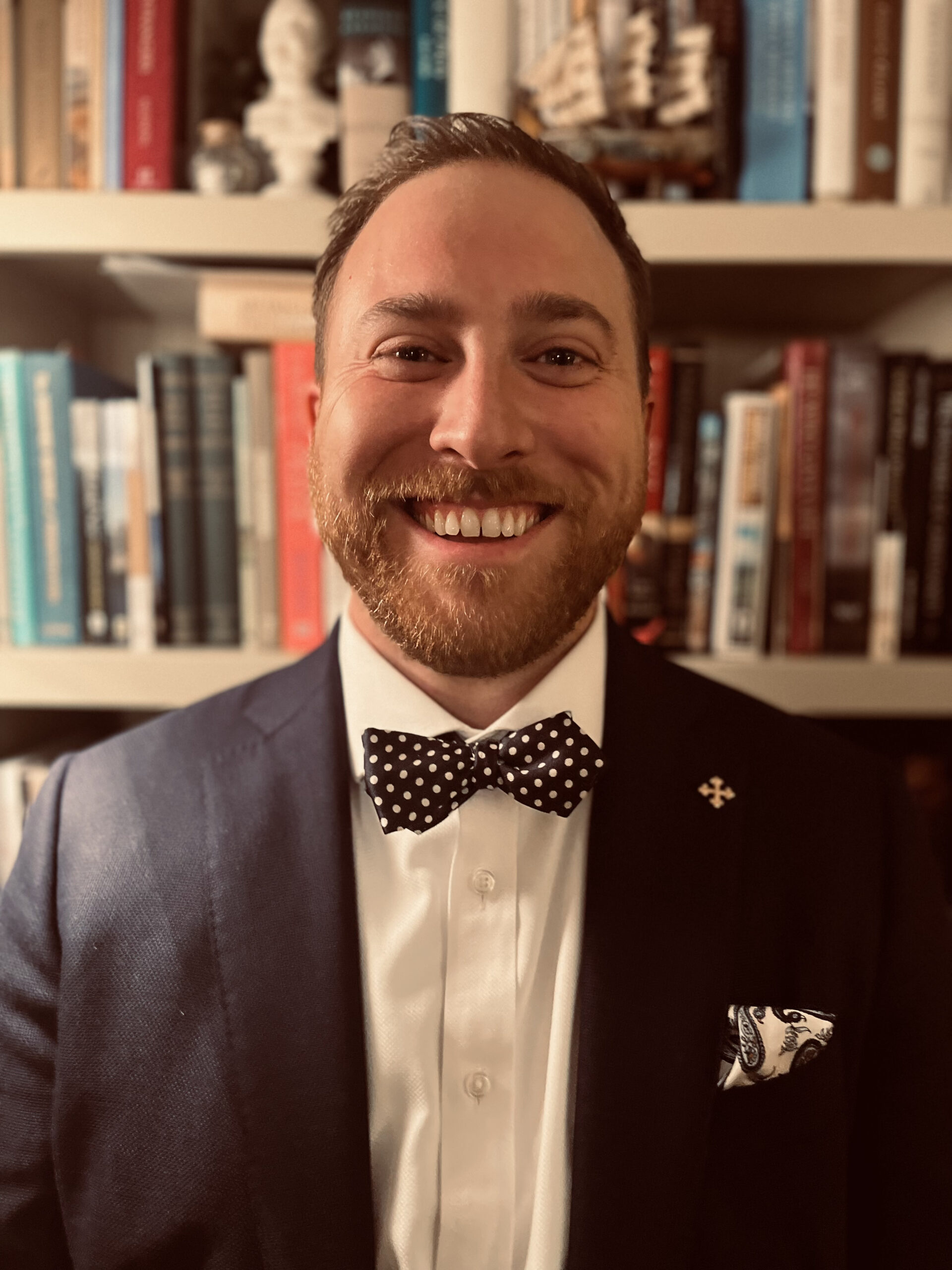
Tyler serves as the Pastor of Dallas Reformed Baptist Church, where he is committed to faithfully preaching Christ from all of Scripture. He came to saving faith at age 11 and sensed a call to ministry as a teenager. He holds a Master of Divinity from Westminster Theological Seminary and has served in pastoral ministry since 2024. Tyler is married to Cassie, and they have one daughter. He enjoys baseball, reading the Puritans, and studying military history.
Stay in touch with CBTSeminary
For more information about CBTS, go to CBTSeminary.org
Consider giving to CBTSeminary to help us train the next generation of gospel ministers.
Apply to CBTS today to be sharpened for a lifetime of faithful ministry.
Follow CBTS on our socials: X | Instagram | Facebook | YouTube
Sign up for our newsletter and receive monthly updates related to the Seminary.