Throughout the Old Testament, the “eighth day” consistently foreshadowed a new creation. By rising from the dead on the first day of the week, Jesus Christ fulfilled the ancient covenants, shadows, rituals, and feasts. Having redeemed His people from a world broken by and now enslaved to sin, Christ now empowers His Church to walk in the fullness of His resurrection life. As a result, believers grow to love God’s law more deeply—including the celebration of the Lord’s Day as the Christian Sabbath. Consider these ten ways in which Christ blesses His church with His promised eighth-day rest.
1. Christ Is the True Meaning of Scripture
The creation week established a seven-day cycle that culminated in Sabbath rest. The fall ruined that original creation, making a new work of redemption necessary. Throughout the Law, an “eighth day” marked the end of an old order, the completion of cleansing, and a holy start.
The Second London Baptist Confession affirms that Scripture interprets Scripture (2LCF 1.9). Every passage carries a single divine intent, revealed progressively through redemptive history and brought into full light in Christ. When Christ rose on the first day of the week—the eighth day following the old creation Sabbath—He inaugurated the New Creation. Moving the Sabbath from the seventh day to the first day of the week shows that God’s ultimate plan shaped history from the very beginning. New Testament apostolic revelation does not alter the underlying Old Testament patterns; rather, it unveils their full meaning and the Holy Spirit’s original intent, fulfilled in God the Son.
2. Christ Is Our Circumcision
The eighth-day motif first appears in the Abrahamic Covenant with eighth-day circumcision: “He who is eight days old among you shall be circumcised” (Gen 17:12), and “on the eighth day the flesh of his foreskin shall be circumcised” (Lev 12:3). Covenants were cut. God graciously bound Himself to provide through Abraham’s line that promised seed of woman, who would crush the serpent’s head. (Gen 3:15)
It pointed forward to Calvary, where Christ was cut off so His people might receive a circumcision of the heart. In Colossians 2:11–12, Paul explicitly identifies Christ’s death and resurrection as the definitive spiritual circumcision: “In Him you were also circumcised with the circumcision made without hands” (Col 2:11), achieved “by putting off the body of the sins of the flesh, by the circumcision of Christ” (Col 2:11), having been “buried with Him in baptism, in which you also were raised with Him through faith in the working of God, who raised Him from the dead” (Col 2:12). The Lord’s Day celebrates the Church’s covenantal bond to God through Christ, who bore the knife of judgment on our behalf so that we might live.
3. Christ Is Our Cleansing
The eighth-day rhythm also structures priestly ordination and ceremonial cleansing. Under Mosaic law, Aaron and his sons spent seven days at the tabernacle door preparing for ministry: “And you shall not go outside the door of the tabernacle of meeting for seven days, until the days of your consecration are ended” (Lev 8:33), “for seven days he shall consecrate you” (Lev 8:33). On the eighth day, Moses announced, “the glory of the Lord will appear to you” (Lev 9:6), “And it came to pass on the eighth day that Moses called Aaron and his sons and the elders of Israel” (Lev 9:1) to begin their service.
This seven-day isolation made clear that no human priesthood could qualify anyone to draw near to God until a full cycle of purification had taken place. Similarly, a leper was pronounced clean on the eighth day. The law required that “on the eighth day he shall take two male lambs without blemish, one ewe lamb of the first year without blemish” (Lev 14:10), and “he shall bring them to the priest for his cleansing, on the eighth day, to the door of the tabernacle of meeting, before the Lord” (Lev 14:23)—a sign that the disease of sin had been overcome.
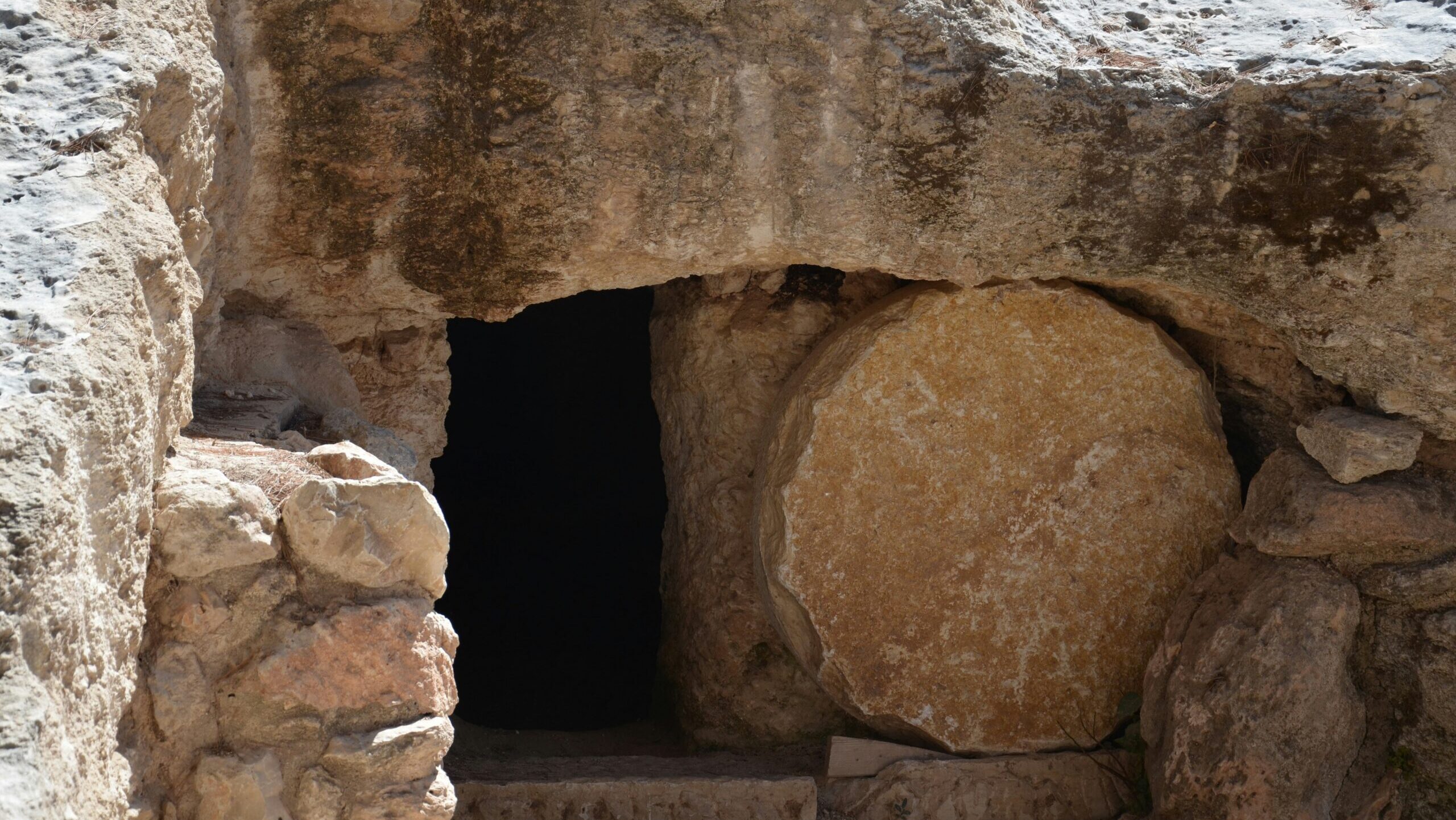
A period of seven days demarks the fullness of time, anticipating the grace of God ministered the next day. These ceremonial laws pointed to the work God promised to accomplish through His own Son: “that in the dispensation of the fullness of the times He might gather together in one all things in Christ.” (Eph 1:10) Christ, our High Priest, accomplished the ultimate consecration through His obedience and death. He rested in the tomb on the Sabbath and stepped forth on the eighth day as the High Priest of a better covenant, opening the heavenly sanctuary to His people.
4. Christ Is Our Great Feast
At the Spring Feasts, the firstfruits of the barley harvest were offered on the day after the Sabbath: “He shall wave the sheaf before the Lord, to be accepted on your behalf; on the day after the Sabbath the priest shall wave it” (Lev 23:11). Paul identifies the resurrected Lord as this fulfillment: “But now Christ is risen from the dead, and has become the firstfruits of those who have fallen asleep” (1 Cor 15:20). Christ’s resurrection was the initial harvest of the New Creation rising out of the grave.
From the Feast of the Firstfruits, Israel counted seven full weeks: “And you shall count for yourselves from the day after the Sabbath, from the day that you brought the sheaf of the wave offering: seven Sabbaths shall be completed” (Lev 23:15). They counted “fifty days to the day after the seventh Sabbath” (Lev 23:16), at which point “you shall offer a new grain offering to the Lord” (Lev 23:16). This pointed directly to Acts 2, where the ascended Christ poured out the Holy Spirit on Pentecost Sunday, establishing the New Covenant Church.
Later in the year, at the autumn Feast of Tabernacles, Israel gathered for seven days: “For seven days you shall offer an offering made by fire to the Lord” (Lev 23:36). God then appointed a sacred assembly on the eighth day: “On the eighth day you shall have a holy convocation, and you shall offer an offering made by fire to the Lord. It is a sacred assembly, and you shall do no customary work on it” (Lev 23:36; see also Num 29:35). No customary work was done on that day, signaling an eternal rest beyond ordinary earthly history.
In John 7:37–38, “On the last day, that great day of the feast” (John 7:37), “Jesus stood and cried out, saying, ‘If anyone thirsts, let him come to Me and drink'” (John 7:37), promising that “He who believes in Me, as the Scripture has said, out of his heart will flow rivers of living water” (John 7:38). Christ is the substance of that eighth-day feast, providing living water to all who come to Him.
5. Christ’s Resurrection Resets A New-Creation Pattern
The New Testament explicitly uses the phrase “the first day of the week” to show how the Old Testament eighth-day pattern moved from shadow to gospel reality. All four Gospel writers deliberately anchor the resurrection of Jesus Christ on this specific day: “Now after the Sabbath, as the first day of the week began to dawn, Mary Magdalene and the other Mary came to see the tomb” (Matt 28:1; cf. Mark 16:2; Luke 24:1; John 20:1). As the eighth day following the old creation cycle, it marked the inauguration of the New Creation.
By apostolic direction, the early Church immediately aligned their life together around this fulfillment: “Now on the first day of the week, when the disciples came together to break bread, Paul, ready to depart the next day, spoke to them” (Acts 20:7). Paul later reinforced this regular weekly gathering: “On the first day of the week let each one of you lay something aside, storing up as he may prosper” (1 Cor 16:2). Finally, John provides the definitive New Covenant name for this day: “I was in the Spirit on the Lord’s Day” (Rev 1:10). By tracking “the first day of the week,” the New Testament confirms that ancient eighth-day shadows find their structural and spiritual fulfillment in the Lord’s Day.
The principle of works after the fall of the first federal head, Adam, was “do that you might live.” The principle of grace after the resurrection of the last federal head, Jesus Christ, is “live in Me that you might do.” Under the Old Covenant, God’s nation worked for seven days in order to then rest for one. Now, in the New Covenant, God’s nation, True Israel—His elect from every nation, gathered in His churches—begin each week resting in Christ, then live by His power the other six days in gratitude to Him.
6. Christ Is Our Rest
The Second London Baptist Confession emphasizes that the Lord’s Day is not a legal burden, but a spiritual delight (2LCF 22.8). Believers set aside worldly pursuits to keep the day holy to Him. The Fourth Commandment contains both a moral principle—that one day in seven belongs to God—and a positive, covenantal specification, which allowed the Lord of the Sabbath to move observance from the seventh day of old creation to the eighth day of the new.
Resting from routine is a liberating boundary. By stepping back from market anxieties and secular distractions, the soul is redirected to Christ and preserved from the temptation of our flesh to be entangled in the ways of this world. Observing the Lord’s Day is an act of faith. Resting on the day Christ rose signals our confession that our righteousness and eternal rest are fully accomplished in Him, not maintained by our own strivings. Ceasing regular labor guards against greed and burnout, offering a foretaste of the eternal rest that remains for the people of God.
7. Christ Teaches His People To Love His Law
Those whom Christ redeemed are made by the Holy Spirit to cry, “Oh, how I love Your law!” (Ps 119:97) fulfilling the anticipated prophecy that True Israel will one day “call the Sabbath a delight” (Isa 58:13). Rather than striving under legalistic obligation, we “serve the Lord with gladness” (Ps 100:2), trusting in Christ who accomplished “what the law could not do in that it was weak through the flesh” (Rom 8:3).
We can say with joy, “How sweet are Your words to my taste, sweeter than honey to my mouth!” (Ps 119:103). Christ continues to call us into obedience out of grateful love for our Redeemer, who first loved us when we were far off. May we find the promised rest and deepest delight God has granted to His people in our triumphant Savior each Lord’s Day.
8. Christ Fuels Our Love
By permitting duties of necessity and mercy, 2LCF 22.8 guards against cold legalism. Acts of mercy reflect the very nature of the eighth day: it is the domain of resurrection life and grace. Relief offered to the suffering on the Sabbath turns the day into an exercise of active goodness—feeding the hungry and caring for the sick in light of Christ’s finished work.
9. Christ Is Worthy Of Our Preparation
Enjoying this “positive, moral, and perpetual commandment” (2LCF 22.7) requires “a due preparing of their hearts” and “ordering their common affairs aforehand” (2LCF 22.8).
The heart cannot instantly pivot from secular business to spiritual rest. “Due preparation” means settling commercial tasks and domestic duties ahead of time to cultivate a prayerful mindset before the Lord’s Day arrives. Just as Israel prepared before meeting God at Sinai, Christians prepare to meet the risen Savior in the assembly of the saints. When our hearts are quieted, His ordinances become a fountain of real refreshment.
10. Each Eighth Day The Church Exalts Christ Together
The Lord’s Day is designed for the refreshment of the soul, as believers are “taken up the whole time” in public and private worship (2LCF 22.8). The confession envisions a day filled with immersive engagement rather than passive obligation. To be taken up the whole time means enjoying communion with the Triune God through corporate praise, family worship, private meditation, and profitable fellowship—echoing the heavenly song: “To Him who sits on the throne, and to the Lamb, be blessing and honor and glory and power forever and ever!” (Rev 5:13).
About the Author
Jason Edwards pastors Reformed Heritage Church in the Denver metropolitan area. He received his theological training for the ministry of God’s word from Trinity Western University in British Columbia, London Reformed Baptist Seminary in the United Kingdom, and the Theological University Apeldoorn in the Netherlands, where he earned his PhD. He serves Covenant Baptist Theological Seminary (CBTS) as a member of the PhD program faculty and as a research advisor for ThM and MDiv students. Additionally, he holds a faculty appointment at the CBTS affiliate seminary in Brazil. His published works include “The Anchor of A Believer’s Hope: John Flavel’s (c. 1630–1691) Theology of Death, Dying, and Eternal,” For Christ’s Sake Alone, From Dust to Glory (contributed a chapter), and The King & His Ordained Rulers.