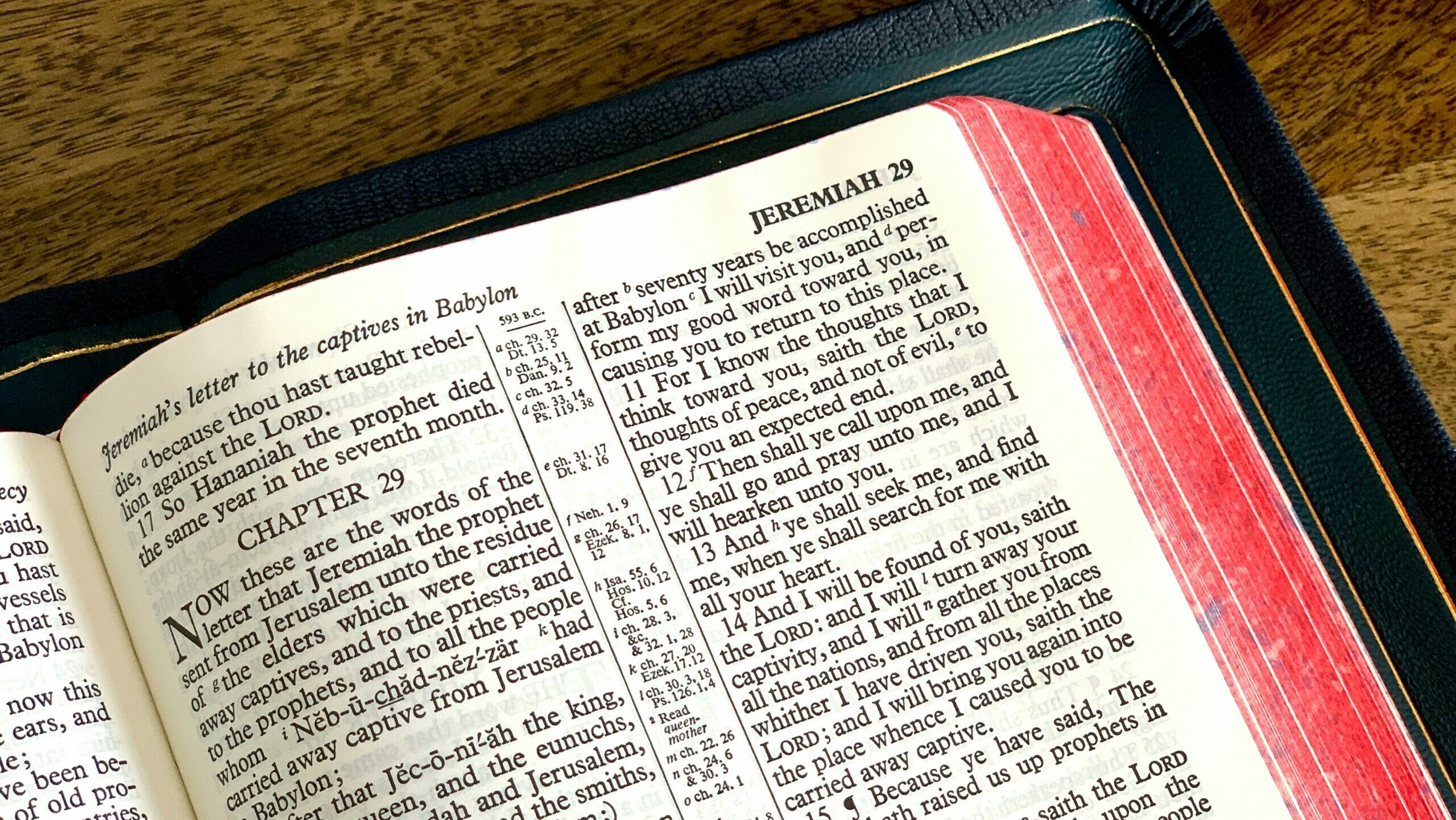
Jeremiah states that his call to the prophetic ministry occurred in the thirteenth year of Josiah’s reign, 627 BC. (Jer 1:2). He describes his call as “the word of the Lord came to me.” The precise manner of his call—dream, vision, divine visitation—is not given, though he hears the voice of God. The call of God is God’s summoning and commissioning of an individual or individuals for a specific mission, ministry, position, or salvation. For example, God called Abraham and his descendants to be His people, a kingdom of priests, and a light to the nations. God’s calling of Israel to national privileges and duties did not guarantee salvation (Rom 2:28-29; 11). God also calls individuals unto salvation (1 Cor 1:24; Rom 8:28; 2 Thess 2:13-14). God calls individuals for ministries as prophets, kings, priests, and pastors. God’s call also includes empowering individuals for specific actions or missions. God’s call of Paul, for instance, empowered and sustained the Apostle through many trials (Gal 1:15-17). Likewise, the Spirit of God empowered Samson’s exploits to begin Israel’s deliverance from Philistine control (Judg 16:20).
Men may not presume to call themselves into the ministry. Isaiah did not just decide to become a prophet. David did not anoint himself or call himself to be king. Moses did not appoint himself deliverer and leader of Israel, though some claimed that he did (Num 16:13). Those prophets in the Old Testament who called themselves were false prophets. The call, of course, must be from God, which furnishes the proper direction, message, encouragement, and power for ministry. God’s calling of Jeremiah ensured God’s guidance and direction of where he should go (Jer 1:7b). God’s call also supplied the message—Jeremiah was to say every word commanded by God. Jeremiah was not to give his own opinions, his own insight, or his own beliefs. He was restricted to proclaiming God’s word and God’s word alone (Jer 1:7b). God’s call provided encouragement against discouragement and failure. From a human perspective, Jeremiah’s ministry, with few converts, would be judged a failure. But God’s call to Jeremiah was very successful because God was with him (Compare Genesis 39 and Joshua 1). In his darkest days, God was with him. In prison, in foreign lands, in muddy pits, God was with him. When hated, threatened, despised, and rejected, God was with him. The divine presence, promised in the divine call, sustained and supported him. In fact, it empowered him when all seemed hopeless (Jer 20:9).
God appointed Jeremiah a prophet. A prophet is a divine spokesman of present duty and of future events. As a divine spokesman, a prophet receives his message directly from God. A prophet, Moses tells us, must not speak in his own name (or by his own authority), but he speaks the words, “that I (God) will put in his mouth.” (Deut 18: 18). God commands Jeremiah, “everything which I command you, you will speak.” (Jer 1:7) Then God places his word in Jeremiah’s mouth (Jer 1:9). In short, this is the gift of inspiration. Exodus 7:1-2 confirms the Biblical definition of a prophet: “See, I have made you like God to Pharaoh, and your brother Aaron will be your prophet. You are to say everything I command you, and your brother Aaron is to tell Pharaoh to let the Israelites go out of his country.” Because Moses claimed that he was not an eloquent speaker, Aaron became Moses’ spokesman.
Prophets spoke of present duties in light of future events. Jeremiah, for instance, foresees the coming invasion of Babylon and the coming disaster on Jerusalem (Jer 1: 11-16). In view of the coming wrath of God, the people should presently return to the Lord and mend their ways. All the prophets speak likewise. The prophet Joel warns of a future locust plague; therefore, the people should rent their hearts, not their garments, now (Joel 2:1-14). Prophecy is not given to satisfy our curiosity, but to encourage us to lead holy lives now. The Apostle John (1 John 3:3) states, “Everyone who has this hope (of the future return of Christ) in him purifies himself, just as he is pure.” This is the goal of all prophecy—to encourage holy lives now in view of future judgments and blessings. God’s call of Jeremiah was part of God’s eternal plan. The Bible teaches that God not only knows the future, but he also directs and governs the future. Modern thinking often chafes under such teaching, but modern teaching often exalts the creature and abases the Creator. From Genesis to Revelation, God controls and governs history. All things, Paul informs us, God works according to the counsel of his will (Eph 1:11). God works all things for our good to those who love him, who have been called according to His purpose (Rom 8:28). In fact, God works in us both to will and to do according to His good pleasure (Phil 2:13).
Of course, prophecy is only possible if God controls the future. In Isaiah’s prophecy concerning Cyrus, the Persian king (Isa 44:28-45:1; 45:13), God clearly chose his parents, ordained time of his birth to aid Israel in exile, named the child at least one hundred years before his birth to comfort Israel, brought him to the throne of Persia to restore Israel to its land, ordered him to say, “Let the temple be rebuilt, Let the foundations be laid” to accomplish all that God willed (Isaiah 44:28).
In Jeremiah’s call, God’s directing and governing the world is clearly presented. God states, “Before I formed you in the womb, I knew you.” (Jer 1:5) As Huey points out, the word “know” has the idea of “choose” in this context. Other passages confirm this: Amos 3:2 says, “You (Israel) have I known (chosen) of all the families of the earth.” God says of Abram (Gen 18:19), “For I have known (chosen) him, so that he will direct his children and his household after him.” God picked out Jeremiah for this prophetic office before his conception in the womb. Moreover, while Jeremiah was in his mother’s womb, God had already sanctified Jeremiah. God had already marked off Jeremiah as holy, divine property (sanctified) as a fetus. In fact, in Jeremiah’s fetal state, God appointed him a prophet to the nations.
Many, to be sure, will object to such teachings. Many see an inherent unfairness with God’s dealings—what he does with one, he should do with all. Paul answered this argument, or at least a version of this argument, in Romans 9:10-18—the creature, especially the sinful creature, does not have a claim on God and His actions, God may sovereignly works as He wills. Others claim that God’s foreordaining of actions destroys man’s freedom of will. Paul answers this argument in Romans 9:19-28. The Bible is clear: man is free and responsible for his actions; and God is free, and He rules the actions of free men. This is a mystery. We should not deny either truth. Certainly, this passage also has profound implications concerning fetal life. God forms the fetus, marks off the fetus as divine property, and appoints the fetus as a prophet. The modern abortion debate concerns the status of the fetus—is it life or not? Jeremiah’s call provides the answer.
Jeremiah responds to God’s call with the claim of unworthiness. This is not a false or sham excuse. Many whom God has called perceive their unworthiness. Isaiah sees his own sinfulness. When God assures him of divine forgiveness, then Isaiah became willing to do God’s service. Ezekiel became as a dead man when he heard the call of God, who had to place Ezekiel on his feet and encourage him against fear and rejection. Jeremiah recognized his inability to speak and his youthful inexperience. These fears are in many ways natural. None of us are sufficient for the task. Certainly, we can do much in our own strength, but what we accomplish in our own strength is unacceptable to God. God helped Jeremiah to overcome fears by directing him and by giving him the message to speak.
Jeremiah’s message was one of judgment and restoration. First, there must be judgment. Jeremiah must uproot, tear down, destroy, and overthrow. Before restoration can take place, a purifying work must occur, completely and entirely. Moreover, the use of four Hebrew words for judgment and the two Hebrew words for restoration indicates that judgment will dominate Jeremiah’s ministry and message. But the judgment has a restorative aim in view. Judah was in danger of complete apostasy from the Lord. The judgment of political destruction and seventy years of exile cleansed the Israelites of idolatry and made restoration possible. Jeremiah’s message was one of horrific judgment, but also of gracious restoration.
God’s call is essential for service in His church. Jeremiah’s call empowered him for the very difficult forty years to come. These forty years of called service transform Jeremiah into a true man of God.
About the Author
Dr. Fuller graduated with a business degree and a Masters in Bible at Bob Jones University. He attended Dropsie College in Philadelphia for its last year, then studied at Hebrew Union College and received MPhil and PhD degrees. He taught at Mid-Continent College for two years and at Southern Seminary for 22 years.

Stay in touch with CBTSeminary
For more information about CBTS, go to CBTSeminary.org
Consider giving to CBTSeminary to help us train the next generation of gospel ministers.
Apply to CBTS today to be sharpened for a lifetime of faithful ministry.
Follow CBTS on our socials: X | Instagram | Facebook | YouTube
Sign up for our newsletter and receive monthly updates related to the Seminary.